
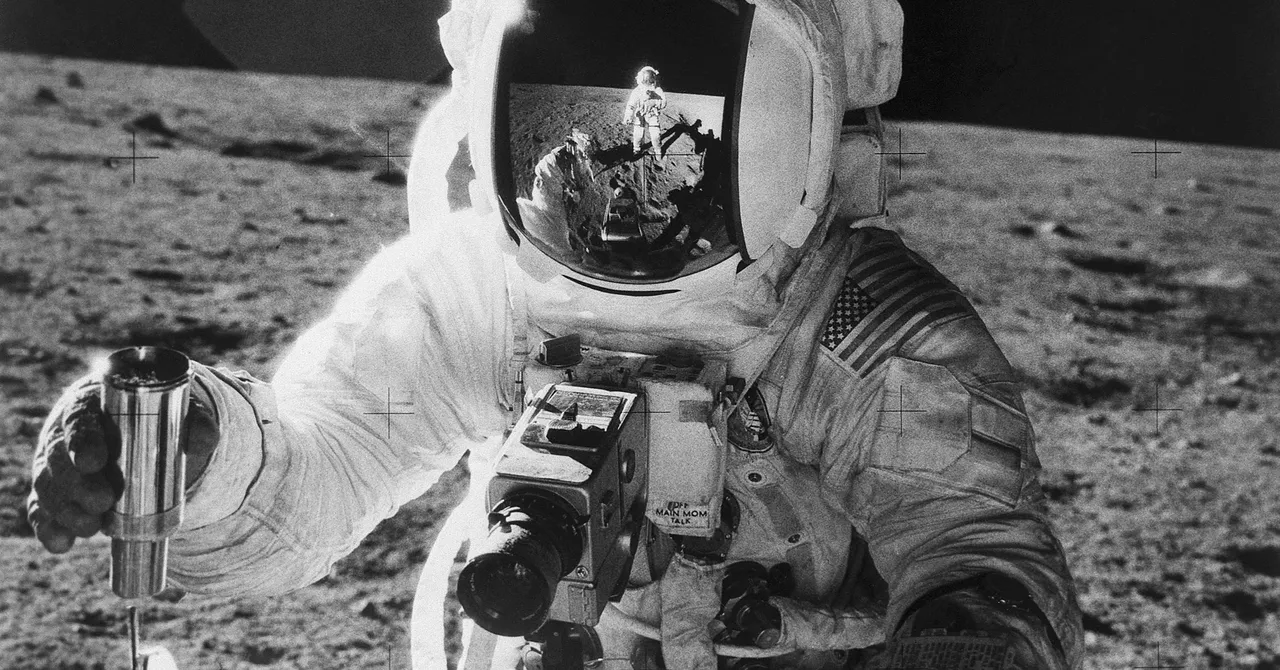
Over five decades,humanity believed it comprehended the moon: an unmoving, vacuum-like, arid terrain, devoid of numerous unanswered questions. Yet, orbital probes and automated expeditions have demonstrated a different reality. The solar system’s most thoroughly examined celestial body possesses a greater intricacy than initially perceived, with numerous foundational inquiries still unresolved.
NASA is on the verge of returning to the moon via the Artemis initiative. While Artemis II and III are slated as orbital journeys around the celestial body, Artemis IV, however, will deploy human explorers onto the surface, a feat not accomplished since the Apollo period. This audacious endeavor aims to establish the foundation for an enduring human foothold, which will yield a constant flow of information and specimens.
Certain lunar puzzles are poised for resolution thanks to the plentiful specimens and advanced equipment being deployed. Immediate and complete revelations are not expected, and outcomes will likely manifest gradually, yet their clarification has never been more imminent. Presented below is a compilation of these perplexing questions, along with plausible outcomes, anticipated to be elucidated within the upcoming decade or two.
What Accounts for the Moon’s Genesis?
The prevailing hypothesis regarding the moon’s formation suggests its emergence followed a catastrophic impact between a Mars-scale celestial body and an early Earth approximately 4.5 billion years in the past. Portions of the debris expelled by this colossal event coalesced and hardened, giving rise to the companion that presently circles our planet.
Nevertheless, this theory relies upon intricate computer models and a restricted collection of specimens retrieved by Apollo half a century ago. Immediate acquisition of fresh, pristine rock formations, coupled with contemporary analytical methodologies, promises substantially more compelling proof. Naturally, reaching subterranean matter, including segments of the mantle revealed within craters or zones of impact, will be crucial, as will reconstructing the timeline of the primeval lunar magma ocean. The primary challenge lies in reaching these locations; the subsequent work constitutes scientific inquiry.
What is the Moon’s Water Content—and What are its Characteristics?
Fifty years prior, the moon was widely thought to be entirely arid. Researchers have subsequently confirmed the presence of ice within the perpetually shaded craters of the south pole and also that a portion of this water is enclosed in crystalline structures within surface minerals. The paramount inquiry now concerns its total volume and its potential utility for prospective lunar outposts.
A primary objective of forthcoming Artemis expeditions will involve investigating these crater formations. Should ice be discovered, it will be essential to ascertain if it is intermingled with regolith, if it constitutes dense sheets, or if more pristine reserves exist. Optimistically, this commodity would be plentiful and convertible into oxygen or propellant. Conversely, in the least favorable outcome, its dissemination would render extraction impractical.
What Constitutes the Moon’s Interior Configuration?
The moon’s inner composition persists as a significant area of uncertainty. While Apollo-era seismographs registered both profound and superficial lunar tremors, the gathered information is limited and originates solely from a single locale. Present gravitational and thermal models provide merely an outline of the interior, falling short of a comprehensive depiction.
An enduring human occupation would empower investigators to deploy seismic sensors in previously unexplored zones, thereby broadening worldwide coverage. Utilizing an updated detection system, the clarity of the lunar interior’s imaging would improve considerably, enabling scientists to more accurately delineate the core’s dimensions, the mantle’s arrangement, and the spread of lingering warmth. Though not an impeccable representation, it will represent the most comprehensive understanding achieved thus far.
What Accounts for the Far Side’s Distinctive Nature?
Considering the moon as a singular entity, why does its distant hemisphere appear so craggy and irregular, contrasting sharply with its closer face, which is largely unblemished and blanketed by basaltic maria? Such a disparity constitutes a major current lunar puzzle. Various hypotheses endeavor to elucidate this, encompassing disparities in primordial thermal conditions, fluctuations during the magma ocean’s solidification, or Earth’s gravitational influences; however, none fully reconcile the observations.
The renewed lunar endeavor introduces the prospect of humanity’s inaugural treks onto the far side’s terrain. Should specimens be acquired, investigators can ascertain its antiquity, makeup, and thermal progression—crucial information for resolving a conundrum that has persisted for fifty years.
What Became of the Moon’s Magnetic Field?
Specimens from the Apollo missions unveiled an unforeseen discovery: numerous rocks exhibit magnetization, as though the moon once possessed a robust internal dynamo. Yet, given current knowledge of its dimensions and internal makeup, the celestial body appears insufficiently large and too frigid to have maintained a potent global magnetic field for an extended duration.
This emerging lunar period holds the potential to illuminate this perplexity, courtesy of novel specimens from varied locales and enhanced magnetic readings. Armed with accurately dated rock formations and improved insights into its interior, scientists can piece together the epoch of the dynamo’s operation and its magnetic strength.
The Moon: Waypoint or Cosmic Research Facility?
In contrast to the Apollo period, the moon currently serves not as an ultimate objective, but as the launching pad for an advanced phase of cosmic investigation. Developments over the coming ten years will not merely resolve lingering enigmas, but will also reshape our comprehension of telluric bodies, planetary genesis, and the ultimate bounds of human pioneering as we revisit a known celestial location with fresh inquiries.
Mankind might not uncover every solution, yet for the inaugural time in fifty years, we will pose pertinent inquiries, from the optimal vantage point, and with a bounty of lunar geological specimens at our disposal.
This narrative first surfaced in WIRED en Español and was rendered from the Spanish language.
{content}
Source:{feed_title}