
**Key Takeaways:**
1. **Global Energy Shock Imminent:** A naval blockade on the Strait of Hormuz, a critical chokepoint for over 20% of the world’s oil supply, would trigger an immediate and unprecedented surge in crude oil prices, potentially leading to global stagflation and recessionary pressures as energy costs ripple through supply chains.
2. **Heightened Geopolitical Risk & Trade Disruptions:** Beyond oil, such a move escalates geopolitical tensions across the Middle East and globally, significantly increasing war risk premiums for shipping, disrupting international trade routes, and potentially forcing major economies to reconsider energy security and alliances.
3. **Iran’s Economic Obliteration vs. Regime Stability:** While designed to cripple Iran’s economy by cutting off its primary revenue streams from oil and petrochemicals, the strategy carries substantial risks, including humanitarian crises, unpredictable internal political outcomes, and a potential for broader regional conflict that could further destabilize global markets.
In a dramatic escalation of geopolitical tensions, the United States has reportedly initiated a naval blockade on the Strait of Hormuz and the Gulf of Oman, targeting Iranian oil exports and commercial shipping. This assertive maneuver, described by some as “Trumpian Jiu-Jitsu” and a “Venezuela model” applied to the Persian Gulf, aims to choke off Iran’s economic lifelines by preventing any unauthorized vessel from entering or departing the blockaded area if it conducts business with Tehran. The implications for global financial markets, energy prices, and international trade are nothing short of profound, signaling a potential paradigm shift in global energy security and supply chain dynamics.
America’s Central Command’s stated position, as articulated, is clear: “Any vessel entering or departing the blockaded area without authorization is subject to interception, diversion, and capture. The blockade will not impede neutral transit passage through the Strait of Hormuz to or from non-Iranian destinations.” While this language attempts to carve out exceptions for neutral transit, the practical enforcement of such a comprehensive blockade against a sovereign nation, particularly one positioned at the nexus of global energy flows, is fraught with peril and immediate market ramifications. The inherent ambiguity of “without authorization” and “neutral transit” in a hostile environment creates a massive risk premium for all shipping in the region, regardless of destination.
From a market perspective, the “Venezuela model” analogy, which saw extensive sanctions cripple Caracas’s oil industry, falls short in scale and systemic impact when applied to the Strait of Hormuz. Venezuela, while a significant oil producer, does not control a maritime chokepoint through which over one-fifth of global oil consumption and one-third of the world’s liquefied natural gas (LNG) passes daily. The Strait of Hormuz is arguably the single most critical maritime transit route for energy worldwide, with an estimated 21 million barrels of oil per day (bpd) passing through it, carrying crude from Saudi Arabia, Iran, UAE, Kuwait, and Iraq. Its effective closure, even partially, to Iranian-linked shipping or through the threat of conflict, introduces an unparalleled risk premium into global energy markets that far eclipses any previous localized sanctions regime.
The president’s declaration of an “all in, and all out” strategy, and his prediction that “numerous countries are going to be helping us with this also,” underscores a maximalist approach designed to completely sever Iran’s ability to generate revenue from oil sales. This isn’t merely about preventing Iran from selling to “people they like” but about achieving “all or none” – a complete economic isolation. The immediate market response to such a strategy would be a dramatic re-evaluation of energy security, supply chain resilience, and global growth forecasts. Major importers like China, India, Japan, and European nations, reliant on Gulf oil, would be compelled to assess their energy strategies, potentially leading to increased demand for alternative sources or severe economic contraction if supply cannot be secured.
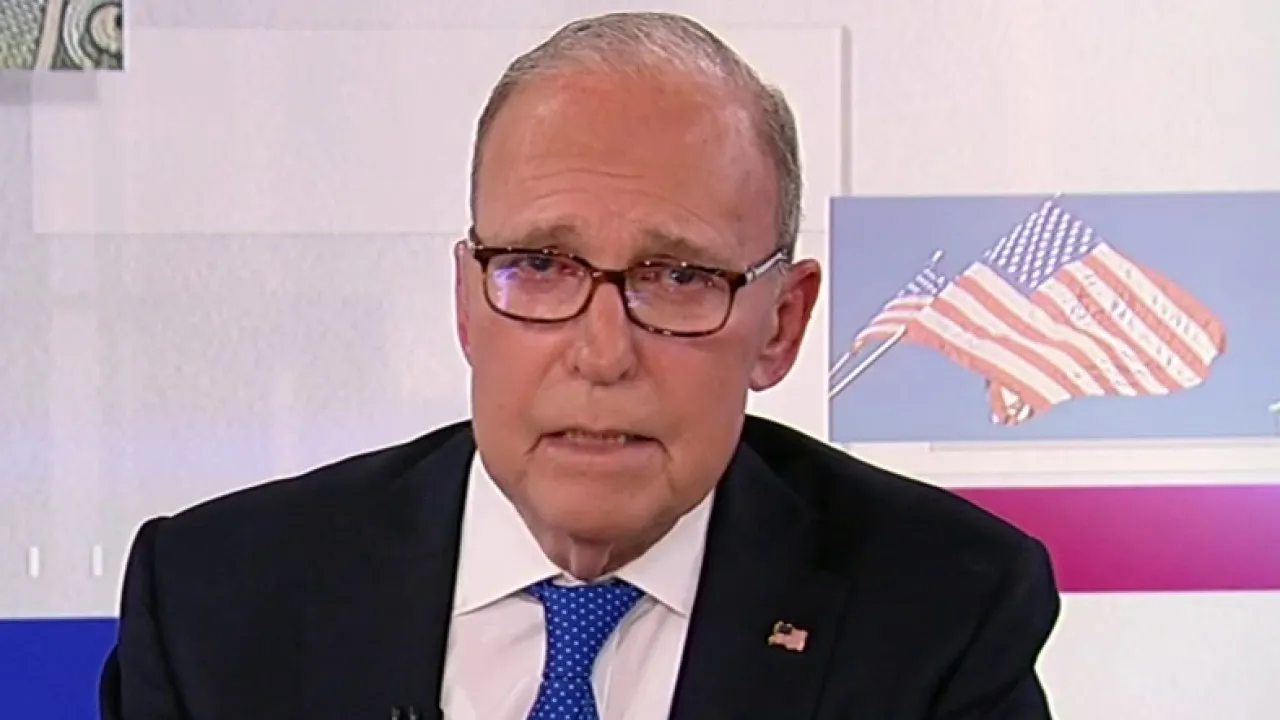
Former U.S. special envoy for Ukraine Gen. Keith Kellogg discusses how the U.S.-Iran conflict is impacting China and Russia as a U.S. naval blockade of the Strait of Hormuz takes effect on ‘Kudlow.’
Let’s crunch some numbers and consider their financial ramifications. Sources including TIPP Insights and the Foundation for Defense of Democracies highlight Iran’s deep reliance on seaborne trade. Over 90 percent of Iran’s nearly $110 billion in annual trade transits the Persian Gulf. Before this escalation, crude oil alone was reportedly earning Iran $139 million per day, with petrochemicals adding another $54 million daily. A complete blockade implies a staggering loss of approximately $435 million per day in revenues – an annualized figure of around $159 billion. This is roughly 50 percent more than Iran’s entire national budget, estimated at $100 billion. The speed at which Iran could face economic obliteration is therefore alarming, not just for Tehran but for any entity with exposure to the region or reliance on global energy stability. The rapid depletion of its foreign reserves would trigger hyperinflation internally and make it impossible to finance essential imports, creating a humanitarian crisis.
The timeline for critical infrastructure failure is equally stark. Reports suggest that Iran’s on-shore oil storage capacity could be topped out in as little as 13 days. Beyond this point, oil production would have to be severely curtailed or shut down entirely, leading to permanent damage to its oil fields and processing capabilities. This rapid onset of economic strangulation aims to force Iran back to the negotiating table, but it also risks an unpredictable and potentially violent response from a cornered regime. The presence of hardline figures within the Iranian Islamic Revolutionary Guard Corps, like Mojtaba Vehedi and Mohammad-Bagher Ghalibaf, further complicates the calculus, suggesting that regime change might be less benevolent and more protracted than anticipated, potentially devolving into a protracted regional conflict with devastating global economic consequences.
For global markets, the immediate concern would be a massive supply shock in the crude oil market. Brent and WTI futures would likely skyrocket, possibly surpassing historical highs as traders price in the geopolitical risk premium and actual supply disruptions. Energy-intensive industries, from aviation and shipping to manufacturing, would face rapidly escalating operational costs, compressing profit margins and potentially triggering widespread layoffs. This energy shock would also fuel inflationary pressures globally, forcing central banks, already grappling with post-pandemic economic complexities, into an unenviable position of choosing between combating inflation with rate hikes (risking recession) or accommodating higher energy prices (risking runaway inflation and eroded purchasing power).
Beyond oil, shipping costs for all commodities would surge due to heightened insurance premiums (war risk clauses) and potential rerouting away from the Gulf, creating bottlenecks and delays. This would impact global supply chains, adding costs to everything from consumer goods to industrial components. Investor sentiment would likely sour, leading to a flight to safe-haven assets such as gold, the U.S. dollar, and U.S. Treasury bonds, while equities, particularly those sensitive to energy prices and global trade, would experience significant downward pressure. Emerging markets, especially those heavily reliant on oil imports, would face severe balance of payments crises, currency devaluations, and increased sovereign debt risk, potentially triggering a wider financial contagion.
Market Impact:
The initiation of a naval blockade on the Strait of Hormuz represents an unprecedented economic and geopolitical gambit with immediate and severe market repercussions. Global crude oil prices would surge dramatically, pushing Brent and WTI futures into uncharted territory, reflecting both the direct supply threat to over 20% of global oil flow and an immense geopolitical risk premium. This energy shock would ignite global inflationary pressures, likely compelling central banks to consider aggressive monetary tightening even amidst a looming recessionary environment. Shipping costs and insurance premiums for all maritime trade would skyrocket, creating widespread supply chain disruptions and impacting industries from logistics to manufacturing. Investor confidence would plummet, leading to significant capital reallocation towards safe-haven assets like gold and the U.S. dollar, while equity markets, particularly those with high energy exposure or global trade reliance, would face substantial downside volatility. The potential for regional conflict and its cascading effects on energy infrastructure and trade routes would keep markets on edge, demanding constant re-evaluation of risk profiles across all asset classes, with profound implications for global GDP growth and corporate earnings for the foreseeable future.