
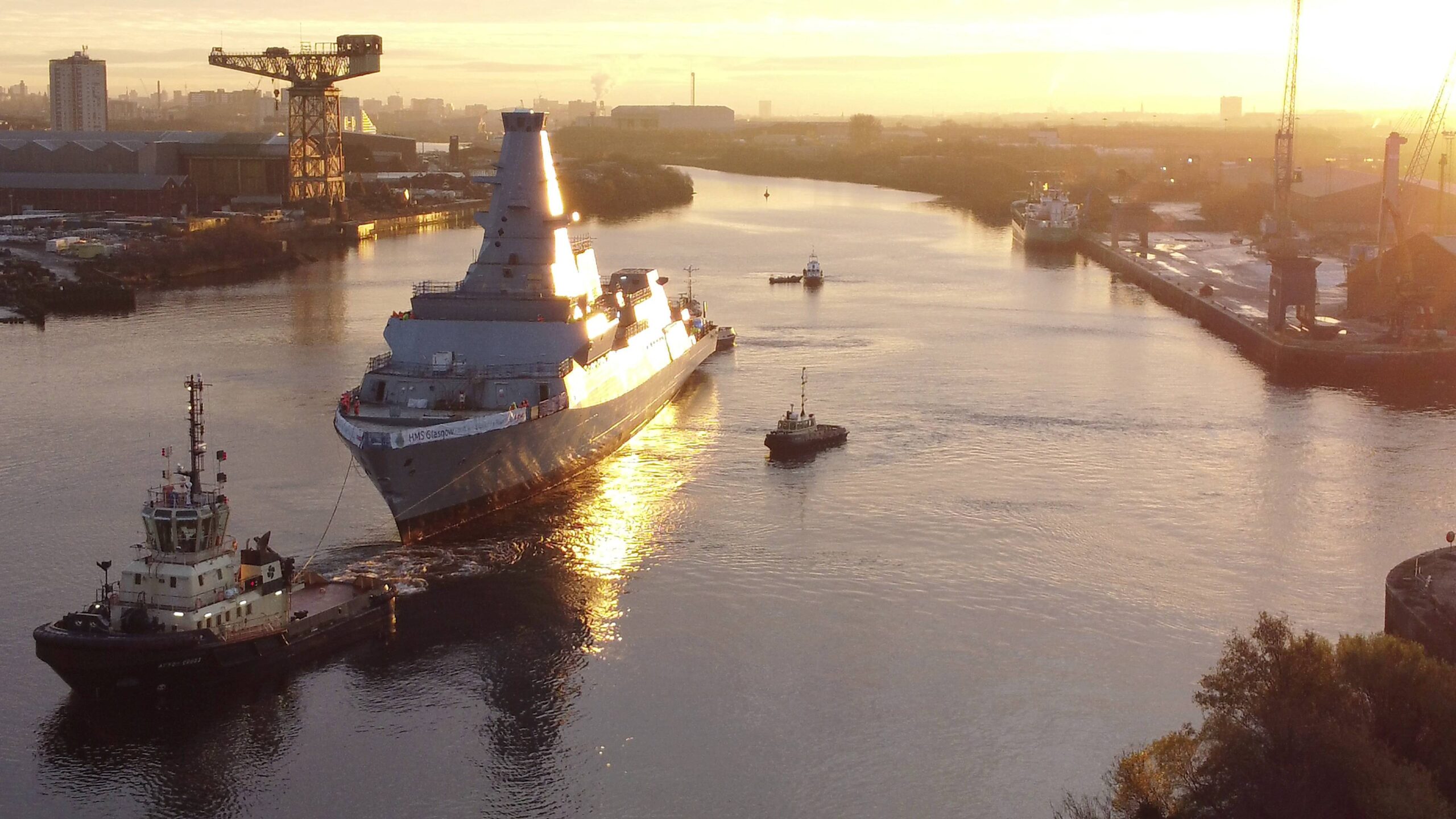
UK Transfers Frigate Build Slots to Norway, Commits to Royal Navy Fleet Amidst Strategic Realignment
The United Kingdom’s Ministry of Defence has confirmed the transfer of several Type 26 frigate build slots, originally allocated for the Royal Navy, to the Royal Norwegian Navy. This strategic move, while strengthening Anglo-Norwegian defence cooperation, necessitates additional orders to fulfill the Royal Navy’s stated requirement for eight of these advanced anti-submarine warfare vessels. The resolution of this ‘delta’ in the order book is expected to be addressed within the forthcoming Defence Investment Plan.
The details emerged from a parliamentary statement on April 22 by Luke Pollard, the Minister for Defence Readiness and Industry. Pollard informed Parliament that a total of 13 frigates had been ordered between 2010 and 2024, encompassing both the Type 26 Global Combat Ship and Type 31 Inspiration-class programmes. He explicitly stated that “a number [of Type 26 slots] have been ceded as part of the Norwegian deal” and that “the delta is yet to be made up through additional orders, and this will be a consideration of the Defence Investment Plan.”
The potential transfer was initially confirmed in February, when Minister Pollard indicated that the UK was “working together with our Norwegian partners” to assess “options for offering Type 26 build slots currently allocated to the Royal Navy to the Royal Norwegian Navy.” At that juncture, Pollard also provided assurance that the Royal Navy’s overall fleet size would not be diminished. He affirmed that “the Royal Navy will receive all eight Type 26 ships during the late 2020s and 2030s as planned,” envisioning a combined fleet of “eight British and at least five Norwegian” ships. This joint force, he suggested, would operate seamlessly in northern Europe, with “the only difference between a Royal Navy Type 26 and a Norwegian Type 26 will be the language on the signs.”
Despite these assurances, the eight-ship commitment has drawn scrutiny from some Members of Parliament. Dr. Andrew Murrison, a Conservative MP, voiced concerns in the Commons, stating that “well-placed sources are suggesting that the number of Type 26 hulls on the order book may be reduced or transferred to our Norwegian allies.” He specifically pressed Minister Pollard to confirm the government’s intention to “proceed with a minimum of eight Type 26 frigates,” particularly in light of an earlier discussion that week regarding increased Russian submarine activity in the North Atlantic.
Minister Pollard’s response to Dr. Murrison was unequivocal. When directly asked to confirm a minimum of eight Type 26 frigates, he firmly replied, “I can indeed.” He further elaborated on the Norway arrangement, highlighting its benefits. He explained that the deal “sustains Type 26 production on the Clyde for many years to come and involves not only the eight British Royal Navy Type 26s but five Norwegian ones.” Pollard underscored the collaborative nature of the effort, stating, “we are currently working with Norway on build slots” and anticipating the outcome would be “a truly interoperable, interchangeable force,” where the only distinction between British and Norwegian Type 26s would be the language of internal signage.
Beyond the Type 26 programme, Minister Pollard also indicated that the Norway deal represented “part of an agreement about how we can work more closely with our joint expeditionary force allies in northern Europe.” He expressed optimism that this model “can be expanded to other nations as we look to sell the Type 31 frigates to more of our partners,” signaling a broader strategy for defence export and alliance building.
The commitment to eight Type 26 frigates for the Royal Navy has been a consistent message from the government. A previous statement, referenced as a written answer from Al Carns MP with a date of March 2026, confirmed that “the Type 26 programme will deliver eight anti-submarine warfare frigates for the Royal Navy, which are designed primarily for operations in the North Atlantic and will form a core component of the Atlantic Bastion concept.”
Financially, the transfer of build slots to Norway does not represent a direct loss to the UK’s defence budget, as Norway is funding its own orders. However, the practical implication is that the Royal Navy’s later Type 26 deliveries are likely to be delayed beyond their initial schedule. This postponement could exert additional pressure on the retirement timetable for the current Type 23 frigates, which the Type 26s are designed to replace, potentially creating a temporary capability gap if the Type 23s cannot be extended.
From a broader strategic perspective, the flag on individual hulls may be less significant than the collective anti-submarine warfare (ASW) capability operating within the North Atlantic theatre. The Lunna House Agreement, an anticipated pact expected to be formalized in December 2025, is explicitly designed around this principle. It aims to commit the Royal Navy and Royal Norwegian Navy to operate as a singular, interchangeable fleet, featuring joint crew training, shared maintenance protocols, and nearly identical vessels.
Within the NATO framework, a combined force of 13 identical frigates, working cohesively as a unified ASW capability across the vital GIUK (Greenland-Iceland-UK) gap and the Norwegian Sea, is considered by many defence analysts to offer a more robust contribution than eight purely national hulls operating alongside Norwegian ships of a different design. This agreement has garnered support within defence circles for moving beyond superficial interoperability towards a more profound level of integration.
In summary, the Royal Navy’s requirement for eight Type 26 frigates remains officially confirmed by ministerial statements. While at least one hull currently under construction is projected for reallocation to Norway to meet their accelerated delivery needs, the necessary additional orders to restore the UK’s count to eight have yet to be formally placed. The forthcoming Defence Investment Plan, for which a publication date has not yet been announced despite original expectations for last autumn, is the designated mechanism for resolving this outstanding requirement.
Why This Matters
The transfer of Type 26 frigate build slots to Norway and the subsequent need for additional orders for the Royal Navy carry significant implications across national security, international relations, industrial policy, and defence planning:
National Defence Capability:The Type 26 frigates are advanced anti-submarine warfare (ASW) platforms, crucial for safeguarding vital maritime routes and detecting hostile submarine activity, particularly in the North Atlantic. Any delay in their delivery to the Royal Navy could impact its ability to maintain its operational commitments, especially as the current Type 23 frigates approach retirement. Ensuring the timely delivery of eight Type 26s is paramount for the UK’s independent naval power and its contribution to NATO’s collective defence.
Strengthening International Alliances:This agreement deepens the strategic military partnership between the UK and Norway, two key NATO allies bordering the North Atlantic. The vision of a “truly interoperable, interchangeable force” signifies a move towards genuine integration, where allied navies can operate seamlessly as a single entity. This enhanced interoperability is critical for collective security, particularly in a region facing increased geopolitical tensions and heightened Russian military activity.
Industrial Impact and Economic Stability:The Norwegian orders provide a significant boost to the UK’s shipbuilding industry, particularly on the Clyde. By “sustaining Type 26 production for many years to come,” the deal helps secure skilled jobs, maintain industrial capabilities, and provides stability for the supply chain. This demonstrates the potential for defence exports to underpin domestic industrial base strength, even amidst reallocations for strategic partners.
Response to Evolving Geopolitical Landscape:The emphasis on anti-submarine warfare and operations in the North Atlantic, coupled with explicit mentions of increased Russian submarine activity, highlights the pressing security concerns driving these decisions. A combined fleet of Type 26 frigates provides a more robust and unified response to these threats, enhancing NATO’s presence and deterrent capabilities in a critical maritime domain.
Transparency and Long-Term Defence Planning:The reliance on the still-unreleased Defence Investment Plan to resolve the Royal Navy’s outstanding frigate orders introduces an element of uncertainty. The timely publication and clear articulation of this plan are crucial for providing transparency to Parliament, the defence industry, and the public regarding the UK’s long-term defence strategy, budgetary commitments, and acquisition timelines. Delays can impact confidence and long-term planning for all stakeholders.