
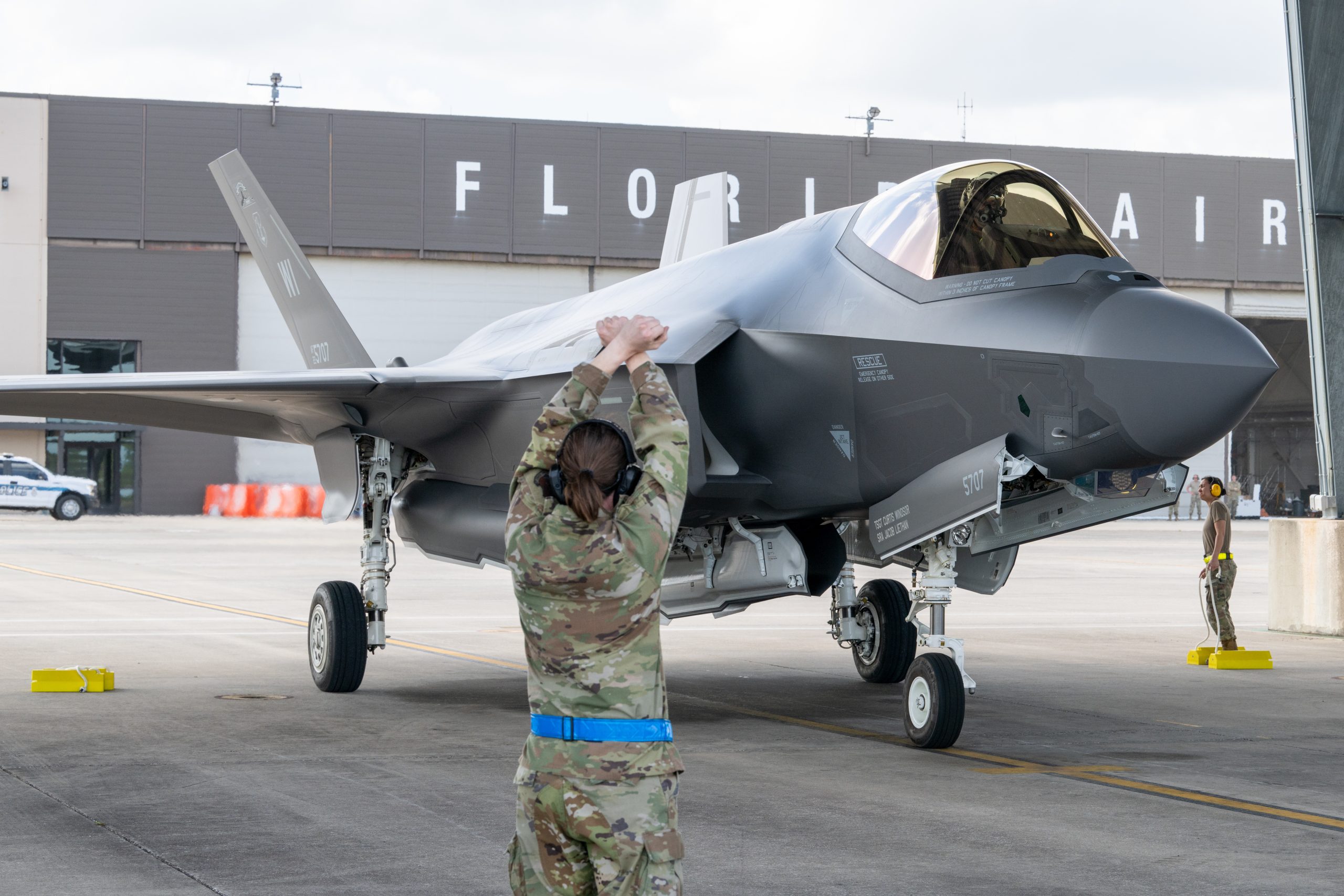
KISSIMMEE, Fla.—Chief Master Sergeant of the Air Force David R. Wolfe recently announced a commitment to increase manpower within the Air Force’s maintenance ranks, a development coinciding with the service’s planned extensive overhaul of its maintenance career field, slated for implementation next year.
Addressing attendees at the Airlift/Tanker Association’s 2026 symposium, Wolfe acknowledged the critical need for “a lot more people into the maintenance career field.” This pledge, however, emerges amidst significant budgetary uncertainties, as the Pentagon’s substantial $1.5 trillion budget request for fiscal year 2027 faces potential rejection or reduction by Congress following recent midterm election results. This proposed budget was intended to fund an expansion of 8,900 additional Airmen, a number now in question.
Overhauling the 2A Career Field
Despite the financial unpredictability, the Air Force is moving forward with its ambitious plan to restructure the 2A career field. This overhaul will consolidate over 50 existing aircraft maintenance specialties into 14 distinct Air Force Specialty Codes (AFSCs). The service initially unveiled its intentions for this transformation in January 2025.
The proposed changes have generated considerable discussion and criticism from both current and former Air Force maintainers. Concerns primarily revolve around the potential for diluted expertise across the career field, particularly given existing shortages in maintenance personnel. In response to this feedback from the field, Air Force officials revised the initial plan, increasing the number of post-transition specialties from seven to 14.
The initial strategic outline for the overhaul involved enlisted Airmen commencing their careers on a generalist track, under a single Air Force Specialty Code. In this phase, they would concentrate on mastering common maintenance skills, such as aircraft recovery and fueling procedures, applicable across various airframes. Upon reaching the rank of Senior Airman and preparing for noncommissioned officer roles, these Airmen would then transition to specialize in one of six non-aircraft-specific areas. These initial proposed specialties included:
- Avionics and Electrical, merging avionics with the electrical aspects of the Environmental and Electrical (E&E) specialty.
- Aerospace Ground Equipment, which would largely retain its current structure.
- Advanced Mechanical, combining the roles of crew chiefs, fuels, hydraulics, and the flight line components of engine maintenance.
- Crew Support Systems, integrating ejection seat systems with the environmental aspects of E&E.
- Fabrication, a consolidation of aircraft structural maintenance, aircraft metals technology, and nondestructive inspection.
- Intermediate-level engines, dedicated to specialized engine maintenance.
Under the revised plan, incoming Airmen will serve their initial 18 months as aviation maintenance technicians, or AMTs. This foundational period will emphasize maintenance fundamentals applicable to multiple aircraft types. Following this initial phase, maintenance Airmen will transition into a specialized track, selecting from one of 14 different specialties. While the Air Force has not yet released the definitive list of these new specialties, officials have indicated that six will be “aircraft-agnostic,” meaning they are not tied to a specific airframe. The remaining eight specialties will be distributed among three broad aircraft groups:
- Fighter/Attack
- Mobility/Strike
- Tactical Lift/Rotary
Looking further ahead, maintainers within the specialty track will eventually have the opportunity to apply for the master aviation technician (MAT) track. This highly specialized pipeline is designed to cultivate a smaller cadre of exceptionally skilled maintainers focused on diagnosing and resolving complex issues on specific aircraft platforms.
The implementation of this new strategy will not be immediate. It is scheduled to undergo an 18-month pilot test commencing in mid-to-late 2027. Lt. Gen. Kenyon K. Bell, deputy chief of staff for logistics, engineering, and force protection, stated in late September that this transition is expected to be “a yearslong effort.” Chief Master Sergeant Wolfe reiterated this sentiment at the Airlift/Tanker symposium, emphasizing, “don’t think we’re just going to, on March 1, flip a switch and all these career fields are going to go away and they’re all going to just shrink down.”
Manning and Budgetary Hurdles
Wolfe also addressed the critical question frequently raised by Airmen regarding the plan’s impact on manning levels. He underscored his personal commitment to addressing this concern, stating, “The other thing that I think you need to know is a commitment from me to the manpower question—if we think we’re just going to let maintenance nation do this with the exact same amount of people that they have now, no way, absolutely not. They’ve got to have a plus-up in manpower to be able to execute any of this.”
Securing this “plus-up” in personnel represents a significant challenge, as any plans for force growth are contingent upon the passage of the $1.5 trillion proposed defense budget. Wolfe stressed the critical importance of congressional approval for the entire budget, noting, “I can’t stress to you enough how important it is for Congress to pass this budget this year.”
Wolfe revealed that the Air Force “took some risks and we overcommitted on our end strength in hopes that the 8,900-person growth that was in the National Defense Authorization Act actually comes to fruition with a budget.” While Congress authorizes the maximum personnel numbers for the services annually, a delay or reduction in budget approval would mean the Air Force would not “get enough money to pay for that end strength.” This disconnect contributes to the “yo-yo effect” observed in personnel programs, stemming from a lack of “sustainable, predictable budget cycle where they approve the budget on the timeline that they’re supposed to … and they approve something that looks like what the president’s budget request was,” Wolfe explained.
Speaking to Air & Space Forces Magazine, Wolfe acknowledged that the precise number of additional personnel required to adequately staff the maintenance career field is yet to be determined. However, he clarified that this specific increase is merely one component of the broader, long-term personnel expansion necessary to rectify the Air Force’s overall manning shortfall. Wolfe informed the Airlift/Tanker audience that an “8,900 plus-up is a really modest, nice start to what we actually need over time, which is probably something in the tens of thousands of more people to be able to do the missions” currently assigned to the Air Force.
Lt. Gen. Jefferson O’Donnell, deputy chief of staff for manpower, personnel, and services, commented in September at AFA’s 2026 Air, Space and Cyber symposium that a key aspect of this drive for growth will involve the Air Force strengthening its narrative. O’Donnell articulated, “Our Air Force has been doing, and our Airmen have been doing all of the missions with an arm tied behind their back, and that is in the manpower piece of this, where we’ve been carrying essentially a negative wedge, and the manpower we need, and the Airmen we need to be able to do the mission, we haven’t had all of them.”
He further emphasized that “to a significant extent, this growth that we’re calling growth is actually restoring some of that which we’ve been missing in our team.” O’Donnell stressed the importance of being “very surgical and very careful about what we bring in on top of our current strength, so that we are meeting our wartime requirements, that we are focused on making sure that we are prioritizing those things like maintenance and logistics and security forces to fill in those spots where we have been taking significant risk across our service.”
Why This Matters
The Air Force’s initiative to overhaul its aircraft maintenance career field and the associated pledge for increased manpower holds profound implications for national security, military readiness, and the future of airpower. Aircraft maintenance is the bedrock of operational readiness; without sufficient numbers of highly skilled maintainers, even the most advanced aircraft cannot fly, fight, or project power effectively. This directly impacts the Air Force’s ability to execute its missions, from strategic deterrence and global mobility to tactical combat operations, in an increasingly complex and contested global environment. A shortage or dilution of expertise in this critical field could lead to increased aircraft downtime, higher accident rates, and ultimately, a reduced operational capability for the United States.
The proposed changes to the career field structure, transitioning from highly specialized roles to a more generalized foundational training followed by focused specialization, aim to enhance flexibility and adaptability within the maintenance force. However, striking the right balance between breadth and depth of knowledge is crucial. The concerns raised by current and former maintainers about potential dilution of expertise highlight the importance of meticulous planning and execution to ensure that the new system produces proficient technicians capable of maintaining sophisticated modern aircraft. The success of this overhaul will shape the training, career progression, and overall effectiveness of thousands of Airmen for decades to come.
Furthermore, the interplay between the Air Force’s strategic personnel needs and congressional budgetary decisions underscores a fundamental challenge in defense planning. The Air Force’s “overcommitment” on end strength in anticipation of budget approval illustrates the precarious nature of long-term force management when facing unpredictable funding cycles. A failure to secure the requested budget would not only hinder the “plus-up” in maintenance personnel but could also exacerbate existing manning shortfalls across the service. This could place undue stress on the current workforce, potentially impacting morale, retention, and overall mission effectiveness. The ability of the U.S. to deter adversaries and respond to crises globally is directly tied to the health and strength of its military, which in turn depends on adequate and predictable funding for its personnel and critical support functions like maintenance.