
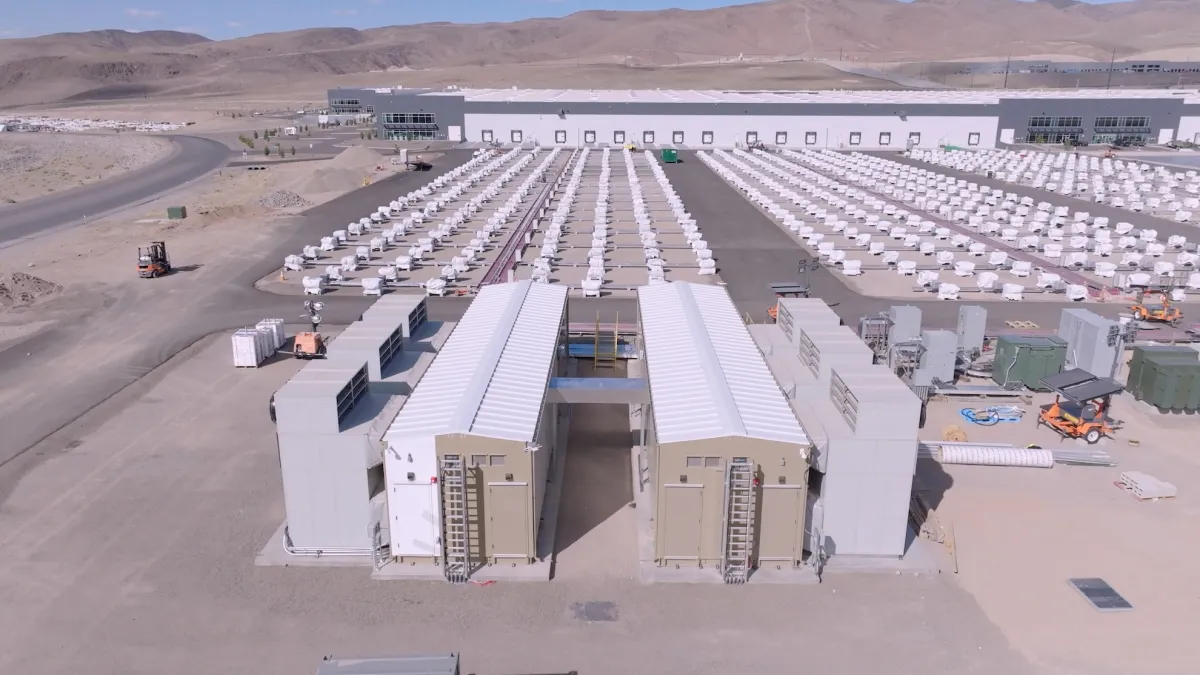
Coatue, one of the biggest names in venture capital and hedge funds, has a new plan to generate bigger returns on AI beyond its sizable stakes in Anthropic, OpenAI, xAI, and data center companies like Singapore’s DayOne and CoreWeave.
It has launched a venture called Next Frontier to buy up land near large power sources with the goal of turning those parcels into data centers, the Wall Street Journal reports. Sources tell the WSJ that Next Frontier has already signed a joint venture with Fluidstack, a cloud infrastructure startup that penned a $50 billion deal to build data centers for Anthropic. (Coatue did not respond to a request for comment.)
Although the U.S. already has 3,000 data centers, more than 1,500 new ones are in various stages of being built, according to Pew Research, most of them in rural areas. The frenzy is enticing land speculation and data center financing projects from lots of players, ranging from Blackstone to Kevin O’Leary from “Shark Tank.”
.
{content}
Key Takeaways:
- **Strategic Vertical Integration:** Venture capital giant Coatue is expanding beyond pure software and AI model investments, launching “Next Frontier” to directly acquire land and develop data centers, securing critical physical infrastructure for the AI era.
- **Power & Location are Paramount:** The new venture explicitly targets parcels near major power sources, highlighting the escalating importance of reliable, high-capacity electricity and strategic geographical positioning in the race to build AI’s foundational compute.
- **Intensifying “Data Center Arms Race”:** Coatue’s move, alongside a reported 1,500 new data centers under construction and involvement from diverse investors like Blackstone and Kevin O’Leary, underscores a frantic, multi-billion dollar land and infrastructure grab fueled by insatiable AI demand.
Coatue’s Next Frontier: Building AI’s Physical Backbone in a Power-Hungry World
The artificial intelligence revolution, often discussed in terms of sophisticated algorithms and groundbreaking models, is fundamentally a story of immense computational power. And where does that power reside? In sprawling, energy-intensive data centers. In a significant strategic pivot, Coatue, a venture capital and hedge fund titan known for its early bets on generative AI darlings like Anthropic, OpenAI, and xAI, is moving beyond software to tackle the physical infrastructure challenge head-on.
The firm has launched a new venture, aptly named Next Frontier, with an ambitious goal: to acquire vast tracts of land strategically located near large power sources. The ultimate vision is to transform these parcels into the next generation of hyperscale data centers, directly addressing the escalating demand for the compute muscle required to train and run advanced AI models. This move, as reported by The Wall Street Journal, signifies a deep recognition that controlling the physical means of AI production is as crucial as investing in the intellectual property itself.
From Digital Stakes to Physical Footprints
Coatue’s existing portfolio is a who’s who of the AI frontier. Beyond its substantial stakes in leading AI model developers like Anthropic, OpenAI, and xAI, the firm has also invested in data center companies such as Singapore’s DayOne and CoreWeave. These investments highlight a prior understanding of the infrastructure bottleneck. However, Next Frontier represents a more direct and potentially disruptive approach – vertical integration into the real estate and energy sectors that underpin the digital world.
Why this shift now? The answer lies in the escalating demands of AI. Training a single large language model can consume energy equivalent to thousands of homes for months. As AI models grow in complexity and ubiquity, the energy and cooling requirements for the data centers housing them skyrocket. Land near reliable, high-capacity power grids—especially those capable of supporting renewable energy initiatives—is becoming a scarce and immensely valuable commodity. By pre-emptively securing these locations, Coatue aims to build a strategic advantage, ensuring its portfolio companies, and potentially others, have access to the foundational resources needed to scale.
The Power of Partnership: Fluidstack and Anthropic’s $50 Billion Deal
Next Frontier isn’t operating in a vacuum. Sources familiar with the matter tell the WSJ that the venture has already forged a joint venture with Fluidstack, a cloud infrastructure startup. Fluidstack is not a newcomer to the AI infrastructure scene; it notably secured a colossal $50 billion deal to build data centers specifically for Anthropic, one of the leading AI research companies and a direct competitor to OpenAI. This partnership is highly synergistic: Coatue brings the capital and strategic foresight for land acquisition, while Fluidstack contributes its proven expertise in designing, building, and operating high-performance data centers. The direct link to Anthropic through Fluidstack’s existing deal further solidifies Coatue’s influence across the AI value chain, from foundational models to the very electricity powering them.
A Nation of Data Centers: The Rural Rush
The U.S. is already home to approximately 3,000 data centers, a staggering number that speaks to the digital demands of modern life. However, this figure is set to balloon dramatically, with Pew Research indicating that over 1,500 new data centers are currently in various stages of development. A significant portion of this growth is occurring in rural areas. This geographical shift isn’t accidental. Rural regions often offer lower land costs, easier access to vast power lines (originally designed to transmit electricity from generation plants to urban centers), and fewer zoning restrictions or local opposition compared to densely populated urban or suburban areas.
This unprecedented surge in data center construction has ignited a frenzied land speculation boom. Investors from across the spectrum are rushing to capitalize on this critical infrastructure play. Giants like Blackstone, a global leader in alternative asset management with deep roots in real estate, are heavily investing in data center financing and development. Even celebrity investors like Kevin O’Leary from “Shark Tank” are reportedly getting in on the action, recognizing the immense, stable demand for digital infrastructure. Coatue’s entry, however, is particularly notable as it comes from a venture capital firm, signalling a broader trend of tech investors directly engaging with physical assets, blurring the lines between traditional tech, real estate, and energy sectors.
Challenges and the Environmental Footprint
While the opportunities are immense, the proliferation of data centers also brings significant challenges. The sheer energy consumption is a primary concern. The immense power required by thousands of GPUs working in tandem strains existing electricity grids and raises questions about sustainability. Water usage for cooling, particularly in arid regions, is another growing environmental consideration. Furthermore, local communities often push back against these developments due to concerns about noise pollution, visual impact, and strain on local resources.
By focusing on land near large power sources, Coatue’s Next Frontier aims to mitigate some of these challenges by securing optimal locations from the outset. However, the broader industry will continue to grapple with integrating renewable energy sources, improving cooling efficiencies, and navigating complex regulatory and community relations. The future of AI infrastructure will not just be about raw power, but also about intelligent, sustainable growth.
The Bottom Line
Coatue’s launch of Next Frontier is more than just another investment; it’s a strategic declaration. It underscores a profound realization within the highest echelons of venture capital: the “picks and shovels” of the AI gold rush are no longer just cloud credits and specialized chips, but literal land and megawatts. By moving to directly control the physical real estate and power infrastructure, Coatue is attempting to future-proof its AI investments and secure a foundational bottleneck in a rapidly expanding industry. This aggressive, vertically integrated approach by a major VC firm signals a new era where the battle for AI dominance will be fought not just in algorithms and data, but on the very ground where its computational heartbeats reside, making real estate and energy as critical as code in the grand tapestry of artificial intelligence.
Source:{feed_title}