
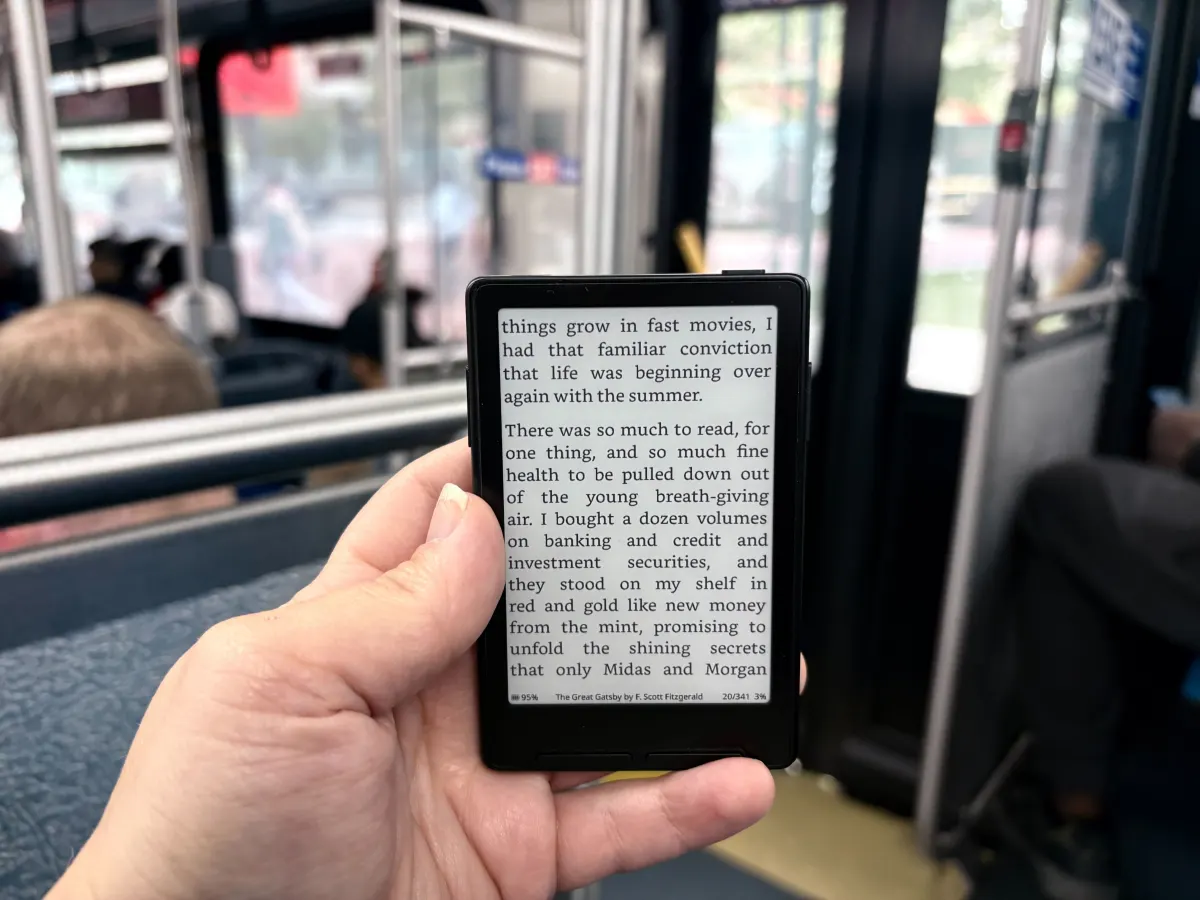
The search for digital serenity often feels like a futile quest in our hyper-connected world. We’re constantly bombarded, perpetually online, and inextricably linked to screens that promise connection but often deliver distraction. But what if a tiny, MagSafe-compatible e-ink reader could offer a genuine escape? Enter the Xteink X3, an $80 gadget that promised to be my personal antidote to doomscrolling, a compact haven for reading in an Instagram-obsessed world. I didn’t know I was searching for such a device until it materialized, a delightful whisper of calm in the digital storm.
Could this diminutive device truly reshape my habits, help me reclaim my attention, and finally cure my social media addiction? Over two weeks, I put the X3 through its paces, hoping to trade endless feeds for engaging narratives. Here’s what I found.
Key Takeaways
- A Niche, Addictive Gadget:The Xteink X3 is a uniquely appealing, MagSafe-compatible e-ink reader, perfect for brief, focused reading moments. Its physical integration with a smartphone offers a compelling alternative to doomscrolling, provided the user commits to the habit change.
- Software & Content Hurdles:Out-of-the-box firmware is clunky, necessitating a community-made open-source alternative like CrossPoint. A significant drawback is the inability to easily access mainstream e-books from platforms like Libby or Kindle due to DRM, pushing users towards public domain or self-curated content.
- Stellar Battery, Proprietary Charging:Boasting exceptional battery life (weeks on a single charge), the X3 minimizes charging frequency. However, it relies on an inconvenient magnetic charger, adding another unique cable to the tech drawer.
The Xteink X3: A Vision of Digital Serenity
It was an almost mythical discovery: a device I never knew existed, yet instantly recognized as a solution to a pervasive modern problem. The Xteink X3 arrived not just as a gadget, but as a promise – a tiny, MagSafe-compatible e-ink reader designed to cling to my iPhone like a digital security blanket. The idea was simple, elegant, and profoundly appealing: instead of reflexively opening TikTok or Instagram, I could flip my phone over and immerse myself in a book. For someone who devours at least 50 books a year but probably spends even more time scrolling, the siren song of social media is a constant struggle against a calmer, more focused existence.
I’ve attempted reading on my phone before, hoping to trick my brain into a literary escape. But the vibrant screen, the ever-present notifications, and the easy swipe to an app that tells me the president is threatening an entire country – it all undermines the very peace I seek. E-ink devices, like a Kindle, offer that distinct, soothing experience. The X3, with its promise of MagSafe integration, felt like the perfect bridge between my phone’s convenience and an e-reader’s tranquility.
First Impressions & Physicality
My excitement was palpable. I tracked the X3’s journey with the fervor of a hawk, constantly refreshing the link until it finally landed on my doorstep. My biggest concern was fit; while I’d meticulously checked its dimensions against my iPhone 16, I knew the previous X4 model was only suitable for larger Pro Max devices. Yet, my worries were unfounded. The X3 snapped onto the back of my phone with satisfying precision, as if custom-molded for my device. It felt right, instantly.
The timing was impeccable, arriving just two hours before I headed to a Phillies game. Naturally, my priority shifted from game prep to loading books onto the X3. My mission: to capture the absurdity of reading “The Power Broker” in a raucous baseball stadium. Behold, my subtle protest against digital noise:
For the first few days, the X3 remained magnetically attached to my phone. This made me slightly uneasy, as I’m accustomed to a Pop Socket wallet and often leave my physical wallet at home. However, I soon discovered that the X3 was just as accessible and useful when carried in my purse or pocket. This flexibility is a huge plus. My unit also shipped with a compact, magnetic case, which for just $9, offers excellent screen protection and improves grip. It can also magnetize to your phone, though it feels a tad less secure than the bare X3. For now, I’m still weighing whether to return to a traditional wallet setup to keep the X3 permanently affixed.
Living with the X3: The Reading Experience
Over my two-week testing period, the X3 genuinely nudged me towards more reading. Waiting in line at the coffee shop, or for the bus, the simple act of pulling out the e-reader instead of defaulting to Instagram became a satisfying ritual. The small 3.7-inch screen proved surprisingly comfortable to read on, defying initial concerns about its diminutive size. However, it’s crucial to stress that simply owning the device isn’t a magical habit transformer. You have to *remember* it’s there, this tiny portal to hundreds of books in your pocket, and consciously choose it over your phone’s more immediate (and often less rewarding) temptations.
Techcrunch event
San Francisco, CA
|
October 13-15, 2026

Under the Hood: Firmware, Charging, and Connectivity
While the X3 itself is delightful, its out-of-the-box software experience is decidedly less so. The stock firmware is clunky, bordering on unintuitive. This was expected, as the Xteink Reddit community enthusiastically champions CrossPoint, a free, open-source, community-made firmware. As someone whose primary language is words, not code, the idea of flashing custom firmware felt daunting. Yet, with CrossPoint’s detailed website instructions and a few helpful YouTube videos, the process proved manageable. My initial difficulties were self-inflicted – attempting to install the X4 firmware on my X3. A rookie mistake, but one you can easily avoid!
Another point of contention for some users is the X3’s charging method. Unlike its larger sibling, the X4, it eschews USB-C for a magnetic charger. Yes, it’s annoying to add yet another proprietary cable to the ever-growing collection. However, my frustration was quickly tempered by the X3’s astonishing battery life. After two weeks of consistent use, the charge had only dropped from 100% to a still-robust 96%. This means you’ll rarely need that extra cable. Furthermore, adding new books doesn’t even require the charger; files can be transferred wirelessly from your phone or computer. The Wi-Fi transfer process isn’t exactly “user-friendly,” but I managed to figure it out without resorting to Google.
The Content Conundrum
Perhaps the biggest drawback of the Xteink X3 lies in its content ecosystem – or lack thereof. Much of my digital reading comes from Libby, which allows seamless borrowing of ebooks from my local library directly to my Kindle. Unfortunately, you can’t (legally) transfer these protected .epub files to an Xteink reader. The same applies to Amazon’s Kindle store, a classic example of corporate walled gardens. This incompatibility is a significant hurdle for many. However, it also contributes to the device’s unique charm: it’s a “dumb” device, devoid of apps and touch screens, a startlingly refreshing contrast in an era of AI-enabled refrigerators and smart everything.

Despite the DRM limitations, finding engaging .epub files for the X3 isn’t difficult. A vast library of public domain works is readily available for free download (I’m finally getting around to “Pride and Prejudice”). I also stocked up on entire .epub catalogs from sci-fi authors like Charlie Jane Anders and Annalee Newitz during a charity fundraiser. For those who want to read online articles or blogs, a free program like Calibre can easily convert them into .epub format. This forces a more intentional approach to content acquisition, perhaps even a healthier one.
The Verdict: A Step Towards Digital Wellness, Not a Magic Bullet
So, did the Xteink X3 “fix” me? Am I now a reformed digital citizen, free from the clutches of social media, diligently consuming classic literature instead of obscure poetry from my college days? It’s not that simple. No single gadget can magically rewire deeply ingrained habits. The X3 is a tool, an enabler, but it demands active participation. It’s a reminder, a gentle nudge, that there are more enriching ways to fill those tiny pockets of downtime than mindless scrolling. If you’re willing to meet the X3 halfway, to embrace its quirks and consciously choose it, then yes, it can genuinely spare you from a bit more brainrot.
Bottom Line
The Xteink X3 isn’t a digital panacea, nor is it designed for hardcore e-reader enthusiasts seeking seamless library integration. Instead, it carves out a unique niche for the digitally overloaded user craving intentional, bite-sized reading moments throughout their day. For those willing to embrace its “dumb device” ethos, navigate its open-source firmware, and curate their own content library, this $80 gadget offers a surprisingly effective, albeit effort-requiring, pathway to reclaim focus from the smartphone’s incessant demands. It’s an experimental, endearing tool for the modern attention-span challenged – a delightful little distraction from distraction itself.
When you purchase through links in our articles, we may earn a small commission. This doesn’t affect our editorial independence.
{content}
Source:{feed_title}