
Iraqi Militia Commander Charged in U.S. with Plotting Attacks on Jewish Sites and Terror Campaigns in Europe
NEW YORK – A commander of an Iranian-backed militia, Mohammad Baqer Saad Dawood al-Saadi, has been charged in the United States with orchestrating plots to attack Jewish sites in the United States, including an unspecified synagogue in New York City, and allegedly carrying out terrorist attacks across Europe. These actions are described in a criminal complaint as part of a broader campaign of retaliation attributed to Iran following a period of heightened regional tensions and military actions that began in early 2020.
The charges against Mr. al-Saadi, 32, were unsealed on Friday in a federal court in Manhattan. The complaint accuses him of planning at least 20 attacks targeting U.S. and Israeli interests in Europe and Canada since late February 2020. Mr. al-Saadi was recently detained in Turkey and subsequently transferred into U.S. custody, according to his lawyer, who stated this during the court proceedings on Friday. Mr. al-Saadi did not enter a plea at the initial hearing.
According to the complaint, Mr. al-Saadi holds a leadership position within Kataib Hezbollah, an Iraqi militia designated by the U.S. as a foreign terrorist organization since 2009. Kataib Hezbollah functions as a significant proxy for Iran’s Islamic Revolutionary Guard Corps (IRGC), a powerful branch of the Iranian military responsible for projecting Tehran’s influence across the Middle East. The group has a documented history of engaging in attacks against American forces and diplomatic targets within the region. However, U.S. authorities emphasize that Kataib Hezbollah traditionally had not been known for organizing attacks outside the Middle East, making the alleged plots a significant expansion of its operational scope.
The unsealed complaint further details Mr. al-Saadi’s alleged involvement in planning to target “Americans and Jews” in various U.S. cities, including Los Angeles and Arizona, in addition to the New York City synagogue plot. This marks a notable shift, suggesting an intent to directly threaten individuals and communities within the continental United States. The timing of these alleged plots coincided with a period of elevated security concerns in Europe and the United States, particularly around Jewish institutions, amid warnings from authorities regarding potential retaliatory actions. During this time, Iranian-aligned forces were also accused of carrying out attacks on U.S. military installations in the Middle East and targeting critical infrastructure in Arab nations allied with the United States, further underscoring the regional instability.
A critical aspect of the complaint directly links Mr. al-Saadi to an obscure group that emerged in March 2020, known as Harakat Ashab al-Yamin al-Islamiyya (Movement of the Companions of the Right). This group claimed responsibility for a series of attacks in London, Belgium, and the Netherlands, deliberately obscuring its alleged connections to the established Iraqi militia, Kataib Hezbollah. Counterterrorism officials at the time had launched investigations into whether Harakat Ashab al-Yamin al-Islamiyya had ties to Iran and if these attacks represented a new strategy involving low-cost, unsophisticated methods designed to instill fear within Jewish communities across Europe.
Investigators noted similarities between the logos of Harakat Ashab al-Yamin al-Islamiyya and Kataib Hezbollah, leading U.S. authorities to conclude, as stated in the complaint, that the former was operating as a front for the latter. The complaint, signed by a special agent of the Federal Bureau of Investigation (FBI), asserts that “Essentially overnight, Harakat Ashab al-Yamin al-Islamiya was able to activate terrorist cells across Europe” in direct response to the escalating regional tensions. Authorities and lawyers involved in the European cases indicated that individuals accused of carrying out these attacks did not appear to have established links to known extremist organizations, suggesting they were likely recruited through financial inducements. This wave of violence significantly heightened anxiety among European Jewish communities, who feared becoming direct targets.
The arrest of Mr. al-Saadi occurred during a period when the U.S. administration under then-President Donald Trump was considering further military actions aimed at compelling Iran to comply with its demands. Since early 2020, U.S. and Israeli operations had reportedly focused on targeting high-level Iranian officials and disrupting the government’s capacity to manage its network of proxy groups and engage in perceived terrorist activities across the region. The U.S. Department of Justice has previously reported disrupting numerous plots linked to Iran, including at least one alleged scheme to assassinate a former U.S. president, though these were not always directly organized or executed by Iran or its primary proxies.
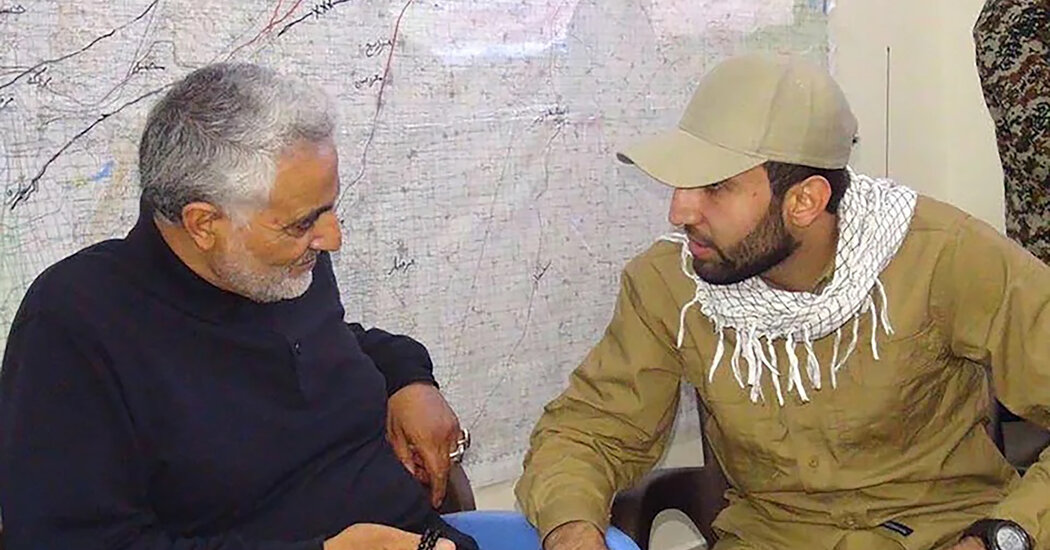
Kataib Hezbollah, from its inception, has maintained close operational ties with Iran’s Quds Force, the expeditionary arm of the IRGC. A primary objective for Kataib Hezbollah has consistently been the expulsion of U.S. forces from Iraq. Its persistent attacks on U.S. Army positions in Iraq and Syria over many years contributed directly to Washington’s decision in 2009 to designate the group as a foreign terrorist organization. The complaint further highlights Mr. al-Saadi’s alleged close collaboration with key Iranian and Iraqi militant leaders. He reportedly worked with Maj. Gen. Qassim Suleimani, the former head of Iran’s Quds Force, and Abu Mahdi al-Muhandis, the Iraqi militant leader who commanded Kataib Hezbollah. Both Suleimani and al-Muhandis were killed in a U.S. drone strike in January 2020, an event that significantly escalated tensions in the region and led to reciprocal actions.
Mr. al-Saadi is considered one of the most senior figures linked to Iran and its proxy networks to have been apprehended by the United States since the onset of this particular period of conflict and heightened tensions. His case appears to embody the kind of retaliatory terrorist act that U.S. officials have long anticipated and sought to prevent. U.S. authorities, including the FBI, have invested considerable resources in tracking and disrupting such alleged plots.
Jay Clayton, the U.S. Attorney for the Southern District of New York, commented on the charges, stating, “Mr. al-Saadi allegedly attempted to disrupt American society through intimidation and violence. In a righteous and just contrast, his prosecution will highlight the best of our country.” Jessica S. Tisch, the New York City Police Commissioner, affirmed the department’s collaboration with federal and international law enforcement partners in disrupting the alleged plot and working with the leadership of the targeted synagogue to ensure its safety and security.
The criminal complaint meticulously outlines a series of alleged attacks across Europe, attributed to Harakat Ashab al-Yamin al-Islamiyya and, by extension, to Mr. al-Saadi’s network. Since March 9, 2020, these incidents reportedly include attacks against synagogues in Liège, Belgium, and Rotterdam, Netherlands, as well as against a Jewish school in Amsterdam. Additionally, the complaint cites attacks against financial institutions with U.S. ties, specifically the Bank of New York Mellon in Amsterdam and the Bank of America building in Paris. In London, there was an alleged arson attack on four Hatzalah ambulances, which provide emergency medical services primarily to Orthodox Jewish communities. Further, in late April 2020, an individual in London allegedly stabbed and seriously injured two Jewish men, one of whom was a dual U.S.-British citizen, an incident also attributed to this alleged network.
The complaint provides insights into how the alleged plots were coordinated. It states that Mr. al-Saadi, in a phone call on March 20, 2020, discussed the ongoing European terrorist attacks with an individual identified as “a source of information for the F.B.I.” (SOI-1). During this conversation, which was recorded by SOI-1, Mr. al-Saadi reportedly sought assistance in planning additional attacks within the United States and indicated a willingness to engage in lethal violence. He referred to “Ashab al-Yamin” during the call but noted that the group did not require help in Europe, stating, “Things are working for us here in Europe.” SOI-1 has voluntarily provided information to the FBI regarding Mr. al-Saadi’s activities. The complaint further alleges that Mr. al-Saadi claimed to be “running multiple teams” and inquired whether SOI-1 could facilitate attacks in the United States and Canada, thereby expanding the potential geographic scope of the alleged network’s operations.
Why This Matters
The charges against Mohammad Baqer Saad Dawood al-Saadi represent a significant development in global counterterrorism efforts and carry several profound implications:
Expanded Reach of Iranian-Backed Proxies:Historically, Iranian-backed groups like Kataib Hezbollah have primarily operated within the Middle East, focusing on regional objectives and targeting U.S. and allied interests there. The alleged plots and attacks in Europe, Canada, and the United States, if proven, signify a substantial expansion of their operational theater. This suggests a willingness and capability to project power and conduct terror operations far beyond their traditional geographic boundaries, posing a direct threat to Western nations and their domestic security.
Direct Threat to Jewish Communities:The explicit targeting of synagogues, Jewish schools, and individuals within Jewish communities in both the United States and Europe highlights a concerning escalation of antisemitic violence, potentially sponsored by state actors or their proxies. This not only fuels fear and insecurity within these communities but also underscores the complex interplay between geopolitical conflicts and targeted identity-based attacks, requiring heightened vigilance and robust protective measures globally.
U.S. Counterterrorism Strategy:The arrest of a high-ranking militia commander like Mr. al-Saadi demonstrates the persistent efforts of U.S. law enforcement and intelligence agencies to track, apprehend, and prosecute individuals involved in international terrorism plots, regardless of their operational base. It reinforces the U.S. commitment to disrupting foreign-sponsored terror networks and underscores the importance of international cooperation, as evidenced by Mr. al-Saadi’s detention in Turkey and transfer to U.S. custody.
Nature of Retaliatory Operations:This case provides a detailed look into the alleged mechanisms of state-sponsored retaliation. The use of an obscure front group (Harakat Ashab al-Yamin al-Islamiyya) and the recruitment of seemingly unaffiliated individuals with financial incentives illustrate sophisticated, yet deniable, tactics employed to carry out terror attacks. Understanding these methods is crucial for governments and security agencies in developing effective counter-strategies against similar threats.
Geopolitical Tensions and Regional Stability:The alleged plots are presented as a direct response to heightened tensions and military actions involving the U.S., Israel, and Iran. This case illustrates how regional conflicts can spill over into global terrorism, impacting stability far beyond the immediate theater of conflict. It underscores the ongoing challenges in managing proxy warfare and the delicate balance required to prevent escalation into broader international confrontations.
FBI Arrests Man Allegedly Plotting Attacks on U.S. Jewish Sites, Linked to Iran-Backed Groups
New York City, NY– Federal authorities have arrested Bassem al-Saadi, a 43-year-old Iraqi national, on charges related to an alleged plot to carry out terrorist attacks against Jewish institutions in New York, Los Angeles, and Scottsdale, Arizona. Al-Saadi is accused of conspiring to provide material support to U.S.-designated foreign terrorist organizations, including Kataib Hezbollah and the Islamic Revolutionary Guard Corps (IRGC), and conspiracy to bomb places of public use.
According to a criminal complaint unsealed by the U.S. Attorney’s office in Manhattan, al-Saadi, who entered the United States from Canada in March 2024, allegedly sought to orchestrate a “martyrdom operation” and communicated with an FBI confidential source (referred to as SOI-1) regarding potential targets and operatives.
The complaint details a series of communications beginning on March 10, 2024, where al-Saadi allegedly expressed his desire to conduct attacks in the United States. Initially, these discussions reportedly included targeting American soldiers. However, by March 19, al-Saadi’s focus, as described in the complaint, shifted to “Zionist Jews” and “Jewish people” in New York, which he framed as part of a “war between good and evil.”
Prosecutors allege that in a March 21 call, al-Saadi spoke of planning “attacks” within the United States, specifically mentioning “Jewish synagogues” and “Zionist headquarters” as potential targets. These alleged discussions escalated on April 1, when al-Saadi reportedly asked SOI-1 to locate an individual capable of carrying out such attacks and inquired about the associated costs. SOI-1 then indicated that a “Mexican person” willing to conduct a bombing operation could be found.
During the April 1 call, al-Saadi allegedly stated, “This war will not end. Either they eradicate us, or we eradicate them,” underscoring what prosecutors describe as his extremist views and intent.
Two days later, on April 3, the confidential source introduced al-Saadi to an undercover law enforcement officer who was posing as a member of a Mexican cartel. This officer was presented as someone capable of executing a terrorist attack in New York or other locations within the U.S.
That same day, al-Saadi allegedly sent the purported cartel member a photograph and a map indicating the precise location of a prominent Jewish synagogue in Manhattan. Accompanying this, he reportedly sent an Arabic document that described the synagogue’s congregation as supporting “the right for Israel to exist.” The complaint further alleges that al-Saadi also transmitted photos and maps of two additional potential targets: prominent Jewish community centers located in Los Angeles, California, and Scottsdale, Arizona.
The court documents state that al-Saadi agreed to pay $10,000 for these proposed attacks. On April 4, he allegedly paid the undercover officer $3,000 in cryptocurrency, an initial payment made in anticipation of the planned synagogue attack in New York.
On April 6, the complaint details that al-Saadi relayed an urgent message through SOI-1 to the purported cartel member, stating that “the operation needs to happen TODAY.” That evening, the undercover officer sent al-Saadi a video, which showed a police presence on the block where the targeted synagogue was located. Approximately an hour later, al-Saadi reportedly requested an update on the attack’s status but received no response.
The following morning, April 7, al-Saadi allegedly messaged the purported cartel member again, inquiring what had transpired and why the operation had not been completed. He was arrested on April 11.
Al-Saadi faces multiple serious charges, including conspiring to provide material support to Kataib Hezbollah and the Revolutionary Guards, and conspiracy to bomb a place of public use. Kataib Hezbollah is an Iran-backed Iraqi Shiite militia designated as a foreign terrorist organization by the U.S. government. The Islamic Revolutionary Guard Corps (IRGC) is Iran’s elite military and security force, also designated by the U.S. as a foreign terrorist organization.
During his court appearance on Friday, al-Saadi appeared in army green pants and a black shirt. He nodded as Magistrate Judge Sarah Netburn read the charges against him. Through an interpreter, he engaged in an animated discussion with his lawyer, Andrew Dalack. Mr. Dalack informed the judge that his client understood the charges and wished the court to recognize him as a “political prisoner.” As the hearing concluded, Mr. Dalack reiterated his client’s desire for the court to know that he considers himself “a political prisoner and prisoner of war and should be treated as such.”
Euan Ward and Adam Goldman contributed reporting.
Why This Matters
This arrest underscores the persistent threat of terrorism on U.S. soil, particularly from individuals allegedly linked to or inspired by foreign militant groups. The charges against Bassem al-Saadi highlight several critical issues:
- National Security and Counter-Terrorism Efforts:The alleged plot to target religious institutions across multiple U.S. cities demonstrates the ongoing need for vigilance and robust counter-terrorism operations by federal law enforcement agencies like the FBI. The successful disruption of this alleged scheme, involving an undercover operation and confidential sources, illustrates the proactive measures taken to prevent potential acts of violence.
- Foreign Influence and Designated Terrorist Organizations:The alleged connections to Kataib Hezbollah and the Islamic Revolutionary Guard Corps (IRGC) signal the potential for foreign state-sponsored or affiliated actors to instigate violence within the United States. Both groups are designated by the U.S. as foreign terrorist organizations, and any alleged material support to them carries severe legal consequences. This case emphasizes the complex nexus between international geopolitical tensions, particularly those involving Iran, and domestic security concerns.
- Targeting of Religious and Ethnic Communities:The alleged focus on Jewish synagogues and community centers is particularly alarming. It raises concerns about the safety and security of religious and ethnic minority communities in the U.S. and highlights the potential for religiously or ideologically motivated hate crimes to escalate into acts of terrorism. In a climate of heightened geopolitical sensitivities, such alleged targeting can exacerbate fear and division within society.
- Legal Precedent and Justice System:The charges of conspiring to provide material support to designated terrorist organizations and conspiracy to bomb public places are exceptionally serious, carrying significant penalties. The defendant’s claim of being a “political prisoner” introduces a complex dimension to the legal proceedings, which will likely involve a thorough examination of intent, evidence, and constitutional rights. The outcome of this case will be closely watched as it progresses through the U.S. judicial system.
- Public Awareness and Community Preparedness:While law enforcement works to mitigate threats, incidents like these serve as a reminder for communities, especially those identified as potential targets, to maintain vigilance and cooperate with authorities to ensure public safety.