
Audio of this article is brought to you by the Air & Space Forces Association, honoring and supporting our Airmen, Guardians, and their families. Find out more at afa.org
U.S. Air Force Faces Widespread Aircraft Maintenance Delays, GAO Report Reveals Masked Extent
WASHINGTON D.C.– Nearly three-quarters of U.S. Air Force aircraft experienced longer-than-expected depot-level maintenance between fiscal years 2019 and 2024, according to a new report from the Government Accountability Office (GAO). The report highlights a growing challenge within the Air Force’s aging fleet: a significant rise in unplanned repairs that are delaying critical maintenance work.
Crucially, the GAO found that the true extent of these delays has been obscured by the Air Force’s practice of revising its target completion timelines after unexpected work emerges. This policy, the report concludes, prevents an accurate understanding of maintenance challenges and hinders the ability to make meaningful comparisons across the fleet.
“As a result, the Air Force is not reporting the full extent of depot maintenance challenges and may not be able to make accurate comparisons across the fleet,” the GAO report stated, emphasizing a lack of transparency in performance metrics.
Understanding Depot Maintenance
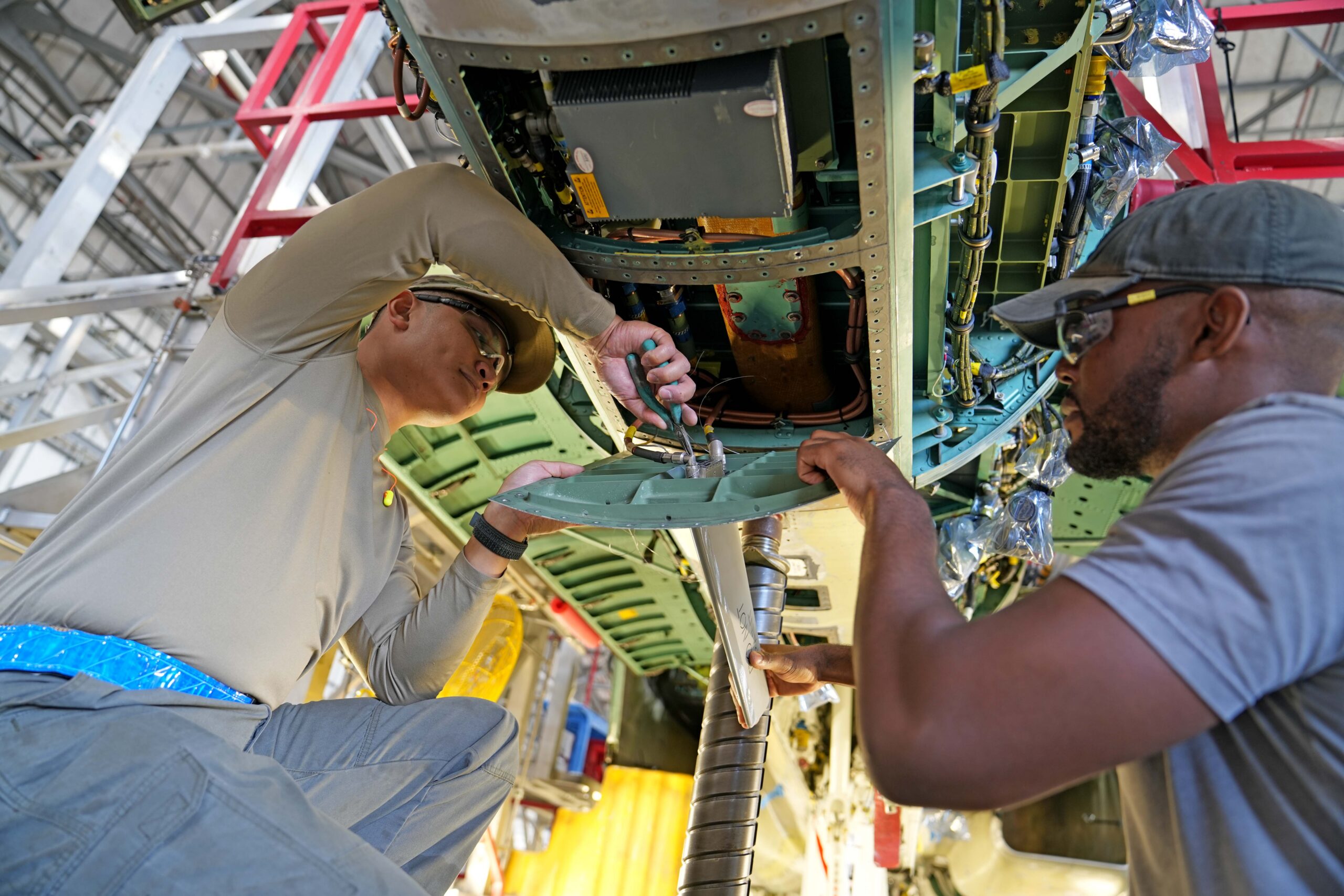
Depot maintenance represents the most intensive level of military aircraft upkeep, encompassing comprehensive repairs, overhauls, upgrades, or rebuilding of components and structures, as defined by U.S. law. This essential work is carried out at three primary Air Force logistics complexes:
- Ogden Air Logistics Complex at Hill Air Force Base, Utah
- Warner Robins Air Logistics Complex at Robins Air Force Base, Ga.
- Oklahoma City Air Logistics Complex at Tinker Air Force Base, Okla.
Aircraft are scheduled for depot maintenance based on predetermined criteria, such as accumulated flight hours or time in service. Upon an aircraft’s arrival, personnel at these depots establish an “original target completion date,” an initial estimate for the duration of all anticipated work.
The Challenge of Unplanned Work
However, once aircraft are disassembled and inspected, maintainers frequently uncover unforeseen issues that require extensive additional repairs. The GAO report cited examples from the Ogden ALC, where officials noted the discovery of previously unidentified corrosion or stress cracks.
Air Force officials acknowledge that such unplanned work is becoming increasingly common, a direct consequence of the fleet’s advancing age. As aircraft operate for longer periods, they are more prone to wear, fatigue, and deterioration not initially accounted for in scheduled maintenance plans.
Despite the growing prevalence of these unexpected repairs, understanding their full impact is complicated by current Air Force Materiel Command (AFMC) policy. The GAO discovered that this policy permits officials to adjust target completion dates *after* unplanned work is identified and resolved. While not universally applied, this practice significantly alters reported performance metrics.
The Air Force assesses its depots’ performance against these *revised* target dates, rather than the original estimates. This approach, according to the GAO, prevents service leaders from gaining a comprehensive understanding of how unplanned work truly slows down maintenance cycles.
Distorted Metrics and Hidden Delays
The disparity between original and revised targets reveals a stark contrast in perceived delays. In fiscal year 2024, for instance, 73 percent of aircraft undergoing depot maintenance were delayed when measured against their original target date. However, using the revised target dates, only 34 percent were considered delayed.
Both figures indicate an increase in delays since 2019, but the original target date metric highlights a dramatic escalation, more than doubling from 31 percent over six years. This suggests that while some delays are acknowledged, the full scale of the problem is being significantly understated.
AFMC officials have defended the use of revised targets, explaining they aim to avoid penalizing depots for issues beyond their control, such as unexpected structural damage or parts shortages. Yet, they conceded to the GAO that reporting timelines based on the original target dates would provide a more complete picture of delays.
The GAO argues that the Air Force should primarily use the original target metric while implementing a mechanism for depots to document and explain delays caused by unforeseen work. Currently, such a system is inadequate.
Limitations in Tracking and Analysis
The report criticized the Air Force’s existing root cause reporting system, designed to track the reasons for maintenance delays, for several significant limitations. The system offers only seven broad categories for root causes, none of which explicitly cover “unplanned work.” Consequently, many aircraft that spend extra weeks or months in depot due to unexpected issues are not officially categorized as delayed because their target completion dates were revised.
A striking example cited by the GAO involved an F-15 fighter jet entering the Warner Robins depot with an initial estimate of 151 days for completion. Unplanned work ultimately extended its stay to three years – more than seven times the original estimate. Despite this massive overrun, the aircraft was not officially deemed “delayed” due to target date revisions.
Furthermore, even if specific categories for unplanned work were introduced, the GAO found that Air Force Materiel Command currently lacks an enterprise-wide system for analyzing these root causes. This critical analysis is left to individual program offices, preventing a holistic understanding of systemic issues.
“By not periodically analyzing these data, the Air Force is missing opportunities to assess trends and recurring problems and to better understand the root causes of delays to ultimately improve depot maintenance timeliness,” the report warned.
Staffing and Recommendations
While the report found staffing levels at the three depots to be relatively healthy, generally at or above 90 percent, it suggested that depots could improve their understanding of private sector pay scales. This would enable them to better compete for and retain personnel in highly specialized or difficult-to-fill positions.
The GAO concluded its report with 10 recommendations for the Air Force and the Pentagon. These included directives to primarily use the original timeline as the key performance metric, limit target date revisions after work has begun, incorporate unplanned work as a specific category for delay root causes, and conduct regular enterprise-wide analysis of delay data.
The GAO cautioned, “Without complete and credible metrics to understand the full extent of depot maintenance delays, decision-makers will not fully understand the sustainment challenges related to its aging fleet. Consequently, they will not have the information needed to determine the resources necessary to sustain the Air Force’s aging fleet and thereby be able to accurately plan for impacts on aircraft availability for training and operations.”
The Air Force generally concurred with most of the GAO’s recommendations, but expressed only partial agreement regarding the inclusion of unplanned work categories in the delay root causes tracking system. The Air Force stated it would ensure “Air Force Materiel Command properly documents delays for unplanned work or induced delays in the proper locations.”
Why This Matters
The findings of this GAO report carry significant implications for U.S. national security, defense spending, and the operational readiness of its air power. The persistent and often masked delays in depot-level maintenance directly affect the availability of Air Force aircraft for critical missions, training, and global deployments.
National Security and Readiness:A modern military relies heavily on its assets being operational. When aircraft are stuck in maintenance for extended periods, it directly reduces the number of platforms available for combat, surveillance, humanitarian aid, or training exercises. This can impact the Air Force’s ability to respond to emerging threats, project power globally, or support allies, potentially undermining U.S. national security interests and commitments worldwide.
Taxpayer Stewardship:Inefficient maintenance processes, particularly those extended by unforeseen repairs and compounded by unclear tracking, can lead to increased costs. Longer maintenance cycles mean higher labor costs, potentially more expensive parts due to urgency, and prolonged downtime for valuable assets. This represents a less-than-optimal use of taxpayer dollars allocated for defense, raising questions about accountability and financial management within the Department of Defense.
Aging Fleet Challenges:The report underscores a broader systemic challenge facing the U.S. military: managing an increasingly aging fleet across all services. As aircraft, ships, and ground vehicles remain in service longer than initially planned, the incidence of unexpected repairs and the complexity of maintenance will naturally increase. The Air Force’s experience with depot delays could serve as a bellwether for similar issues in other branches, necessitating a comprehensive strategy for sustainment and modernization.
Transparency and Accountability:The GAO’s critique of the Air Force’s practice of revising target completion dates highlights a crucial issue of transparency. Without accurate and unvarnished metrics, policymakers, congressional oversight committees, and the public cannot fully understand the challenges facing the Air Force. This lack of clear data can hinder informed decision-making regarding budgeting, resource allocation, and the overall health of the nation’s air fleet, potentially eroding public trust in military management.
Future Planning and Modernization:Accurate data on maintenance delays and their root causes is essential for long-term strategic planning. Without it, the Air Force struggles to precisely estimate future sustainment costs, effectively plan for the introduction of new platforms, or make informed decisions about retiring older aircraft. This directly impacts the Air Force’s ability to maintain technological superiority and adapt to future operational environments, ensuring it remains a formidable force for decades to come.
Audio of this article is brought to you by the Air & Space Forces Association, honoring and supporting our Airmen, Guardians, and their families. Find out more at afa.org