
FOX Business correspondent Madison Alworth reports on new data showing Generation Z retail spending outpacing other generations on ‘Varney and Co.’
**Key Takeaways:**
- **Demographic Tailwinds for Brick-and-Mortar:** Gen Z’s increasing preference for physical shopping experiences, coupled with their rising spending power, presents a significant and unexpected tailwind for mall Real Estate Investment Trusts (REITs) and experience-driven retailers, challenging the long-held “retail apocalypse” narrative.
- **Strategic Imperative for Experiential Retail:** To capture this lucrative demographic, retailers and mall operators are compelled to invest heavily in experiential elements, digital integration within physical spaces, and curated tenant mixes, shifting capital allocation towards CapEx for store redesigns and technology adoption.
- **Resilience Amidst Macro Headwinds:** The sustained strength in overall retail sales, bolstered by Gen Z’s unique spending habits, signals a nuanced consumer landscape. This resilience, even amidst higher interest rates and economic uncertainty, offers a degree of stability for the consumer discretionary sector, though profitability will hinge on adaptive strategies.
In a compelling paradigm shift that is forcing investors and retail executives to re-evaluate their investment theses, Generation Z shoppers are emerging as the unexpected saviors of America’s malls. This demographic’s distinct spending habits, favoring tactile and social in-person experiences over the solitary click of an online cart, are not just a fleeting trend but a foundational shift fueling a new chapter for physical retail. Their burgeoning influence is rapidly becoming a central focus for retailers, mall operators, and institutional investors keen on understanding the evolving dynamics of consumer behavior and its implications for market performance.
FOX Business’ Madison Alworth recently reported on “Varney & Co.,” detailing how this generational preference is driving significant capital expenditure and strategic overhauls within the retail real estate sector. Malls are undergoing extensive redesigns, incorporating elements specifically engineered to attract and retain younger shoppers. This includes the integration of social media-friendly dressing rooms – spaces designed for content creation as much as clothing trials – alongside diverse entertainment offerings such as indoor rock climbing walls and pop-up activations. These investments reflect a clear strategic pivot: to transform shopping centers from mere transaction hubs into vibrant social and experiential destinations.

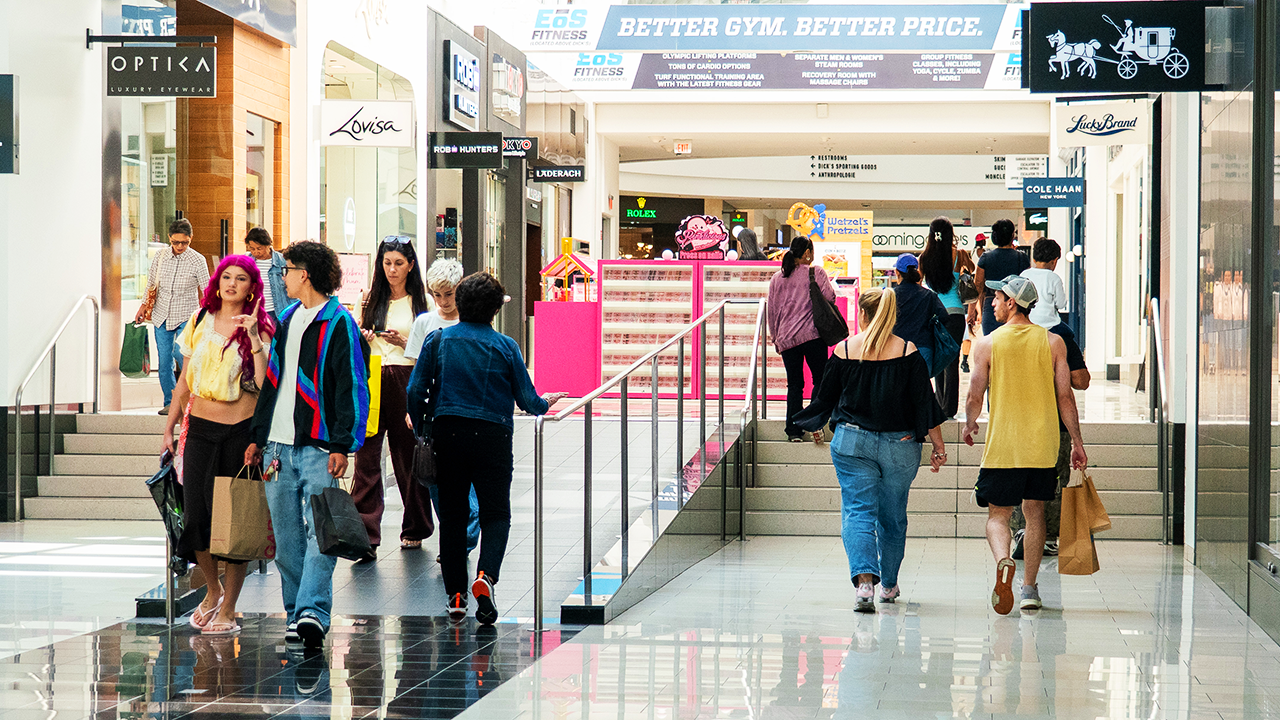
Shoppers at a mall in Glendale, California, U.S.(Kyle Grillot/Bloomberg / Getty Images)
The financial implications of Gen Z’s spending power are staggering. According to data analytics firm NielsenIQ, Gen Z’s global retail spending is projected to exceed an astounding $12 trillion by 2030. This growth trajectory is anticipated to outpace every other generation, signifying a massive reallocation of consumer capital that retail businesses and their shareholders cannot afford to ignore. Furthermore, granular data from Circana underscores this preference for physical interaction: shoppers aged 18 to 24 made a remarkable 62% of their general merchandise purchases in physical stores last year, a stark contrast to the 52% recorded among consumers aged 25 and older. This 10-percentage-point differential highlights a significant behavioral divergence that is reshaping retail footprints and profitability models.
This demographic-driven resurgence comes at a time when the broader U.S. retail sector has demonstrated remarkable resilience. Despite persistent macroeconomic headwinds, including elevated inflation and higher interest rates that continue to pressure household budgets, consumer spending has remained robust. The Commerce Department’s latest data revealed U.S. retail sales climbed 0.5% in April from the previous month and a robust 4.9% year-over-year. This sustained spending, partly underpinned by strong labor markets and wage growth, provides a stable foundation upon which the Gen Z-led physical retail renaissance can build. It suggests that while economic uncertainty persists, discretionary spending, particularly within experience-rich environments, remains a priority for a significant segment of the population.
A ‘Mornings with Maria’ panel discusses the markets, the impact from the Spirit Airlines collapse and the resiliency of the U.S. economy.
Cory Scott, Executive Vice President of Asset Management at Macerich, a prominent mall REIT, succinctly captured the essence of this shift. He noted that younger shoppers are increasingly prioritizing experiences alongside their purchases. “They value experiences almost more than they value material things. So it’s as much about the journey as the shopping and the things that they’re taking home with them,” Scott explained. This insight is critical for understanding the capital allocation decisions being made by mall operators and their tenants. Investments are no longer solely focused on square footage and anchor tenants but increasingly on creating immersive environments that foster social interaction, entertainment, and a sense of community. This includes diversified tenant mixes, integrating digitally native brands’ pop-ups, health and wellness centers, and premium food and beverage offerings to create a holistic lifestyle destination.
For retailers, adapting to this experiential demand means a significant re-evaluation of store design, employee training, and inventory management. An omnichannel strategy is no longer just about offering online and in-store options; it’s about seamlessly blending the two, allowing for “buy online, pick up in store” (BOPIS) while simultaneously enhancing the in-store discovery and engagement. Brands like Lululemon have excelled at this, incorporating fitness classes and community spaces into their retail footprint. The successful execution of these strategies requires substantial capital expenditure (CapEx) and innovation, but the potential returns—in terms of brand loyalty, increased foot traffic, and higher average transaction values—are substantial.
The Gen Z perspective further reinforces this trend. As one shopper articulated to FOX Business, the appeal of malls lies in the social connection they provide, something online shopping fundamentally cannot replicate. “We grew up during like quarantine… Getting out and hanging out with people was a very big thing we didn’t appreciate during that time… As we grow older, we see that we need to be doing these things and it’s kind of fun.” This sentiment highlights a post-pandemic societal shift, where younger generations, having experienced isolation, place a premium on communal spaces and real-world interactions. For retail, this translates into a powerful demand signal for physical environments that serve as social hubs, fostering connection and shared experiences.
Companies like Burlington are already responding to this evolving landscape, with plans to open over two dozen new stores across the country in May. This expansion by a discount retailer suggests that value-consciousness, often associated with Gen Z, can coexist with a preference for physical shopping, especially when the in-store experience is efficient and appealing. While Walmart’s reported corporate job cuts signal ongoing efficiency drives and strategic re-alignments within the broader retail giant, the focused investment by mall operators and individual brands into experiential brick-and-mortar underscores a bifurcated market strategy: optimize back-office and e-commerce for scale, but innovate aggressively in physical spaces for engagement.
‘The Big Money Show’ panelists discuss how Gen Z is increasingly opting for skilled trades over college degrees and desk jobs, as well as new brokerage accounts letting teens invest.
The challenge for retailers and mall REITs lies in sustaining this momentum. It requires continuous innovation, agile adaptation to changing Gen Z preferences, and significant capital investment without sacrificing profitability. The return on investment (ROI) for these experiential upgrades will be a critical metric for investors, who will scrutinize occupancy rates, rental growth, and foot traffic conversion rates. Success will hinge on creating dynamic, ever-evolving spaces that remain relevant and appealing to a generation constantly seeking novelty and authentic connection.
Market Impact:
The pronounced shift in Gen Z’s shopping preferences carries significant market implications across several sectors. For mall REITs such as Simon Property Group (SPG), Macerich (MAC), and Kimco Realty (KIM), this trend represents a powerful catalyst for potential valuation upside, driven by increased occupancy rates, higher rental income growth, and robust capital expenditure into asset enhancement. Investors should watch for increased foot traffic data, tenant diversification strategies, and CapEx announcements from these entities. For individual retailers, particularly those in the consumer discretionary sector, a failure to adapt to experiential retail and omnichannel integration could result in market share erosion and depressed earnings. Conversely, companies investing in engaging physical spaces and seamless customer journeys stand to gain significant competitive advantage. The broader retail landscape will likely see continued bifurcation, with innovative, experience-centric brick-and-mortar concepts thriving, while traditional, undifferentiated stores face ongoing pressure. This dynamic will influence investment flows, favoring companies demonstrating strategic agility and a deep understanding of evolving consumer psychology, potentially leading to a re-rating of physical retail assets that were previously undervalued due to the “retail apocalypse” narrative. The resilience of overall retail sales, bolstered by Gen Z, could also temper some economic recessionary concerns, providing a more stable outlook for the consumer economy.
GET FOX BUSINESS ON THE GO BY CLICKING HERE