
Unlock the Editor’s Digest for free
Roula Khalaf, Editor of the FT, selects her favourite stories in this weekly newsletter.
**Key Takeaways**
1. **Macroeconomic Headwinds Stifle CRE Recovery:** The collapse of major deals like OpernTurm signals that elevated interest rates, tighter financing conditions, and persistent economic uncertainty continue to hinder a sustained rebound in European commercial real estate investment volumes, particularly for office assets.
2. **Geopolitical Risk Elevates Investor Caution:** Heightened geopolitical tensions, notably the conflict in the Middle East, are amplifying risk aversion among institutional investors. This leads to a re-evaluation of valuations and a deferral of large-scale, long-term commitments despite some underlying market fundamentals.
3. **Divergent Market Segments and Strategies:** While prime “trophy assets” face significant valuation challenges due to increased financing costs and a widening bid-ask spread, other segments like residential portfolios demonstrate resilience. This fosters a bifurcated market where investors increasingly adopt nuanced, sector-specific strategies to navigate uncertainty.
***
The largest European office building deal in years has spectacularly collapsed, sending a sobering signal across the commercial real estate (CRE) market that a hoped-for recovery remains elusive amidst persistent economic uncertainty and elevated financing costs. This unraveling suggests that the fragile confidence observed in early 2024, when investors cautiously eyed a rebound after a protracted downturn, is now giving way to renewed caution.
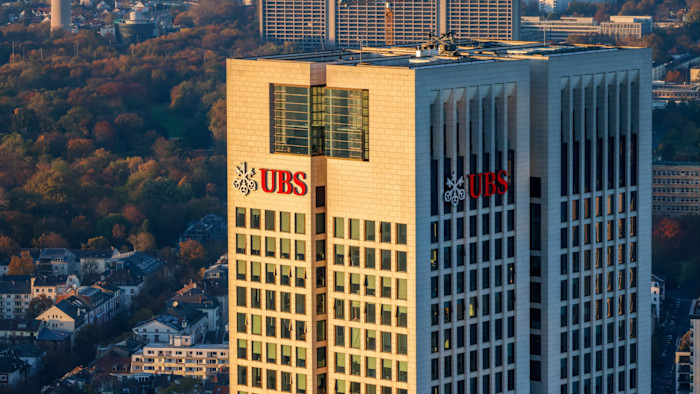
The roughly €850mn sale of OpernTurm, a flagship Frankfurt office tower, will not proceed after the prospective buyer, Munich entrepreneur Erich Schwaiger, reportedly failed to secure the necessary funding. This setback highlights the profound impact of the current macroeconomic climate on even the most coveted assets. OpernTurm, revered for its prime location in Frankfurt’s central business district and its stable, long-term tenants like Swiss banking giant UBS, represents a “trophy asset” – typically a beacon of stability and consistent income. Its failure to transact underscores how even seemingly robust investments are struggling to overcome the challenges of a tightened capital environment.
Schwaiger, who has been aggressively expanding his commercial property portfolio, particularly after the insolvency of René Benko’s Signa, had been in advanced talks to acquire the building from its current owners, JPMorgan Asset Management and Singapore sovereign wealth fund GIC. The proposed acquisition would have marked the largest European office building transaction since September 2022, when 21 Moorfields, Deutsche Bank’s UK headquarters in London, traded for €935mn. That such a significant deal could falter points directly to the prevailing illiquidity and the difficulty in bridging the bid-ask spread that has plagued the CRE market since interest rates began their rapid ascent in 2022.
The building’s current owners are now reportedly considering refinancing the asset instead, a common alternative when outright sales prove untenable. This strategy, however, often comes with its own challenges, including potentially higher debt service costs and stricter lending covenants in the current high-interest-rate environment, which could compress future returns. Schwaiger did not respond to a request for comment, while JPMorgan Asset Management and GIC declined to comment on the developments.
The broader market context reveals a landscape fraught with hesitation. While industry participants gathered at the MIPIM conference in Cannes earlier this year expressed cautious optimism for a recovery, that sentiment has quickly dissipated. The escalation of geopolitical tensions, particularly the US and Israel’s conflict with Iran, has injected a fresh wave of volatility into global markets, forcing investors to reassess risk premiums and long-term commitments. Analysts at MSCI succinctly noted, “It is external volatility, principally the conflict in Iran, that has once again spooked the market and caused the slowdown in dealmaking.”
Indeed, investment volumes in the first quarter across all commercial real estate sectors were down 10 per cent from a year earlier, according to MSCI data, a stark reminder that the hoped-for rebound remains elusive. The financing environment has become considerably more challenging, with central banks signalling a prolonged period of higher interest rates to combat inflation. This has translated into higher borrowing costs for buyers and tighter lending standards from banks, making it significantly harder to raise the large sums required for major transactions. The person familiar with the OpernTurm transaction highlighted that the desired valuation was likely unrealistic given the current climate, unless a buyer had a specific strategic imperative for diversification into the Frankfurt market that justified a premium.
This situation reflects a widening “valuation gap” or “bid-ask spread,” where sellers, often holding assets acquired in a lower interest rate environment, maintain higher price expectations, while buyers, facing increased cost of capital and higher risk perception, demand lower entry prices. As Fergus Keane, head of central London capital markets at BNP Paribas Real Estate, observed, the market had seemingly “bottomed out at the end of last year,” but the recent events indicate that “we’re going to be at the bottom for a bit longer.” Keane noted that this extended period at the bottom could create opportunities for certain buyers, such as well-capitalized family offices and US private equity players, who are positioned to acquire assets at potentially distressed or discounted valuations in what has become a clear “buyer’s market.”
Evidence of this cautious approach is not isolated to Frankfurt. Blackstone, a global private equity giant with extensive real estate holdings, has also reportedly paused the £250mn sale of Cargo, an office building in London’s Canary Wharf. While early discussions had taken place, Blackstone has opted to defer formal marketing, choosing to wait for a more favourable market environment. This tactical withdrawal underscores how even sophisticated institutional players are adjusting their disposition strategies in response to market volatility.
However, the real estate market is not monolithic. Some segments continue to show resilience and attract capital. Blackstone, for instance, has demonstrated a more nuanced approach. While pausing some office sales, it is actively pursuing other opportunities and exits. The firm is preparing to launch a more than £1bn sale of its British rental home provider, Leaf Living, and has already received an expression of interest for a substantial £400mn chunk of that portfolio. Furthermore, Brookfield Asset Management recently acquired a portfolio of Spanish housing from Blackstone for over €1bn in late March. These contrasting movements highlight a strategic shift towards asset classes with more stable income streams and stronger fundamentals, such as residential, which benefits from demographic trends and less exposure to the structural shifts impacting traditional offices.
James Seppala, Blackstone’s head of European real estate, maintains a positive outlook on certain aspects of the market, stating, “European real estate remains resilient despite the near‑term uncertainty, supported by solid fundamentals, highly supportive debt capital markets and growing investor demand for hard assets.” He added that Blackstone has closed or committed almost $4bn of sales across nearly 60 transactions in Europe since January, “meaningfully higher than the same period last year.” This suggests that while large, single-asset office deals face headwinds, activity persists in other segments, particularly smaller, diversified transactions or those focused on resilient sectors and geographies.
**Market Impact**
The sustained period of uncertainty, underscored by these high-profile deal collapses, has profound implications for the European commercial real estate market. Valuations, particularly for prime office assets, are likely to remain under significant pressure, compelling sellers to either recalibrate their price expectations downwards or explore costly alternative strategies such as refinancing or injecting more equity. For potential buyers, especially well-capitalized private equity firms and family offices with long investment horizons, this environment presents opportunistic entry points for quality assets at potentially reduced prices, shifting market power decisively towards buyers. Lending institutions will almost certainly maintain and potentially tighten their stringent criteria, impacting deal velocity, increasing the cost of capital, and making debt harder to secure, particularly for speculative projects. Furthermore, the divergence between resilient sectors like residential and logistics, and challenged ones like traditional offices, will become more pronounced. This will guide future capital allocation, potentially leading to a re-pricing of risk across different property types and geographies, and accelerating the flight to quality and income stability. This recalibration period underscores a fundamental shift towards fundamentals-driven investment, robust balance sheets, and a heightened focus on active asset management to navigate a complex and evolving landscape.