
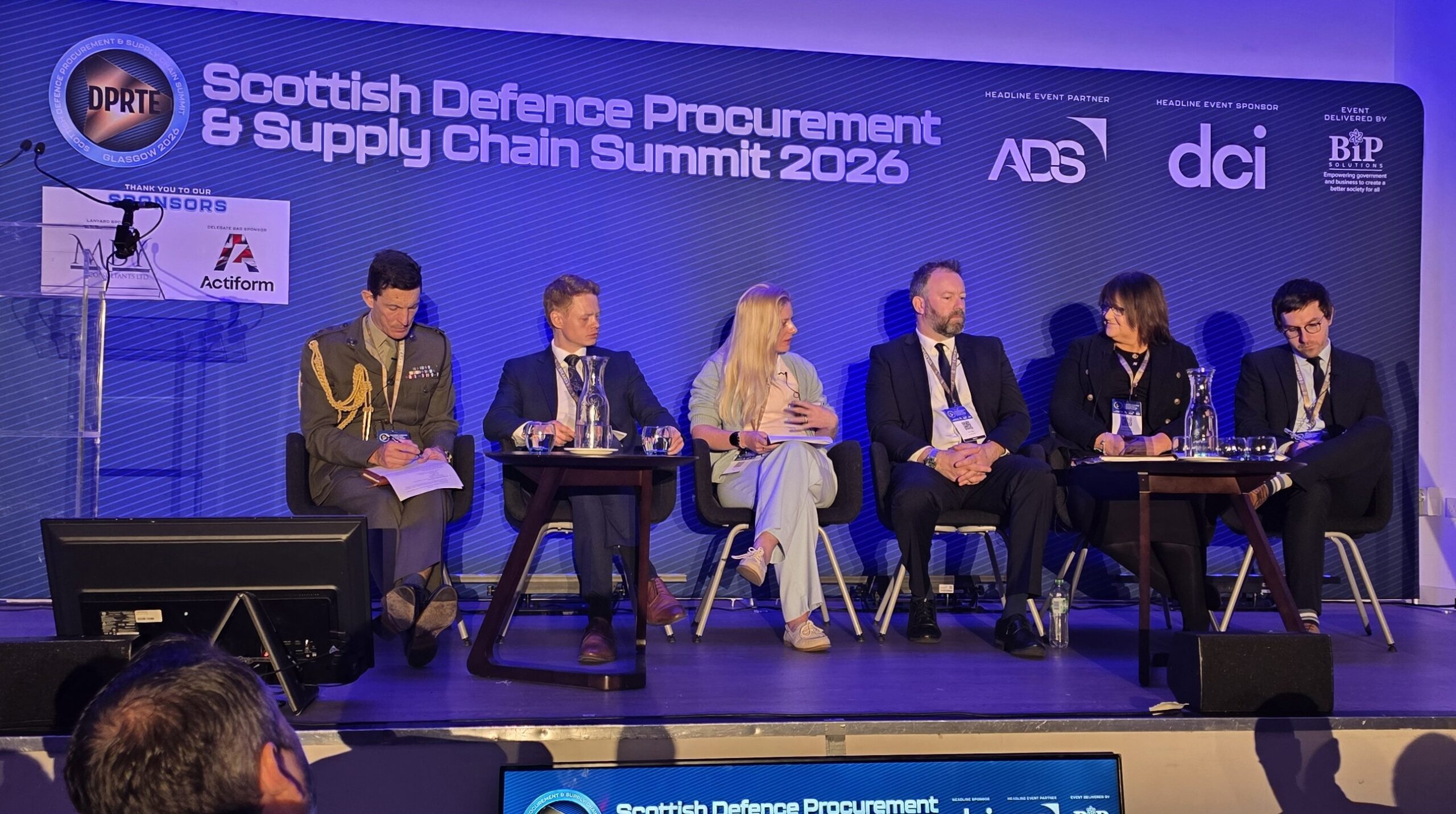
Edinburgh, Scotland– A recent high-level session in Edinburgh, focused on positioning “Defence as an Engine for Scottish Prosperity,” brought together key stakeholders from government, industry, and the military to address evolving security threats and the strategic importance of a robust defence industrial base.
The panel, moderated by Emma Baker, Senior Defence Policy Adviser at ADS Group, included representatives from the UK Ministry of Defence (MoD), Scottish Enterprise, leading defence contractors Leonardo and Thales, and the Royal Navy’s Naval Regional Commander for Scotland and Northern Ireland, Brigadier Andrew Muddiman. Discussions highlighted the urgent need to bolster industrial capacity, foster innovation, and integrate small and medium-sized enterprises (SMEs) into the defence supply chain, particularly in light of heightened geopolitical tensions.
Brigadier Andrew Muddiman opened the session by outlining a stark operational context, emphasizing a significant escalation in Russian military activity within the North Atlantic and UK territorial waters. “We have seen on a number of occasions in the past year the presence of Russian forces in areas and in numbers that would five years ago have been unthinkable. We are in a completely different paradigm,” Muddiman stated, underscoring a fundamental shift in the security landscape.
The Royal Navy commander articulated a clear mandate: the service must be prepared to engage a “peer adversary” by 2029. Achieving this readiness, he explained, necessitates the development of a resilient and innovative industrial ecosystem. He pointed to the Scotland Defence Growth Deal as a crucial mechanism designed to cultivate such an environment. As an example of desired innovation, Muddiman cited XV Excalibur, the Royal Navy’s extra-large autonomous underwater vehicle, developed by a Plymouth-based company. He expressed a desire to see similar cutting-edge capabilities emerge from Scottish investments. “I give you that as an example of the type of thing that we as a service would really like to see coming out of the Defence Growth Deal in Scotland, something that leads directly into the front line and our ability to counter emerging threats,” he added, linking industrial output directly to operational effectiveness.
Mark Stead, Senior Vice President for Radar and Advanced Targeting at Leonardo and Vice Chair of ADS, addressed the critical role of prime contractors in nurturing the wider supply chain. He argued for a more proactive approach from larger defence companies in engaging with smaller businesses. “We need to push more outside of the wire into our supply chain to help build that capacity, because geographically it allows spread, it allows those skills and those jobs to be created more widely, but it also fundamentally allows us to service what are going to be greater needs and greater volumes from our domestic and NATO allied customers,” Stead asserted. This outreach, he suggested, would not only distribute economic benefits but also enhance the overall capacity and resilience of the defence industrial base to meet increasing demands.
Stead also issued a broader call to action, urging all participants to consistently advocate for the defence and aerospace sectors. He stressed the undeniable economic benefits these industries bring. “Whichever way the politics leans locally or personally, fundamentally we need to demonstrate a prosperous nation, and defence and aerospace is a growing sector. No one anywhere in the world is believing otherwise,” he remarked, emphasizing the global recognition of the sector’s growth potential and economic significance.
Stu McPherson, Head of Digital Strategy at Thales UK, detailed concrete steps his company has implemented to enhance SME access and integration. Thales has launched a new “Strategic Supplier Programme,” designed to create direct links between smaller businesses and the engineers responsible for programme decisions. This initiative aims to bypass traditional bottlenecks often associated with procurement and category management processes, thereby accelerating the engagement of innovative SMEs. Additionally, Thales introduced an “Innovation Ecosystem” in April, which offers SMEs the unique opportunity to co-locate within Thales’s Glasgow office. This arrangement facilitates direct engagement with programme teams, fostering collaboration and quicker integration of new technologies. “We want to bring you into the business. A lot of the contracts coming out from the MoD now have a requirement to team up with SMEs, so it is in our interest more than ever to bring you on board,” McPherson explained, highlighting the mutual benefits and contractual drivers for such partnerships.
McPherson further illustrated the practicalities of rapid supply chain engagement by referencing Thales Belfast’s HUST programme, a significant £1.6 billion air defence systems contract for Ukraine. This project necessitated a rapid scaling of production, from tens to hundreds of missiles per month, demonstrating the critical importance of an agile and responsive supply chain in meeting urgent operational requirements during conflicts. The experience underscored the need for robust industrial planning and collaborative networks.
Echoing the government’s commitment, Calum Taylor, Deputy Head of Place and Industry Skills at the MoD, affirmed that significant resources have been allocated to improve SME access to defence contracts. He highlighted the “Defence Office for Small Business,” launched in January, which serves as a streamlined “single front door” for companies seeking to engage with the defence sector. Coupled with a new “SME Commercial Pathway,” these initiatives aim to simplify processes and increase opportunities. The MoD has also set an ambitious target to increase defence spending with SMEs by £2.5 billion by 2028. “How do we get the latest innovative capability to the frontline quickly? That’s the main lesson we’ve learned from Ukraine. That’s what defence growth is trying to do, make it easier for you not only to compete for domestic defence contracts, but international ones as well,” Taylor stated, drawing a direct link between the conflict in Ukraine and the imperative for accelerated innovation and market access.
Scottish Enterprise, the national economic development agency, provided practical guidance for smaller firms looking to enter or expand within the defence market. Their advice included the importance of clearly articulating capabilities, making early investments in supply chain readiness, obtaining necessary quality accreditations, and structuring for scalability. “Defence is a great market for many of our SMEs to get into. When you look at the long-term contracts and the long-term future you can see, there are few sectors where that is the case,” a representative noted, underscoring the stability and longevity of defence contracts. They further emphasized the global reach of Scottish Enterprise, which operates 30 offices in 23 countries, providing invaluable assistance to companies seeking to access international markets and navigate complex financing options. This comprehensive support aims to empower Scottish businesses to compete effectively on a global stage.
The session collectively painted a picture of a defence sector undergoing rapid transformation, driven by both geopolitical necessity and economic opportunity. The focus on integrating SMEs, streamlining procurement, and fostering innovation underscores a strategic effort to build a more resilient, responsive, and prosperous defence industrial base in Scotland and across the UK, capable of meeting contemporary and future security challenges.
Why This Matters
The discussions at the “Defence as an Engine for Scottish Prosperity” session illuminate several critical issues that have far-reaching implications beyond the immediate scope of Scotland’s defence industry. Firstly, the stark warning from Brigadier Muddiman regarding increased Russian activity in the North Atlantic serves as a powerful reminder of the deteriorating global security environment. This heightened threat level necessitates robust national defence capabilities, placing a premium on military readiness and a responsive industrial base. The ability of nations like the UK to deter aggression and protect strategic interests, particularly vital maritime routes, is directly tied to the strength and agility of their defence sector.
Secondly, the focus on integrating Small and Medium-sized Enterprises (SMEs) into the defence supply chain is crucial for both national security and economic prosperity. SMEs are often hotbeds of innovation, capable of developing bespoke, cutting-edge technologies more rapidly than larger corporations. By removing barriers and actively incorporating them, as Thales and the MoD are attempting to do, the defence sector can access a broader pool of talent and innovative solutions, accelerating the deployment of advanced capabilities to the front line. This agility is a key lesson from ongoing conflicts, such as in Ukraine, where rapid technological adaptation has proven decisive. Economically, this integration fosters job creation, skills development, and regional growth, particularly in areas like Scotland, by diversifying the economic base and securing long-term, high-value employment opportunities.
Thirdly, the emphasis on defence and aerospace as a “growing sector” underscores its strategic importance as an economic engine. Investment in defence translates into significant research and development (R&D) expenditure, leading to technological advancements that often have dual-use applications, benefiting civilian sectors as well. Furthermore, a strong domestic defence industry reduces reliance on foreign suppliers, enhancing national resilience and strategic autonomy. For Scotland, this represents an opportunity to solidify its position as a hub for advanced manufacturing and technology, attracting further investment and talent.
Finally, the collective efforts highlighted – from government policy to prime contractor initiatives and regional economic development support – reflect a comprehensive strategy to adapt to a new era of geopolitical competition. In an increasingly complex world, where technological superiority and industrial capacity are paramount, the ability to rapidly innovate, scale production, and integrate a diverse range of suppliers is not merely an economic advantage but a fundamental component of national security and international influence. The success of these initiatives in Scotland, therefore, will not only contribute to regional prosperity but also play a vital role in the UK’s overall defence posture and its ability to uphold stability in a challenging global landscape.