
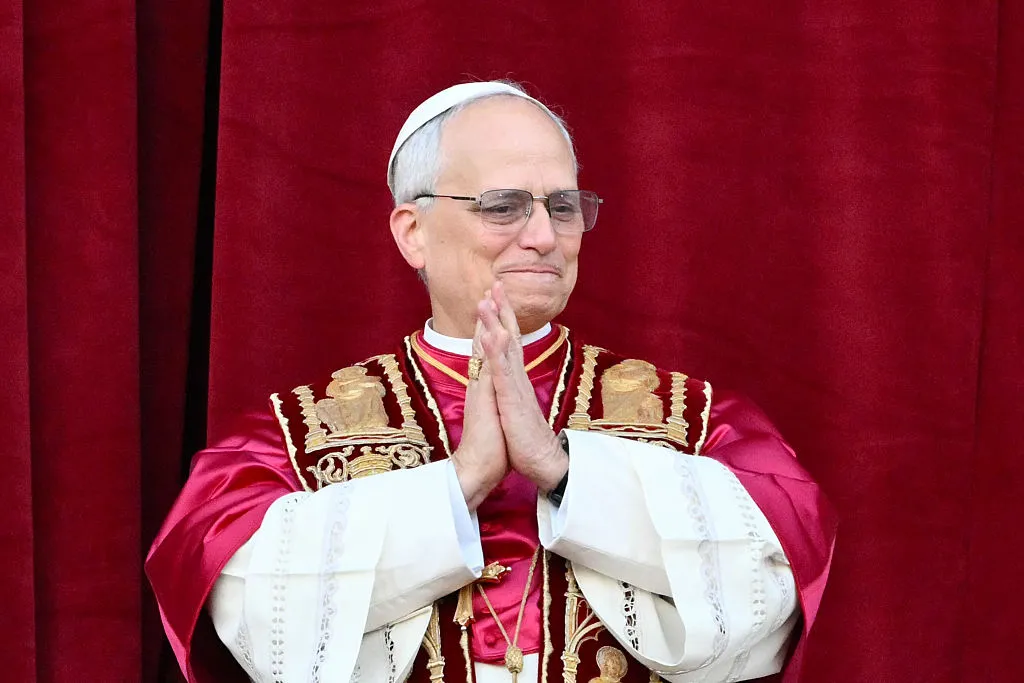
Pope Leo XIV’s Encyclical: A Clarion Call for Human-Centric AI Governance
Key Takeaways
- AI Amplifies Existing Inequality:Pope Leo XIV’s *Magnifica Humanitas* warns that artificial intelligence, much like previous technological revolutions, inherently magnifies the power of those who already possess economic resources, expertise, and data, exacerbating existing disparities and creating new forms of dependency and exclusion.
- Urgent Need for Participatory Oversight:The encyclical champions “clear criteria and effective oversight” for AI development, emphasizing that governance must be rooted in the broad participation of affected communities to ensure technology serves the “common good” rather than the interests of a select few.
- End the AI Arms Race:Leo XIV directly challenges the prevailing “AI arms race” – the relentless pursuit of more powerful algorithms and larger datasets for geopolitical or commercial dominance – arguing that technical power does not automatically confer the right to govern, and this race jeopardizes ethical, human-centric development.
In a move that reverberates far beyond the Vatican, Pope Leo XIV has issued his inaugural encyclical,Magnifica Humanitas, a profound and timely reflection on “safeguarding the human person in the time of artificial intelligence.” While AI provides the contemporary lens, the 200-page document delves into foundational human challenges that have long plagued society: the widening chasm of inequality, the specter of war, the insidious erosion of democratic principles, and the perilous concentration of power in the hands of a select few who may not prioritize the collective magnificence of humanity.
Presented alongside Chris Olah, co-founder of the AI company Anthropic, the encyclical is a powerful assertion that technology designed, built, and governed by a narrow elite cannot, by its very definition, genuinely serve the common good. It posits that the immense capabilities of AI, without proper ethical frameworks and broad societal input, risk becoming instruments of control and division rather than tools for progress and unity.
The Peril of Concentrated Power in the AI Era
“When such power is concentrated in the hands of a few, it tends to become opaque and evade public oversight, increasing the risk of distorted forms of development that give rise to new dependencies, exclusions, manipulations and inequalities,” Pope Leo XIV writes. This statement is not merely an abstract philosophical point; it’s a direct critique of the current trajectory of the tech industry, where a handful of corporations and individuals wield unprecedented influence over global information flows, economic structures, and even political landscapes.
The encyclical further elaborates: “In fact, as with every major technological shift, AI tends to amplify the power of those who already possess economic resources, expertise and access to data.” This amplification, the Pope warns, empowers elites to “shape information and consumption patterns, influence democratic processes and steer economic dynamics to their own advantage.” The implications are chilling, suggesting a future where AI becomes a sophisticated tool for maintaining and extending existing power structures, rather than democratizing access and opportunity. It’s a stark reminder that technology is not neutral; its impact is shaped by those who create and control it.
A Political Undercurrent: The Push for Oversight
The release ofMagnifica Humanitasarrives amidst a tense political climate surrounding AI regulation. Just days prior, President Donald Trump reportedly delayed signing a crucial executive order on AI, which would have introduced government oversight over new models before their public release. The reported influence behind this delay? VC investor and former White House AI czar David Sacks, highlighting the very tension between private economic interests and public governance that the encyclical addresses.
Against this backdrop, Pope Leo’s call for AI to be guided by “clear criteria and effective oversight” rooted in participation from communities directly affected by it gains significant resonance. This isn’t just about preventing harm; it’s about fostering an inclusive development paradigm where the benefits of AI are broadly shared, and its deployment aligns with human values and societal well-being. It implies a radical shift from top-down development to a more collaborative, multi-stakeholder approach.
Disarming the AI Arms Race
Perhaps one of the most provocative calls within the encyclical is for an immediate end to the AI arms race. This refers to the relentless, competitive push by companies and countries to build “ever more powerful algorithms and larger datasets” in the belief that such advancements will “secure geopolitical or commercial dominance.” Pope Leo XIV directly challenges this prevailing mindset, articulating a powerful truth:
“To disarm means discrediting the assumption that technical power automatically confers the right to govern.” This statement critiques the techno-utopian narrative that often conflates innovation with moral authority, suggesting that the ability to create advanced technology does not inherently grant the right to dictate its application or societal impact. Such a race, driven by competitive advantage rather than collective good, risks diverting resources, fostering secrecy, and ultimately undermining the ethical development of AI for humanity’s benefit.
Echoes Through Time: Old Problems, New Stakes
The dynamics Pope Leo XIV identifies are, in many respects, not new. They are historical echoes of past technological upheavals. His predecessor, Pope Leo XIII, addressed similar concentrations of power and economic inequality during the Industrial Revolution with his 1891 encyclical,Rerum Novarum. Yet, we don’t need to delve into the distant past to see these patterns at play. Contemporary examples abound, such as Elon Musk’s acquisition of Twitter and his subsequent leveraging of the platform to influence political outcomes, or the vast sums flowing from tech elites into super PACs explicitly aimed at blocking AI regulation. These modern manifestations of concentrated power and influence clearly serve as a direct inspiration for Leo XIV’s urgent warnings.
However, the Pope arrives at a conclusion shared by many observers: the surreal power and capabilities of today’s AI raise the stakes enormously. The potential for manipulation, surveillance, and control is exponentially greater than anything seen before. Notre Dame Law School professor Paolo Carozza, a distinguished member of the Pontifical Academy of Social Sciences and chair of the Meta Oversight Board, underscored this point in a conversation with TechCrunch. He highlighted how AI-driven misinformation and deepfakes have “corroded our capacity to recognize what’s true and what’s not true, and that really has consequences for democratic politics.” Furthermore, Carozza pointed to the tech industry’s pervasive practice of “harvesting and manipulating” human data, which he argues poses “fundamental challenges to cognitive freedom” – a new frontier in the battle for human autonomy and dignity.
Bottom Line
Pope Leo XIV’s encyclical,Magnifica Humanitas, is more than a religious pronouncement; it is a critical, timely intervention into the global discourse on artificial intelligence. It serves as a stark warning to tech innovators, policymakers, and citizens alike: without deliberate, ethical, and broadly participatory governance, AI risks amplifying humanity’s oldest problems, rather than solving them. The document compels us to move beyond a narrow focus on technological advancement for its own sake, urging a fundamental reorientation towards an AI future built on justice, inclusion, and the collective flourishing of every human person, ensuring that our magnificent humanity is preserved, not diminished, by our creations.
When you purchase through links in our articles, we may earn a small commission. This doesn’t affect our editorial independence.
{content}
Source:{feed_title}