
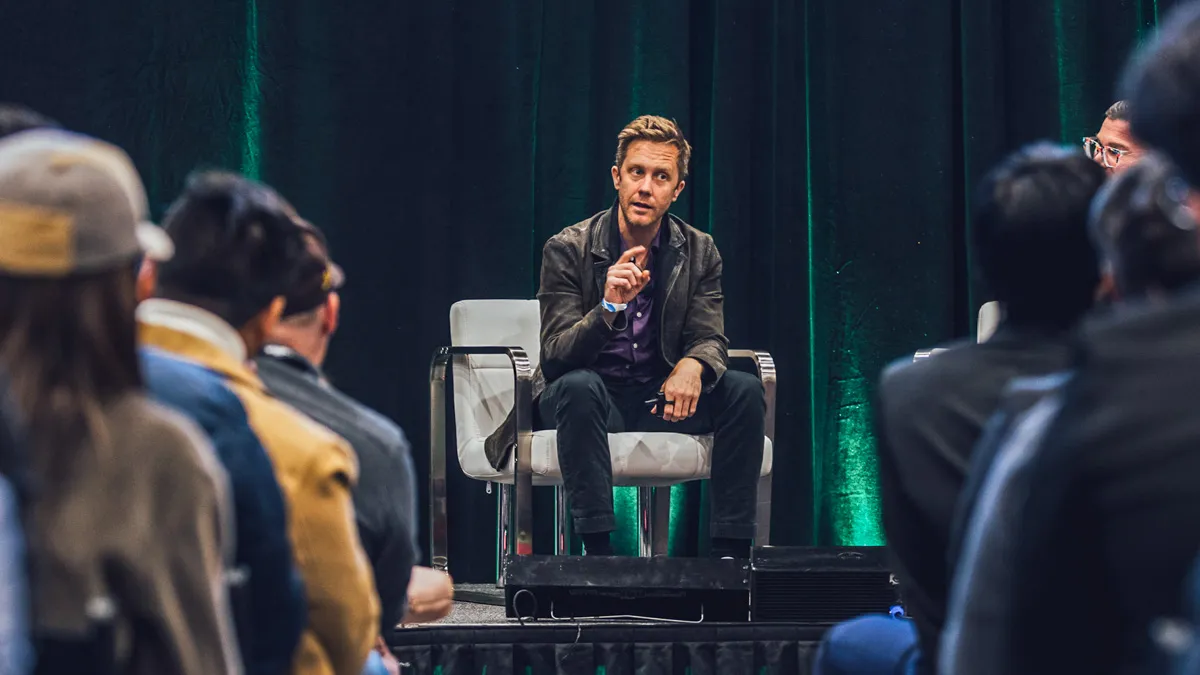
A pattern is emerging among people who’ve already made it big. They’re rolling up their sleeves again, seemingly out of fear of missing AI’s defining moment and, presumably, the irresistible allure of making even more money — potentially a lot more.
—
**Key Takeaways**
* **Tech Titans Re-engage:** A growing number of highly successful founders and executives are stepping back from leadership or advisory roles to dive hands-on into the AI frontier.
* **FOMO & Impact Drive:** This shift is fueled by a powerful combination of fear of missing out on AI’s defining moment, the immense potential for impact, and the opportunity for significant financial upside.
* **”Back to the Lab” Mentality:** Many are embracing non-executive, “Member of Technical Staff” roles, signaling a desire for direct contribution and a cultural shift towards prioritizing technical depth over hierarchical titles in leading AI labs.
—
In the ever-evolving landscape of technology, certain moments act as gravitational forces, pulling in the brightest minds and most ambitious talents. We are witnessing one such epochal shift with Artificial Intelligence. A striking pattern has emerged: a growing cohort of tech’s most accomplished veterans, individuals who have already scaled companies, enjoyed immense success, and secured their financial futures, are now rolling up their sleeves once more. They’re not just investing; they’re *operating*, shedding executive comfort for the intense, often grueling, daily grind of building at the AI frontier. This isn’t merely a trend; it’s a profound re-engagement, driven by a potent cocktail of fear, foresight, and the irresistible allure of shaping the next technological epoch.
The Great Migration: From Boardroom to Build-Room
The examples are compelling and increasingly numerous. Tom Blomfield, a name synonymous with fintech innovation as the co-founder of GoCardless and Monzo, and a seasoned mentor at Y Combinator, recently announced a significant pivot. He’s taking a leave of absence to join Anthropic’s compute team, not in a strategic or executive capacity, but as a “member of technical staff.” This isn’t a lateral move; it’s a deliberate descent into the core engineering effort, a decision that speaks volumes about where true innovation is perceived to lie.
Blomfield’s journey isn’t an isolated incident. Instagram co-founder Mike Krieger, a figure central to one of social media’s most iconic success stories, joined Anthropic as Chief Product Officer in 2024. While a CPO role carries executive weight, it still represents a move into a high-intensity, frontier-defining AI company rather than resting on past laurels. Perhaps even more indicative of this hands-on ethos is Andrej Karpathy, a founding member of OpenAI, former head of AI at Tesla, and founder of Eureka Labs. He, too, joined Anthropic’s pre-training team in May, echoing Blomfield’s sentiment by stating that “the next few years at the frontier of LLMs will be especially formative.” These individuals, having already reached the pinnacle of their respective fields, are choosing to be in the trenches, directly contributing to the foundational work of AI.
Why Now? The Allure of the AI Frontier
What compels these titans to jump back into the operational fray? The answer lies in the unprecedented nature of the current AI boom. It’s perceived not merely as another tech cycle, but as a foundational shift akin to the internet or electricity. The “fear of missing AI’s defining moment” is palpable. For individuals who have consistently operated at the cutting edge, the prospect of being a bystander during such a transformative period is deeply unappealing. This isn’t just about financial gain, though the potential for wealth creation in AI is undeniably immense; it’s also about impact, intellectual challenge, and the desire to leave an indelible mark on human progress.
This drive isn’t confined to joining existing labs. Some are opting to build entirely new empires. Chamath Palihapitiya, famously known as the “SPAC King” and a veteran of Facebook, had largely focused on investments and his popular “All In” podcast. Yet, he recently took on his first full-time operating role in over a decade as CEO of 8090 Labs, an enterprise AI coding startup he announced with a hefty $135 million Series A led by Salesforce Ventures. Palihapitiya’s declaration on X — “I am convinced that what we are building now is even more important, so there was no decision to make except to be all in” — underscores the profound conviction these leaders hold regarding AI’s significance.
Similarly, Eric Wu, who guided Opendoor for a decade before stepping back in 2023, didn’t stay on the sidelines for long. He launched NavigateAI, an AI “copilot” for construction workers, backed by $25 million in seed funding. Wu articulated his motivation clearly: “I knew if I looked back in 10 years and didn’t do something related to it, I would probably regret that.” This sentiment captures the underlying urgency and the sense of historical imperative driving many of these moves.
The “Member of Technical Staff” Mentality: A Cultural Shift
Perhaps the most telling indicator of this profound shift is the specific job title many of these accomplished individuals are embracing: “Member of Technical Staff” (MTS). This deliberately flat, non-hierarchical label, common at frontier AI labs like Anthropic and OpenAI, is applied to virtually everyone on their technical teams, regardless of their prior accolades or seniority. Blomfield is taking this title. So is Peter Bailis, who, just months after becoming Workday’s CTO – a role overseeing AI strategy across an $8 billion-revenue business – traded it for a spot as an MTS at Anthropic. Bailis’s decision to leave such a high-profile, strategic corporate role for a hands-on technical position at an AI research lab is a powerful testament to where the perceived epicenter of innovation now lies.
This choice of title isn’t just semantics; it represents a cultural preference for direct contribution and technical depth over traditional corporate ladders. It signals a desire to be deeply embedded in the problem-solving process, to write code, design architectures, and directly contribute to the scientific and engineering breakthroughs that are defining the field. For these seasoned veterans, the allure isn’t power or prestige, but the immediate and tangible impact on the technology itself. They are seeking the intellectual rigor and the sheer excitement of building something truly transformative from the ground up, or rather, from the frontier forward.
Broader Implications: A New Tech Gold Rush
The implications of this “great migration” are far-reaching. It signifies a massive influx of not just capital, but invaluable experience, strategic acumen, and technical prowess into the AI sector. This concentration of talent will undoubtedly accelerate AI development, pushing boundaries at an unprecedented pace. For established tech companies, it poses a challenge: how to retain top talent when the gravitational pull of frontier AI is so strong? For startups, it means a more competitive, but also potentially more mentored, ecosystem. It highlights AI as the undisputed “gold rush” of our era, attracting not just ambitious newcomers, but also the very architects of the previous digital revolutions, all eager to stake their claim in this new, uncharted territory.
When you purchase through links in our articles, we may earn a small commission. This doesn’t affect our editorial independence.
Source:{feed_title}
**Bottom Line**
The exodus of tech’s most successful figures from their hard-won executive perches back into the demanding, hands-on world of AI development underscores a powerful consensus: AI is not merely the next big thing, but *the* defining technological frontier of our time. These leaders are driven by a profound recognition of AI’s transformative potential, a potent fear of irrelevance, and an insatiable desire to personally shape a future that promises unprecedented impact and rewards, signaling a pivotal moment where ambition, experience, and the pursuit of innovation converge at the cutting edge of artificial intelligence.