
Stay informed with free updates
Simply sign up to the Technology sector myFT Digest — delivered directly to your inbox.
Key Takeaways
- **Ethical AI as a Non-Negotiable Market Imperative:** The encyclical underscores that ethical design, accountability, and human-centric principles are no longer merely moral considerations but critical factors for regulatory compliance, investor confidence, and a company’s long-term social license to operate in the AI era.
- **Divergent Regulatory Landscapes Create Market Volatility:** The stark contrast between the Vatican’s call for proactive ethical governance and the varying, often minimal, responses from global political leaders (especially in the US) signals an unpredictable and fragmented regulatory environment, posing risks and challenges for international tech companies.
- **The Value of Human-Centric AI for Sustainable Growth:** Prioritizing human dignity, combating algorithmic bias, and preventing digital colonialism, as advocated by the Pope, highlights a growing demand for AI solutions that genuinely serve societal well-being, potentially fostering more resilient market adoption and mitigating future reputational and financial risks for businesses.
Pope Leo was perturbed. The speed of change was dizzying. The elements of conflict were unmistakable: the vast expansion of industry, the marvellous discoveries of science, the changing relations between employers and workers, the enormous fortunes being made amid mass poverty and prevailing moral degeneracy. The gravity of the situation “fills every mind with painful apprehension”, he wrote in his landmark papal encyclicalRerum Novarum(Of New Things) in 1891. This seminal document addressed the dire social conditions wrought by the Industrial Revolution, laying groundwork for Catholic social teaching on labour rights, private property, and the role of the state, directly influencing nascent economic and political movements.
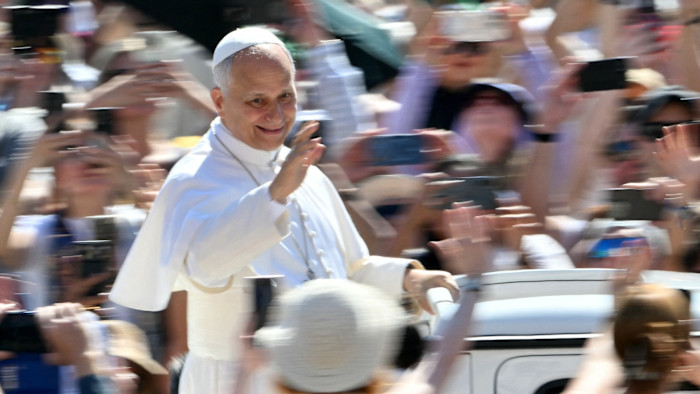
Exactly 135 years later, the current Pope Leo, who chose his papal name in honour of his predecessor, issued his own encyclical echoing similar fears about the disruptive power of technology and the urgency of a moral response. His letter,Magnifica Humanitas(Magnificent Humanity), focused on safeguarding the human in the time of AI. The parallels are striking: just as the first industrial revolution reshaped global economies, created unprecedented wealth alongside profound inequality, and challenged traditional social structures, so too is the current AI revolution poised to profoundly reconfigure labour markets, concentrate capital, and redefine human interaction. Everyone must benefit from the digital transformation, he said, while no one should be reduced to “productivity,” “cognitive performance” or “mere data”. This is a direct challenge to the prevailing market logic that often prioritizes efficiency and data monetization above all else. AI should therefore be “disarmed” and must not become an instrument of “domination, exclusion or death.”
The encyclical is worth a considered read, not just for its spiritual guidance but for its potent commentary on the ethical and societal underpinnings of our rapidly evolving digital economy. But three points in particular leap out, offering crucial insights for market participants, policymakers, and investors.
First, the Pope is not antagonistic to technology. Indeed, he embraces it. Besides being a fan of Duolingo and Wordle himself,the Vatican uses AIto provide translations of his homilies in 60 languages. He acknowledges that AI can accelerate scientific progress and improve life for all. This perspective is vital: it’s not an anti-innovation stance but a call for responsible innovation. The global AI market, projected to reach trillions of dollars in the coming decade, thrives on accelerating scientific progress and improving life. However, the Pope argues that AI is not morally neutral and must be designed within an ethical framework from its inception. This isn’t just about corporate social responsibility; it’s about mitigating long-term systemic risks. Companies that embed ethical considerations, transparency, and accountability into their AI development from the ground up are more likely to build trusted products, avoid costly regulatory penalties, and maintain their social license to operate. “Let us not be afraid to get our hands dirty on the ‘construction site’ of our time,” he wrote, indicating that active, hands-on engagement with ethical design is paramount.
Second, no matter how novel the technology, humanity should always strive to preserve precious human values. (You would expect that one from the Pope). This point carries significant market weight, particularly concerning data privacy, algorithmic bias, and the concentration of economic power. AI systems may present themselves as objective, but they often reflect and reinforce ideological bias and existing power structures embedded in their training data and design. Given the immense concentration of corporate power in the hands of a few tech giants and the possibilities of exploiting personal data to create new forms of digital colonialism, the Pope rightly fears that innovation, if unchecked, can become an accelerator of injustice. This echoes growing concerns among regulators globally regarding antitrust issues, data monopolies, and the need for robust data governance frameworks like GDPR and emerging privacy laws. For investors, this translates into assessing ESG (Environmental, Social, Governance) risks associated with AI portfolios, particularly those exposed to potential class-action lawsuits over bias, data breaches, or anti-competitive practices. Firms failing to address these ethical dimensions risk significant reputational damage, regulatory fines, and a loss of consumer trust, which directly impacts market capitalization and long-term viability.
Third, the world’s most influential American spiritual leader, who holds sway over 1.4bn Catholics, is grappling with the serious challenges of AI in ways that its most powerful American secular leader, the US president, is choosing to ignore. Shortly after the Pope issued his 42,300-word letter, Donald Trump scrapped a minimalist executive order that would have subjected frontier AI models to testing before their release. This policy divergence is a critical market signal. While the European Union has moved forward with its comprehensive AI Act, establishing a clear (if demanding) regulatory framework, the US approach remains largely hands-off, fostering an environment of rapid innovation but also greater uncertainty regarding future guardrails. This creates a fragmented global market where companies must navigate differing ethical and legal standards, potentially leading to increased compliance costs for international operations or competitive disadvantages for those adhering to stricter norms. The Pope’s implicit criticism highlights the vacuum that often gets filled by market forces operating without sufficient ethical oversight.
The participation of Chris Olah, a co-founder of Anthropic, in the presentation of the encyclical shows that at least some in Silicon Valley are prepared to engage in the debate. Olah warned that every frontier AI lab — including Anthropic — operated within a set of incentives and constraints that sometimes conflicted with doing the right thing. “We need moral voices that the incentives cannot bend,”he said. This acknowledgement from a leading AI developer is noteworthy, suggesting a nascent recognition within the industry that self-regulation alone may be insufficient and that external ethical guidance is valuable. For investors, collaboration with ethical frameworks or religious institutions could be seen as a de-risking strategy, enhancing a company’s long-term sustainability and public perception.
Other tech bros, though, arealready brushing offthe papal message. As they see it, Silicon Valley is disrupting the divinity industry, just like all the others, and it is natural for the Vatican to defend its turf. This dismissive attitude, however, risks alienating a significant global population and underestimating the potential for widespread public backlash or consumer preference shifts towards more ethically aligned tech. Ignoring such influential moral voices can lead to a narrow market view that prioritizes short-term gains over long-term societal integration and trust.
Yet the Pope showed he was prepared to mix it up a bit, too. He attacked both the transhumanism and posthumanism that are developing cult-like followings in some AI circles, which promise radical human augmentation or even transcendence of biological limitations. These philosophical movements, often funded by tech billionaires, represent a significant, albeit niche, market for future biotech and AI applications, with profound ethical implications. And in a classy piece of papal trolling, he quoted Gandalf fromTheLord of the Rings, a text more resonant than the Bible for many technologists, on the nature of responsibility. That appeared squarely aimed at the US military drone and data companies Anduril and Palantir, which both take their names from JRR Tolkien’s writings. This direct targeting of specific defense tech companies by such a high-profile moral authority introduces a new dimension to the ethical investment debate, particularly concerning autonomous weapons systems and AI in warfare. It raises questions about ESG criteria for defense contractors and the potential for public pressure campaigns impacting their stock performance or access to capital.
Addressing the dangers of killer robots, the Pope warned that AI risked lowering the threshold for violence, rushing military commanders into acting on threat predictions, and reducing victims to data. His clear red line was that it is not permissible to entrust lethal decisions to artificial systems. This stance has direct implications for the burgeoning market for autonomous weaponry. As nations invest heavily in AI-powered defense, a widespread moral rejection of Lethal Autonomous Weapons Systems (LAWS) could significantly impact defense contractors, international arms treaties, and the perceived legitimacy of AI in military applications. Investors in this sector face heightened ethical scrutiny and potential long-term regulatory hurdles.
To many, the Pope’s reflections will appear unworldly, but that is part of his job. And that only made his final appeal more telling in his call for “authentic realism.” Idealists tend to bend the facts to confirm their worldview. Cynics despair of any positive change, believing that force will always prevail. But authentic realists do not give up on changing the world for the better. Instead, they painstakingly persist in pursuing the common good through credible institutions, verifiable guarantees, patient negotiations, conflict prevention, and the protection of civilians. For the market, this translates into a call for long-term, sustainable strategies that prioritize societal well-being alongside profit. Amen to that.
Market Impact
Pope Leo’s encyclical, while spiritual in its origin, sends tangible signals that reverberate across financial markets and the technology sector. The Vatican, as a global moral authority, is effectively raising the ESG bar for AI. Companies and investors ignoring this message do so at their peril, risking not just reputational damage but also regulatory headwinds, consumer backlash, and reduced access to capital from ethically minded funds. The call for ethical AI design from inception signals that proactive engagement with AI governance and human-centric development will become a competitive differentiator, not just a compliance checkbox. Furthermore, the explicit condemnation of autonomous lethal weapons directly impacts defense tech companies, potentially triggering divestment campaigns or increased scrutiny from institutional investors. In an increasingly polarized and regulated world, the encyclical reinforces the idea that the “social license to operate” for AI companies is inextricably linked to their commitment to human dignity and the common good, influencing long-term valuations and market stability.
[email protected]