

UBS managing director and senior portfolio manager Jason Katz joins ‘Varney & Co.’ to give his outlook on the markets in the second half of the year.
### Key Takeaways:
1. **Aggressive Cost Restructuring:** Volkswagen is confronting a significant 20% cost disadvantage against competitors, necessitating potentially massive job cuts – up to 100,000 workers globally – as a critical measure to regain competitiveness amidst the automotive industry’s transformative shift to electric vehicles (EVs) and intensified global competition, particularly in China.
2. **Structural Industry Headwinds:** The proposed cuts underscore the immense pressure on legacy automakers to streamline operations, retool for EV production, and navigate complex labor relations, reflecting a broader industry trend of efficiency drives and strategic re-evaluations to ensure long-term viability in a rapidly evolving market.
3. **Execution Risk vs. Strategic Imperative:** While painful, such drastic measures are seen by investors as a necessary strategic imperative for Volkswagen’s future profitability. However, successful implementation hinges on overcoming significant hurdles, including strong labor resistance, complex factory repurposing, and maintaining employee morale during a challenging transition.
Volkswagen, Europe’s automotive titan, finds itself at a critical juncture, facing structural headwinds that are forcing its leadership to consider drastic measures. An internal memo from CEO Oliver Blume reveals a stark reality: the company may need to slash an additional 50,000 jobs worldwide, on top of previously announced plans to cut 50,000 positions. This potential move, bringing the total to a staggering 100,000 job reductions, highlights the immense pressure on legacy automakers to adapt to a rapidly evolving global market defined by fierce EV competition, geopolitical trade tensions, and escalating production costs.
Blume’s memo, reviewed by Reuters, attributes this existential challenge to Volkswagen operating at a crippling 20% cost disadvantage relative to its rivals. This significant gap is not merely an operational hiccup but a symptom of deeper, systemic issues facing traditional manufacturers. The transition to electric vehicles demands enormous capital investment in new platforms, battery technology, and software development, while simultaneously grappling with the depreciation of existing internal combustion engine (ICE) infrastructure. This dual challenge places immense strain on profitability, especially for a company with Volkswagen’s extensive global footprint and diverse brand portfolio, which includes Porsche and Audi.
The “theoretical deduction” of another 50,000 jobs, bringing the total potential cuts to 100,000, signals an urgent and widespread restructuring effort. Blume stated, “We are currently assessing across all brands, companies and regions how many adjustments are actually necessary and feasible.” This assessment reflects a comprehensive review of the company’s global operations, aiming to identify inefficiencies and redundancies that have accumulated over decades of traditional automotive manufacturing.
VOLKSWAGEN RECALLS NEARLY 50,000 VEHICLES OVER SERIOUS ENGINE FIRE RISK FROM FAULTY WIRING
Volkswagen is weighing an additional 50,000 job cuts on top of the previously announced layoffs of 50,000 workers amid a restructuring effort.(Elijah Nouvelage/Getty Images)
Several factors contribute to Volkswagen’s cost disadvantage and profit slump. Firstly, the intensely competitive Chinese market, the world’s largest automotive arena, has become a battlefield for EV dominance. Local players like BYD, Nio, and Xpeng have rapidly gained market share, often at lower price points, forcing established foreign brands to engage in brutal price wars and accelerate their EV strategies. Volkswagen, once a dominant force in China, has seen its market position erode, impacting crucial revenue streams and profit margins.
Secondly, higher tariff costs and geopolitical tensions are adding layers of complexity. The specter of trade wars and protectionist policies, particularly between the EU, China, and the US, can disrupt supply chains, increase component costs, and complicate export strategies. For a global manufacturer like Volkswagen, navigating these shifting sands requires significant agility and often comes with a financial penalty.
Thirdly, the pressure on its German manufacturing network to become more efficient is immense. Germany’s high labor costs, stringent environmental regulations, and energy prices contribute significantly to the overall cost base. Blume’s preference for “intelligent solutions” over outright facility closures underscores the difficulty of modernizing and repurposing legacy factories. He previously suggested underutilized plants could be used for defense industry production or to assemble Chinese Volkswagen models for the European market – innovative ideas, but their scalability and economic viability remain to be proven.
UBER PARTNERS WITH CHINESE TECH GIANT TO ROLL OUT DRIVERLESS VEHICLES ACROSS MULTIPLE GLOBAL MARKETS
| Ticker | Security | Last | Change | Change % |
|---|---|---|---|---|
| VWAGY | VOLKSWAGEN AG | 8.2452 | +0.04 | +0.43% |
The memo specifically mentioned that looking into the next decade, the company “still cannot confirm competitive use cases for the plants of Emden, Hanover, Zwickau and Neckarsulm in the 2030s.” This direct mention of specific facilities highlights the severity of the overcapacity issue and the difficulty in transitioning these factories from ICE to EV production, or finding alternative, profitable uses. These are not merely production sites; they are major employers and economic pillars in their respective regions, making their future a highly sensitive political and social issue.
Volkswagen’s management has already faced “angry calls from workers” regarding the restructuring plans. In Germany, labor representatives hold significant power through the co-determination system, where they often have seats on supervisory boards. This institutionalized influence means that any drastic cuts, especially job reductions or factory closures, require extensive negotiation and consensus-building, adding a layer of complexity and potential delay to management’s strategic imperatives. Reuters reported that labor representatives on the supervisory committee blocked initial proposals that included job cuts and possible factory closures, showcasing the formidable opposition management faces.
POLESTAR BANNED FROM US MARKET UNDER RULE TARGETING CHINA-LINKED CONNECTED VEHICLES
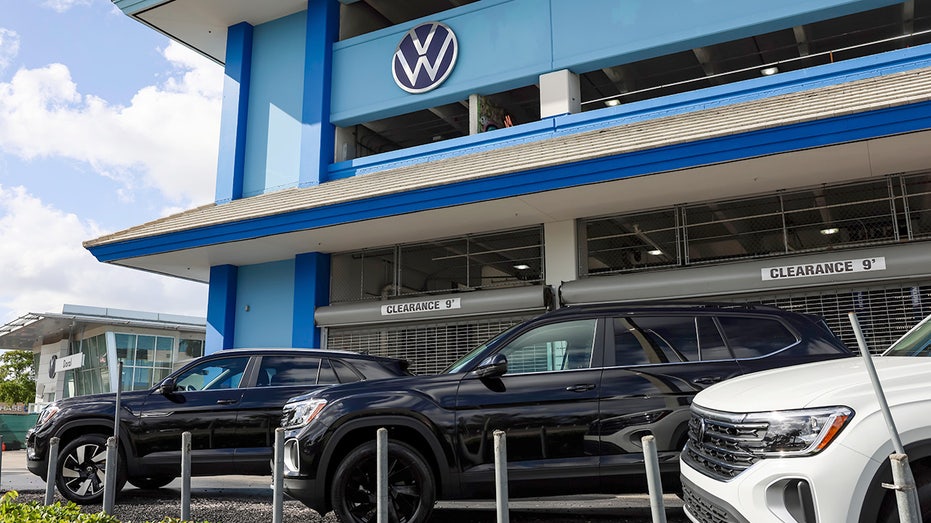
Volkswagen is looking to halve its lineup of models amid a push to restructure more efficiently.(Eva Marie Uzcategui/Bloomberg via Getty Images)
Following a recent supervisory board meeting, Volkswagen’s official statement notably refrained from discussing job cuts or plant closures. Instead, it focused on plans to further reduce production capacity and “gradually halve its lineup of models.” This strategic shift towards fewer, more profitable models reflects an industry-wide trend where volume is no longer the sole metric of success. Streamlining the product portfolio can reduce R&D costs, simplify manufacturing, and allow for a more concentrated focus on core, high-margin offerings, particularly in the premium EV segment.
Blume’s concluding message to workers — “Of course, it’s understandable that not everything has been planned out down to the last detail yet, and that certain issues still need to be further discussed and evaluated… There will certainly be more meetings in which we will work hard to find the best solutions” — indicates that the restructuring process is ongoing and highly dynamic. It underscores the delicate balance between the urgent need for cost reduction and the necessity of maintaining employee trust and cooperation.
The situation at Volkswagen is a microcosm of the broader challenges facing the entire legacy automotive industry. Companies like Ford and General Motors are also undergoing significant restructuring, shedding traditional businesses, and investing heavily in EVs and software. The race is on to build leaner, more agile organizations capable of competing with tech-first EV startups and efficient Asian manufacturers. Volkswagen’s ability to successfully navigate this transition, overcome labor resistance, and execute its cost-cutting measures will be a crucial determinant of its long-term viability and attractiveness to investors.
GET FOX BUSINESS ON THE GO BY CLICKING HERE
Reuters contributed to this report.
### Market Impact:
The news of Volkswagen’s potential 100,000 job cuts, while initially painful, is likely to be viewed by the market as a necessary, albeit drastic, step towards restoring long-term profitability and competitiveness. For Volkswagen (VWAGY), this signals management’s firm commitment to addressing its critical 20% cost disadvantage, which could lead to improved margins and a more sustainable business model in the EV era. While short-term stock volatility might occur due to labor disputes or implementation challenges, the market generally rewards companies that take aggressive action to streamline operations and adapt to changing industry dynamics. For the broader automotive sector, these cuts serve as a stark reminder of the immense pressures faced by legacy automakers in the EV transition, suggesting that similar, significant restructuring and job reductions may become increasingly common across the industry. Investors will closely watch Volkswagen’s execution, as successful transformation could set a precedent, while failure could underscore the deep-seated difficulties in reinventing traditional manufacturing giants.