
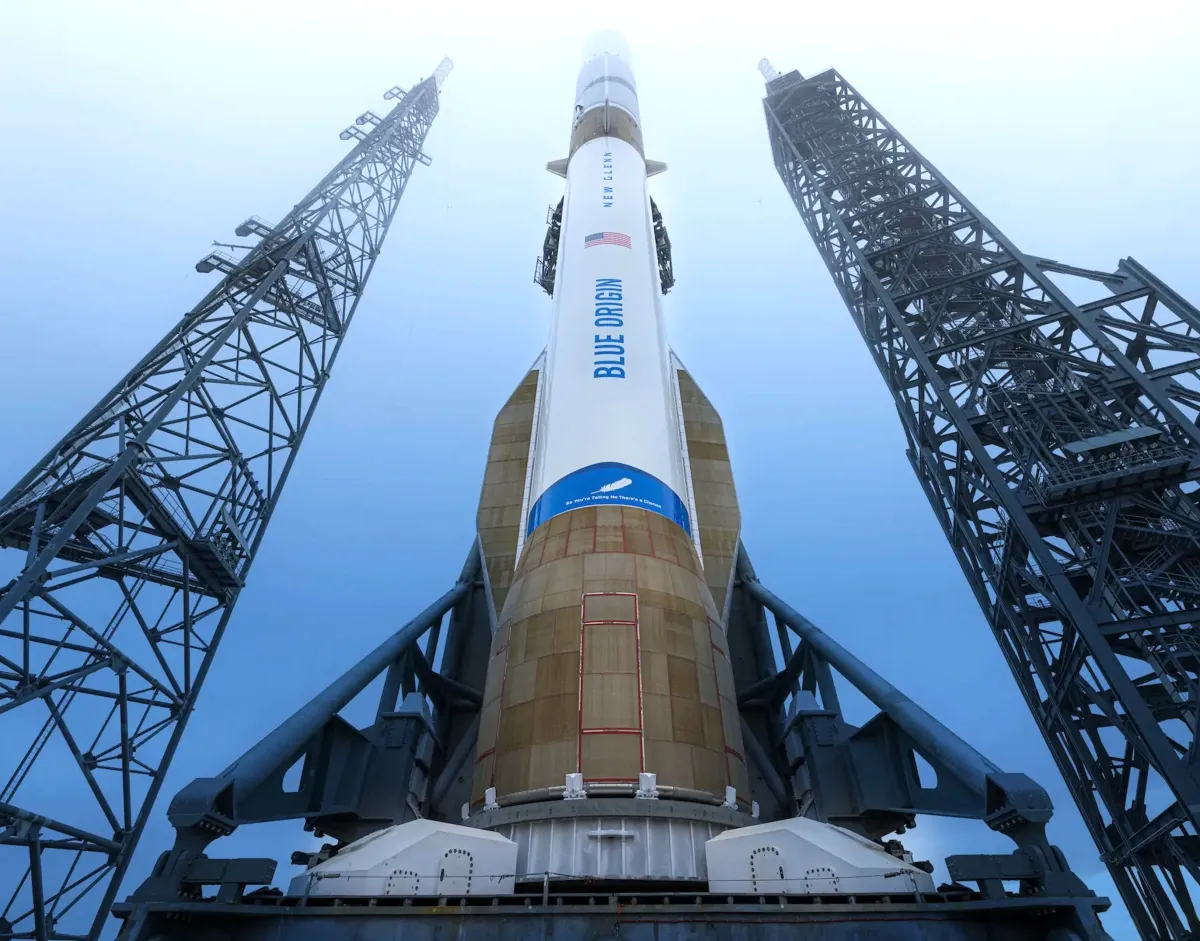
Blue Origin’s ambitious New Glenn rocket program has suffered a catastrophic setback, with its heavy-lift vehicle exploding during a static fire test at Cape Canaveral. This incident marks a severe blow to Jeff Bezos’s space company, pausing its efforts to challenge SpaceX and fulfill critical contracts for NASA and Amazon. The explosion, confirmed by Blue Origin, occurred just weeks after a previous mission failure had received FAA clearance, highlighting the inherent complexities and risks of advanced rocketry.
Key Takeaways:
- Catastrophic Failure:Blue Origin’s New Glenn mega-rocket exploded during a static fire test, representing the worst failure in the company’s history and one of the largest U.S. rocket explosions, halting a program poised for significant launches.
- Immediate Program Halt:The incident forces an indefinite pause in the New Glenn program, jeopardizing planned missions including Amazon’s Leo satellite deployments and critical support for NASA’s Artemis lunar program and Pentagon contracts.
- Setback Amidst Progress:The explosion occurs despite recent strides in reusability and just weeks after the FAA cleared New Glenn following a previous upper-stage failure, underscoring the formidable challenges and high stakes in the competitive commercial space sector.
CAPE CANAVERAL, FLORIDA –A thunderous roar followed by a colossal fireball erupted over Cape Canaveral, Florida, on Thursday, as Blue Origin’s New Glenn mega-rocket suffered a catastrophic explosion during a static fire test. Live streams from NASASpaceFlight.com and SpaceFlight Now captured the dramatic event, later confirmed by Jeff Bezos’s space company, marking a significant and devastating setback for its ambitious orbital launch program.
The massive rocket, reportedly fully fueled for what was to be a crucial test ahead of its anticipated fourth launch, detonated at the launch site. This incident is being described as one of the largest rocket explosions in U.S. history and unequivocally the worst failure in Blue Origin’s existence, sending shockwaves through the commercial space industry.
Immediate Fallout & Official Responses
In the wake of the explosion, Blue Origin quickly moved to assure the public and stakeholders. Through an X post Thursday evening, the company stated, “[a]ll personnel have been accounted for,” a crucial relief amidst the destruction. Jeff Bezos himself echoed this, confirming that all involved were “safe” and acknowledging the gravity of the situation. While the company refrained from detailing the cause, it referred to the event as an “anomaly.”
“It’s too early to know the root cause but we’re already working to find it. Very rough day, but we’ll rebuild whatever needs rebuilding and get back to flying. It’s worth it,” Bezos wrote, signaling a resilient, albeit challenging, path forward.
The incident quickly drew the attention of federal agencies and industry peers. NASA Administrator Jared Isaacman posted late Thursday that the agency would “work with our partners to support a thorough investigation of this anomaly, assess near-term mission impacts, and get back to launching rockets.” The Federal Aviation Administration (FAA) confirmed its awareness of the explosion to TechCrunch, stating there was “no impact to air traffic,” while NASA and the Space Force did not immediately offer further comment.
Even rival Elon Musk weighed in, offering a concise and sympathetic message on X: “Most unfortunate. Rockets are hard. I hope you recover quickly.” His words underscored the shared understanding of the immense challenges inherent in advanced rocketry, even among competitors.
A Rocket’s Troubled Trajectory: The New Glenn Story
The New Glenn program has been a cornerstone of Blue Origin’s long-term strategy, a heavy-lift orbital rocket designed to put substantial commercial payloads, including large satellites, into space. Its development has spanned over a decade, running longer than initially projected, while the company simultaneously utilized its New Shepard program for sub-orbital tourism and scientific missions.
New Glenn finally made its debut in January 2025, reaching orbit successfully during its first flight, though the booster stage exploded before a planned landing on an ocean drone ship. Building on this, the second flight in November 2025 marked a significant milestone, launching twin spacecraft to Mars for NASA and achieving Blue Origin’s first successful booster landing. This triumph demonstrated the company’s progress in reusability, a critical factor for reducing launch costs and competing with industry leaders.
The re-used booster flew again on New Glenn’s third mission in April 2026, successfully landing for a second time. However, this mission was marred by a cryogenic failure in the upper stage, leading to the total loss of an AST SpaceMobile satellite. Ironically, the FAA had just last week cleared New Glenn to fly again after Blue Origin completed its investigation into the cause of that failure. This latest explosion adds a cruel twist to a program that was painstakingly working its way through development challenges and attempting to prove its reliability.
Broader Implications & Future Uncertainties
This incident almost certainly means an extended pause for the New Glenn rocket program. Blue Origin had ambitious plans, targeting as many as 12 launches this year alone, aiming to firmly establish itself as a major player against Elon Musk’s SpaceX. The halt will have far-reaching consequences across Blue Origin’s strategic objectives.
The company is a key partner in NASA’s Artemis missions, expected to play a role in lunar exploration. Isaacman’s statement explicitly mentioned assessing “any impacts to the Artemis and Moon Base programs.” Additionally, Blue Origin has been vying for national security missions for the Pentagon, a critical market that demands unparalleled reliability and schedule adherence.
A significant immediate impact will be felt by Amazon. The upcoming fourth mission was slated to be the first of 24 launches contracted by Amazon for its Project Kuiper (Leo) satellite internet network, a direct competitor to SpaceX’s Starlink. Just a day prior, Amazon had touted New Glenn as a “reusable, heavy-lift rocket” central to building its constellation. Amazon confirmed to TechCrunch late Thursday that no Leo satellites were on board for this specific test, averting an even greater financial loss.
From a political standpoint, Congressman Mike Haridopolos (R-FL), representing the Cape Canaveral district, quickly addressed the event. He expressed gratitude for the safety of personnel and first responders and offered prayers for Florida’s Space Coast, highlighting the community impact of such incidents.
Bottom Line:The catastrophic explosion of Blue Origin’s New Glenn rocket represents a profound setback for Jeff Bezos’s space venture, immediately halting a program critical to its commercial and strategic ambitions. While a thorough investigation is underway, the incident underscores the immense technical hurdles and inherent risks in developing advanced heavy-lift launch vehicles. This failure not only tests Blue Origin’s resilience and financial commitment but also impacts key partners like NASA and Amazon, delaying their respective space endeavors and intensifying scrutiny on the competitive yet unforgiving landscape of the commercial space industry.
When you purchase through links in our articles, we may earn a small commission. This doesn’t affect our editorial independence.
{content}
Source:{feed_title}