
Key Takeaways:
- The Federal Reserve is widely anticipated to hold interest rates steady this week, with markets fully pricing in the decision amidst persistent inflationary pressures.
- New Chairman Kevin Warsh’s inaugural press conference will be intensely scrutinized for insights into the Fed’s future policy trajectory and potential shifts in its communication strategy, particularly regarding forward guidance and economic projections.
- Elevated energy prices, exacerbated by geopolitical tensions, and a discernible hawkish pivot among some FOMC members indicate a “higher for longer” interest rate environment, challenging earlier market expectations for rate cuts later this year and signaling sustained vigilance against inflation.
UBS managing director and senior portfolio manager Jason Katz joins Varney & Co. to discuss the rotation and rally in the markets and his concern over the Feds next move regarding rates.
The financial world is fixated on theFederal Reserveas it convenes its monetary policy meeting this week, with an overwhelming consensus that the central bank will opt to hold rates steady. This decision comes at a critical juncture, marked by stubbornly high inflation and the highly anticipated debut of newly minted Chairman Kevin Warsh at his first post-meeting press conference. Investors and analysts alike will be dissecting every word for clues on the future trajectory of monetary policy and the economy.
Inflation, already a formidable challenge, has been exacerbated by the recent escalation of the Iran war, which has sent energy prices soaring. This geopolitical premium on crude has directly translated into higher costs across the board, pushing key inflation measures further away from the Fed’s long-sought 2% target. The latest Consumer Price Index (CPI) report, which showed a jump to 4.2% in May—its highest level since April 2023—serves as a stark reminder of the persistent pricing pressures impacting American households and businesses. This relentless inflationary trend has effectively compelled market participants to rule out any possibility of an interest rate cut at this week’s Federal Open Market Committee (FOMC) meeting, the Fed panel responsible for charting the course of monetary policy.
Chairman Warsh’s inaugural appearance at the FOMC’s post-announcement press conference is arguably the most significant event for market direction this week. His communication style, emphasis, and implicit signals will be parsed with extreme diligence for any indication of how policymakers envision the economic landscape unfolding and, crucially, the path forward for interest rates. The prevailing market sentiment suggests that the prospect of rate cuts this year appears increasingly dim, a sentiment reinforced by the latest inflation data and a discernible hawkish shift within the FOMC.
INFLATION IS SQUEEZING AMERICAN CONSUMERS AND THE FED’S LATEST REPORT SHOWS IT’S GETTING WORSE
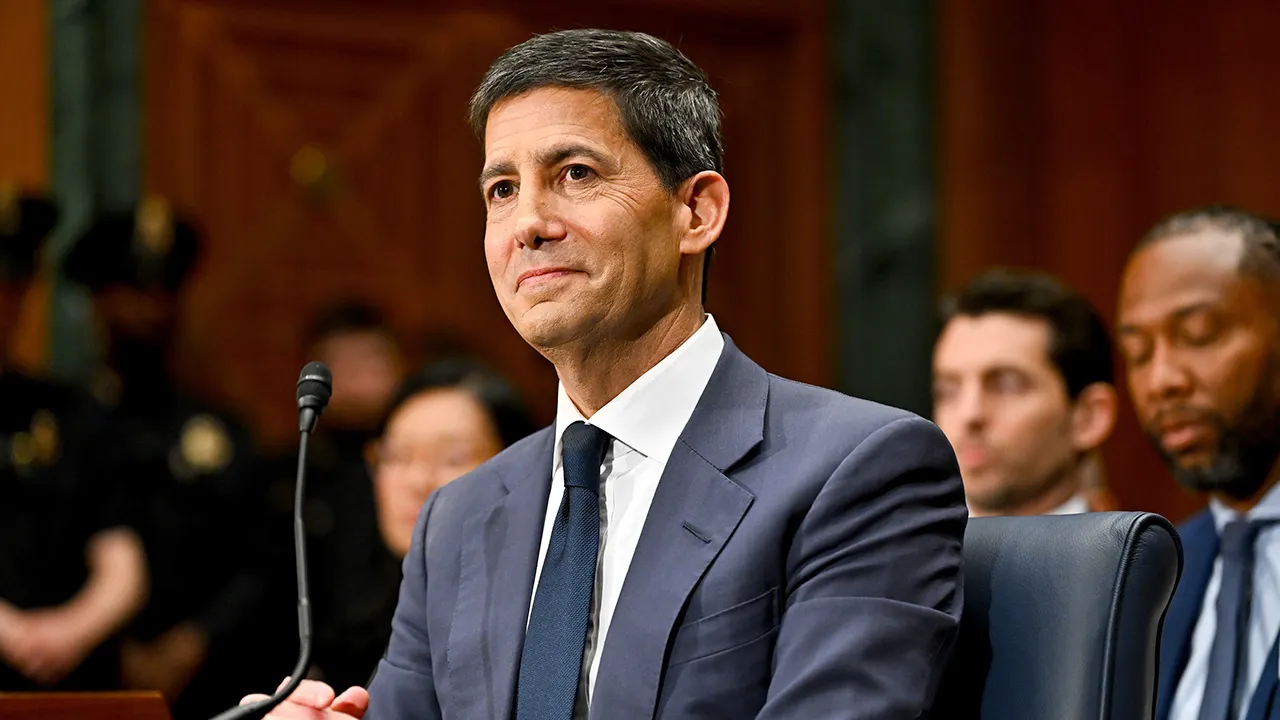
Federal Reserve Chair Kevin Warsh will host his first post-meeting press conference on Wednesday.(Graeme Sloan/Bloomberg via Getty Images)
The CME FedWatch tool, a widely followed barometer of market expectations, indicates a staggering 98.4% probability that the Fed will maintain the benchmark federal funds rate within its current target range of 3.5% to 3.75% this week. Beyond the immediate decision, the tool also highlights the market’s growing acceptance of a “higher for longer” scenario, showing a 42.7% chance that rates will remain at this elevated level through the December meeting. This narrowly edges out the possibility of a 25-basis-point cut by year-end, signaling a significant recalibration of investor expectations.
“While Warsh is generally perceived as dovish, he will inherit a Committee that has become noticeably more hawkish,” noted EY-Parthenon chief economist Gregory Daco. “Several policymakers have recently argued that rate hikes should remain an option if inflation remains above target, and concerns aroundenergy-driven inflationpressures have only reinforced that bias.” This hawkish undercurrent within the FOMC suggests that even a chairman with dovish leanings will face considerable pressure to prioritize inflation containment, impacting the central bank’s forward guidance and potentially extending the period of restrictive monetary policy.
JPMorgan economists, led by Michael Feroli, echoed this sentiment, suggesting that given the persistent inflation backdrop and a robustlabor market, the FOMC “should drop the easing bias from the post-meeting statement, replacing it with either a neutral sentence or no forward guidance at all.” Such a move would be a powerful signal to markets, effectively ending any lingering hopes of imminent rate cuts and forcing a re-evaluation of asset allocation strategies premised on monetary easing.
AMERICANS GROW MORE PESSIMISTIC ABOUT FINANCES AS RENT AND FOOD COST FEARS SURGE, FED SAYS
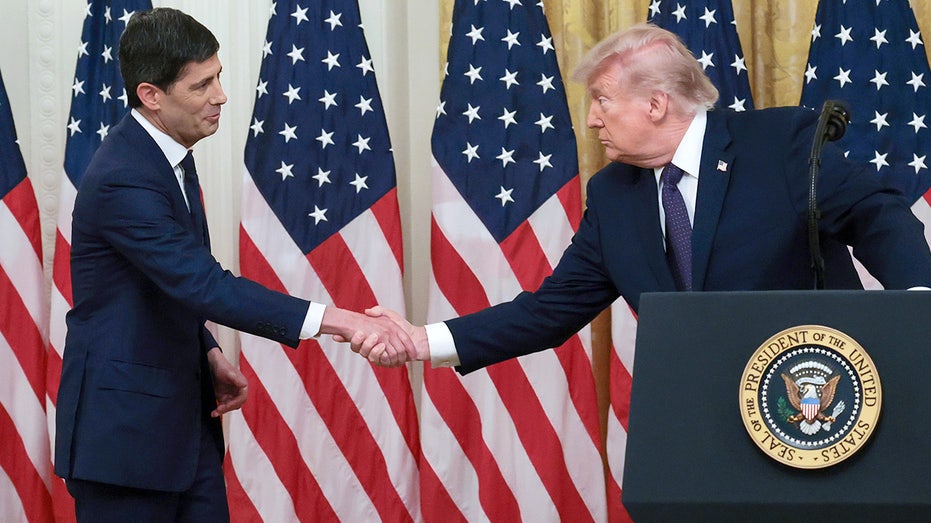
President Donald Trump nominated Warsh to be Powell’s successor as Fed chair.(Anna Moneymaker/Getty Images)
Beyond the immediate rate decision, Fed watchers will be intently scrutinizing Warsh’s press conference for any signals regarding potential institutional changes at the central bank, particularly concerning its communications framework and the usefulness of its economic projections. This scrutiny is heightened by Warsh’s known skepticism regarding the utility of detailed forecasts.
Daco specifically highlighted that theSummary of Economic Projections(SEP, commonly known as the “dot plot”) released by the Fed is likely to garner more attention than usual. “Warsh has repeatedly expressed skepticism toward the usefulness of economic forecasts and the dot plot of median rate expectations,” Daco observed. “While we still expect the SEP and dot plot to be published in June, we would not be surprised if Warsh declined to submit his own projections. Such a decision would be largely symbolic, but it would reinforce his broader view that policymakers should place less emphasis on forecasts and more emphasis on incoming economic data.” For markets, a reduction in forward guidance or personal projections from the chair could introduce a new layer of uncertainty, potentially leading to increased volatility as investors rely more heavily on real-time economic data.
KEVIN WARSH SWORN IN AS FEDERAL RESERVE CHAIR
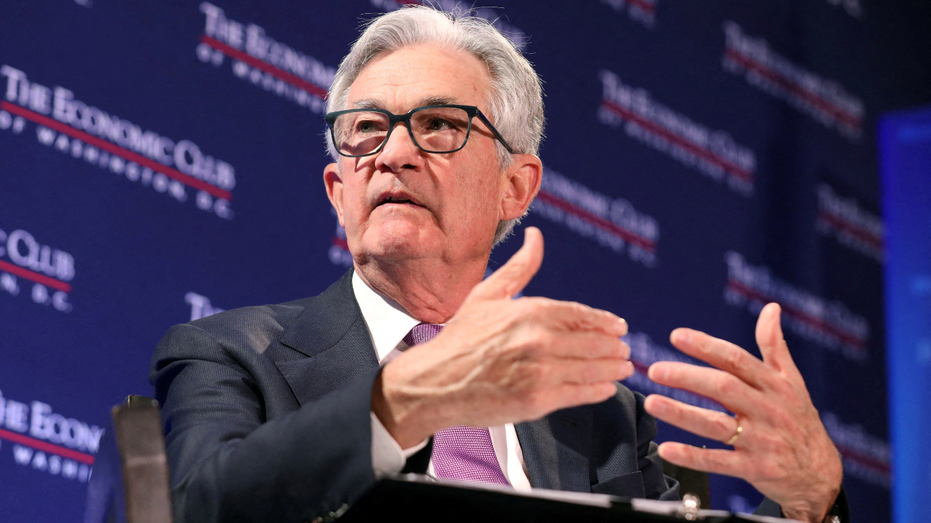
Former Fed Chair Jerome Powell remains a member of the central bank’s Board of Governors and of the FOMC after his chairmanship ended in May.(Amanda Andrade-Rhoades/Reuters)
Goldman Sachs economists Jan Hatzius and David Mericle, while acknowledging the questions surrounding the SEP’s future, noted that they do not anticipate major changes in the near term. “The FOMC just had a lengthy review of its communication practices last year in its framework review and was unable to agree on any changes,” they wrote, suggesting that any significant overhaul would likely require broader consensus within the committee. However, even a symbolic gesture from Warsh could shift the market’s focus from the Fed’s own forecasts to a more data-dependent approach.
The JPMorgan economists added that while Warsh has promised “regime change” at the Fed and will likely face questions about what this entails, he has also “always been somewhat vague about what that would entail.” They expect that at this early stage of his chairmanship, he will likely state he has initiated a review but will “avoid giving specifics.” This initial ambiguity, while perhaps politically prudent, could leave markets grasping for concrete details about the central bank’s evolving philosophy and operational framework under its new leadership.
GET FOX BUSINESS ON THE GO BY CLICKING HERE
Market Impact:
The Federal Reserve’s decision to hold rates, coupled with Chairman Warsh’s initial communications, carries significant implications across various asset classes. For equity markets, a “higher for longer” interest rate environment could continue to pressure valuations, particularly for growth stocks reliant on future earnings discounted at a higher rate. Sectors with strong balance sheets and consistent free cash flow may outperform. Fixed income markets are likely to see continued upward pressure on Treasury yields, reflecting persistent inflation concerns and reduced expectations for near-term rate cuts. Corporate bond spreads could widen as borrowing costs remain elevated, impacting corporate profitability and investment decisions. The U.S. dollar is poised to remain strong, benefiting from the interest rate differential compared to other major economies where central banks might be less hawkish. Commodity markets, especially energy, will remain highly sensitive to geopolitical developments, with any further supply disruptions translating directly into higher prices. Investors will be closely watching for any hawkish surprises or dovish hints in Warsh’s language, which could trigger immediate shifts in market sentiment and capital flows as participants adjust their portfolios to the Fed’s evolving monetary policy stance.