
Welcome back to TechCrunch Mobility — your central hub for news and insights on the future of transportation. To get this in your inbox, sign up here for free — just click TechCrunch Mobility!
Today is Juneteenth, a U.S. federal holiday marking the end of slavery in the United States.
Key Takeaways
- New AI Index Reshapes AV Race:A novel generative AI platform, Autnmy AI’s Road to Autonomy Index, offers a real-time, data-driven ranking of autonomous vehicle companies, surprisingly placing China’s Baidu Apollo Go ahead of Waymo in the robotaxi sector and highlighting strong Chinese performance globally.
- Rapid Fleet Expansion & Strategic Deals:Major players like Waymo, Tesla, and Zoox are significantly scaling their autonomous fleets in key markets like Texas, while the broader industry sees a flurry of multi-million dollar funding rounds and strategic partnerships, from logistics and battery tech to robotaxi deployment.
- Persistent Challenges in Safety & Regulation:Despite technological advancements and market growth, the AV sector continues to grapple with critical safety incidents, regulatory complexities, and the ongoing need for robust software solutions, as evidenced by Waymo’s recent recall and an Avride robotaxi collision.
The Evolving Autonomous Vehicle Landscape
For years, the discourse around autonomous vehicles (AVs) was dominated by questions of who was “winning” the race, often without a clear, objective metric. Early eras were characterized by grand demos and substantial capital injections, yet tangible, publicly accessible substance remained elusive. Fast forward a decade, and while the AV sector has matured considerably, the fundamental question of leadership and progress persists, now amplified by geopolitical dynamics and rapid technological shifts.
The Race for Autonomy: A New Yardstick Emerges
In a significant development for an industry long hungry for objective performance metrics, advisory and research startupAutnmy AIhas launched a groundbreaking generative AI platform designed to create a real-time benchmarking system for autonomous vehicle companies. Their newly released Road to Autonomy Index aims to provide an answer to that perennial “who’s winning” question, leveraging vast datasets from global public databases, including federal and state reports, SEC documents, public exchanges, and other licensed information.
The platform rigorously evaluates companies based on operations, scale, revenue, commercial partnerships, manufacturing capabilities, and safety records, updating its rankings every 12 hours. Crucially, as Autnmy AI co-founder Rob Grant emphasized, the system avoids web scraping, relying instead on publicly available or Creative Commons licensed data, augmented by paid licensed datasets. This commitment to data integrity aims to provide a more reliable and transparent assessment.
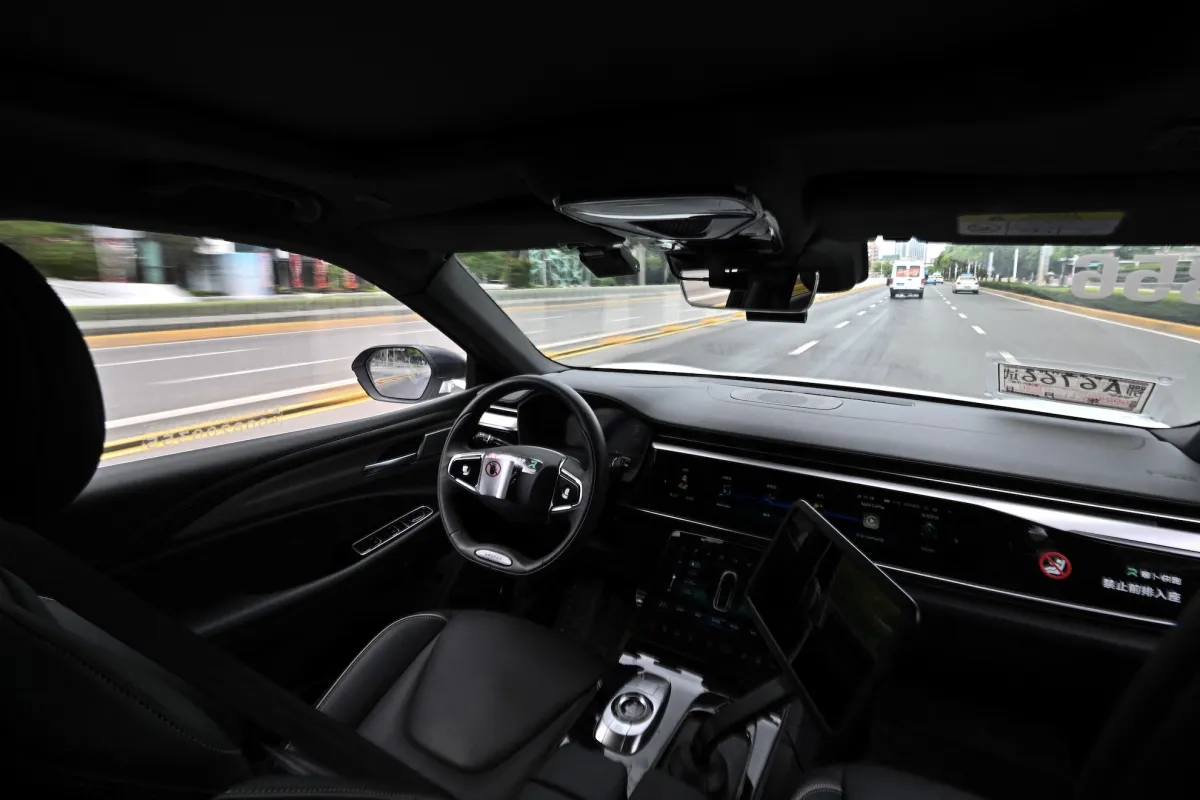
The index currently comprises four categories: robotaxis, autonomous driving licensing companies, autonomous trucks, and delivery bots. A key initial takeaway, and one that particularly struck Grant, is the unexpectedly strong performance of Chinese companies across multiple categories. As of Friday, the widely presumed robotaxi leader,Waymo, was narrowly edged out by China’sBaidu Apollo Goprogram. Waymo secured the second position, followed by other formidable Chinese players,Pony.aiandWeRide.Tesla, a significant contender in the broader autonomous driving space, ranked fifth in the robotaxi category.
On the Ground: Fleet Growth and Operational Expansion
Beyond the ranking systems, real-world deployment continues at a rapid pace. A recent tip highlighted the burgeoning activity reflected in the Texas automated vehicle tracker tool, which launched in May. Data from the tracker indicates a significant ramp-up in autonomous vehicle fleets across the state. In less than a month,Waymoincreased its registered autonomous vehicles by about 7.5%, from 577 to 620.Teslasaw an even more dramatic surge, registering 69 autonomous vehicles, a 64% increase from its 42 on May 28.Zooxalso expanded its presence, growing from 35 to 43 registered autonomous vehicles.
It’s important to note that registration numbers don’t always equate to commercial operation. For instance, Zoox, while actively testing and giving rides in its custom-built robotaxis, cannot yet charge customers without a federal government exemption. Meanwhile, companies likeAvride,Nuro, and Volkswagen subsidiaryMOIAare maintaining steady fleets, with 317, 47, and 12 vehicles registered respectively.
Strategic Alliances and Investment Flow

The AV and mobility sector continues to attract substantial investment and forge critical partnerships, indicating a robust appetite for innovation and market expansion:
- Cargofy, an AI-powered logistics company automating freight operations, successfully raised $11 million in a Series A funding round. The investment was led by u.ventures, Toloka, and Movens Capital, with participation from Intercom co-founder Des Traynor and several angel investors, underscoring confidence in AI’s role in modernizing supply chains.
- Singapore-based online car marketplaceCarroexpanded its footprint by acquiring Australian used-car platform CarPlace, a strategic move to consolidate its position in the broader Asia-Pacific market.
- Gatik, a leader in self-driving trucks for middle-mile logistics, announced a significant multi-year partnership withPepsiCo. While financial terms were undisclosed, this deal reinforces PepsiCo’s commitment to Gatik’s driverless operations already active across Arkansas, Arizona, and Texas, highlighting the growing commercial viability of autonomous freight.
- In a move towards advanced energy solutions, battery developerQuantumScapeformed a joint research agreement with Honda R&D Co. Their collaboration aims to accelerate the development of solid-state battery technology and associated manufacturing processes, crucial for the next generation of electric and autonomous vehicles.
- A powerful trio formed as automakerStellantis, self-driving startupWayve, and ride-hailing giantUberstruck a deal to jointly develop and deploy driverless robotaxis, pooling their expertise in vehicle manufacturing, AI-driven autonomy, and market access.
- XDOF, a startup specializing in robot training data—a critical component for robust AI development in robotics—secured $70 million in funding from prominent investors including Thrive Capital, Spark Capital, a16z, Lux, and WndrCo, signaling strong belief in foundational AI infrastructure.
Navigating the Roadblocks: Safety, Regulation, and User Adoption

Despite the advancements and investments, the path to widespread autonomous vehicle adoption remains fraught with challenges, particularly concerning safety, regulatory clarity, and public perception.
A recent incident captured on Reddit showed a driver running a stop sign and colliding with anAvride robotaxiin Dallas. The robotaxi, hailed via the Uber app, reportedly sustained no injuries, according to an Avride spokesperson. The company is actively reviewing data from the incident to refine its technology and processes. This event underscores the complex real-world scenarios AVs face and the critical role of continuous data analysis and system refinement, even with a human safety operator behind the wheel.
Curiously, in China,Teslaowners have found a unique workaround to the vehicle’s distracted driving monitor: tiny plastic heads. This highlights the ongoing tension between safety monitoring systems and user comfort or circumvention, a challenge for all manufacturers deploying advanced driver-assistance features.
Regulatory nuances are also in focus. Speculation arose on X (formerly Twitter) regarding aTeslawith an authorized limousine permit sticker for San Francisco County and SFO. However, SFO clarified that this permit is for traditional, human-driven limousine operations, not autonomous ones, emphasizing the clear distinction regulators currently draw between the two and the strict permitting required for AV operations.
In a significant strategic pivot,Mobileye, long known as an autonomous vehicle technology supplier, is now planning to become a robotaxi operator itself. The company intends to launch a robotaxi service in an unnamed U.S. city by 2027. This move aligns with Mobileye founder and CEO Amnon Shashua’s long-held belief, articulated as far back as 2020, that developing robotaxis is key to cracking the “holy grail” of passenger car autonomy.
Expanding the ride-hailing giant’s AV footprint,Uberannounced plans to launch a premium robotaxi service in Houston by mid-2027, marking its second U.S. market under its partnership with EV makerLucidand autonomous vehicle startupNuro. This diversification of partnerships reflects Uber’s multi-pronged strategy to integrate autonomous solutions into its extensive network.
Finally, a critical safety challenge emerged asWaymorecalled its entire fleet of nearly 4,000 robotaxis to address an issue where they were driving into highway construction zones. While Waymo had already pulled its robotaxis off freeways weeks prior, the recall revealed at least 13 instances of this behavior. The fact that the software fix is still “under development” underscores the complexity of autonomous system debugging and the ongoing commitment required to ensure public safety, even for industry leaders.
Bottom Line
The autonomous vehicle industry is a vibrant, rapidly evolving ecosystem characterized by intense global competition, significant technological breakthroughs, and substantial financial investment. While new AI-driven metrics challenge traditional perceptions of leadership, and fleets expand rapidly in key markets, the sector continues to navigate complex real-world challenges. Persistent issues in safety, regulatory clarity, and the refinement of advanced software systems underscore that the “race to autonomy” is less about a single winner and more about a continuous, iterative journey toward safe, reliable, and commercially viable self-driving transportation. The road ahead, while promising, demands unwavering commitment to innovation, meticulous safety protocols, and adaptable regulatory frameworks.
Source:{feed_title}