
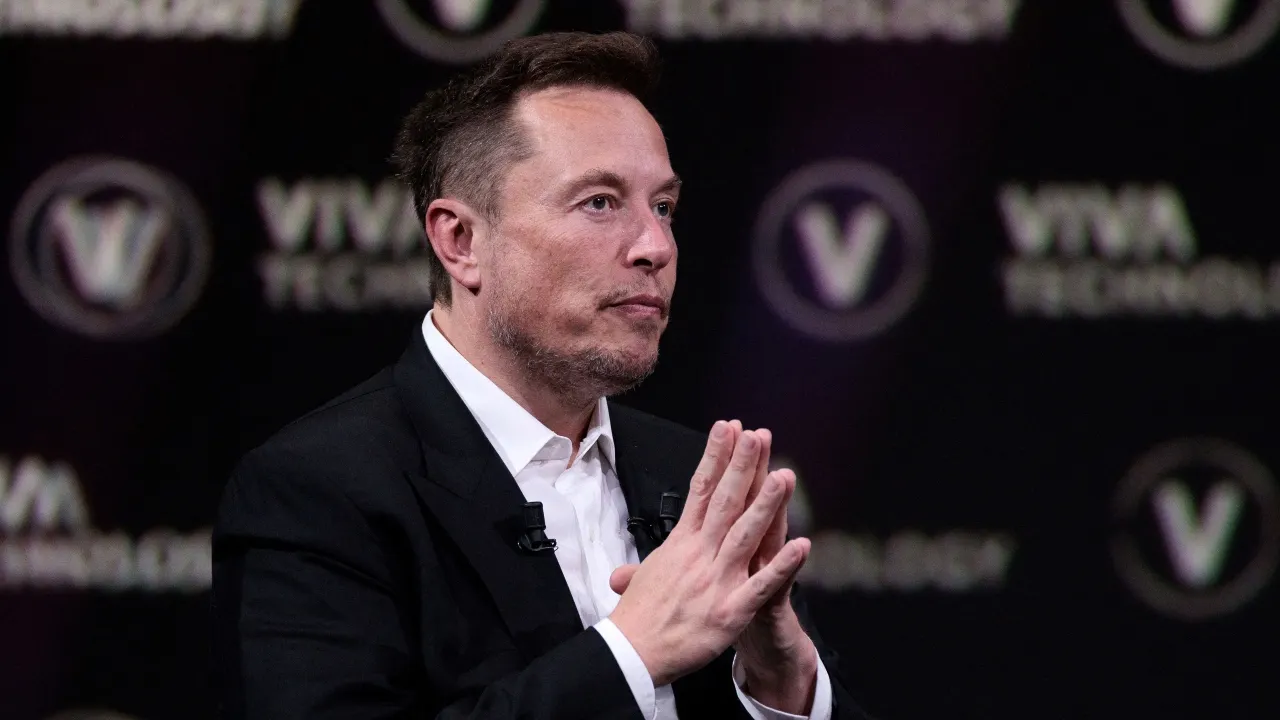
Elon Musk delivers an inspiring speech at the SpaceX IPO event, sharing his initial doubts about the company’s success but emphasizing the importance of making life multi-planetary and creating an exciting future for everyone.
**Key Takeaways:**
1. **Extreme Volatility of Concentrated Wealth:** Elon Musk’s swift decline from trillionaire status underscores the inherent volatility of wealth highly concentrated in high-growth, often speculative, public assets amidst shifting market sentiment.
2. **Post-IPO Correction & Valuation Scrutiny:** The rapid ascent and subsequent significant drop in SpaceX shares post-IPO reflect a broader market trend of initial public offering exuberance giving way to increased scrutiny on valuations, especially for companies perceived as richly priced.
3. **Tech Sector Re-evaluation:** A pervasive tech sell-off, driven by macroeconomic concerns and a re-assessment of long-term profitability for AI and other growth sectors, signals a market pivot from aggressive growth at any cost to a more fundamental-driven investment approach.
Elon Musk’s fleeting reign as the world’s first trillionaire serves as a stark barometer of the current market’s capricious nature, where monumental valuations can pivot dramatically in mere days. Less than two weeks after shattering the trillion-dollar barrier, the visionary entrepreneur’s net worth has rescinded significantly, pulled back by a broader market recalibration that is challenging the valuations of even the most iconic tech and innovation-driven enterprises.
As of Wednesday, Musk’s net worth stood at $946 billion, a considerable decline from its peak of approximately $1.11 trillion just a fortnight earlier, according to the Bloomberg Billionaires Index. This dramatic swing is directly attributable to significant declines in the share prices of his two primary holdings: SpaceX, which recently made its highly anticipated public debut, and Tesla, the electric vehicle giant. The downturn reflects a pervasive tech sell-off, fueled by mounting investor caution regarding the long-term profitability and sustainable growth prospects of high-valuation sectors, particularly those heavily invested in artificial intelligence.
Despite this substantial paper loss, Musk maintains an unchallenged position as the world’s richest individual. His lead remains vast, with Larry Page, Sergey Brin, Jeff Bezos, and Michael Dell trailing significantly, illustrating the sheer scale of wealth concentrated in Musk’s innovative ventures.
**SPACEX MAKES HISTORIC DEBUT; MUSK SOLIDIFIES STATUS AS WORLD’S FIRST TRILLIONAIRE**
The journey to trillionaire status was largely paved by the historic public offering of Space Exploration Technologies Corp., or SpaceX. The much-anticipated IPO, priced at an ambitious $135 per share, ignited a firestorm of investor excitement upon its June 12 debut, with shares immediately beginning trading at $150. This landmark listing not only solidified SpaceX’s position as a titan of the aerospace industry but also propelled Musk’s net worth past the unprecedented $1 trillion mark.
Musk remains the world’s richest person by a wide margin.(Robin Legrand/AFP via Getty Images)
At its IPO price, the market debut valued SpaceX at an astounding $1.77 trillion. Given Musk’s approximately 42% ownership stake in the company, this valuation, combined with his substantial holdings in Tesla and other assets, was the critical factor in his brief ascent to trillionaire status. The initial market enthusiasm for SpaceX, driven by its unparalleled innovation in reusable rocket technology and its strategic importance to national space endeavors, pushed its shares even higher, reaching a peak of $225.64 by June 16. This surge further inflated Musk’s fortune to an estimated $1.32 trillion, demonstrating the profound impact of market sentiment on concentrated wealth.
**MUSK’S SPACEX SURGES PAST AMAZON IN MARKET CAP AFTER HISTORIC IPO DEBUT**
The initial euphoria surrounding SpaceX’s IPO was a classic example of “buy the rumor, sell the news” dynamics, amplified by retail investor excitement and institutional front-running. Investors, eager to participate in a company pioneering multi-planetary life and reshaping space economics, drove up demand. However, the market’s honeymoon period was short-lived.
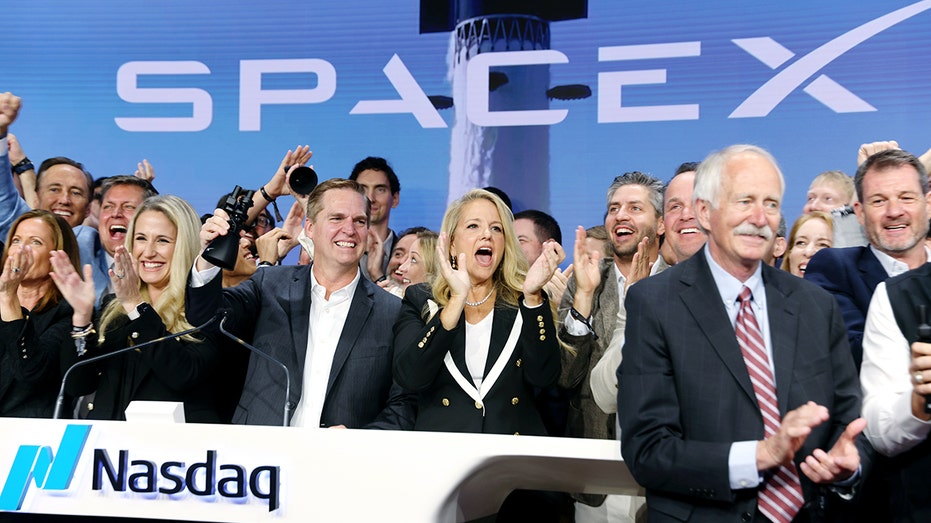
Bret Johnsen, chief financial officer of SpaceX, center left, and Gwynne Shotwell, president of SpaceX, center, during the company’s IPO at the Nasdaq MarketSite in New York, on June 12, 2026(Michael Nagle/Bloomberg via Getty Images)
The gains, however, proved unsustainable in the face of a broader market shift. SpaceX shares plummeted more than 30% from their June peak during a significant tech sector sell-off. On June 22 alone, the stock dropped a staggering 16%, wiping approximately $240 billion from Musk’s fortune in a single trading session. This was compounded by a nearly 6% decline in Tesla shares the following day, further accelerating the erosion of his net worth.
This sharp reversal was not an isolated incident for SpaceX or Tesla, but rather a prominent casualty in a broader, deepening tech sector correction. Investors, once enamored with audacious growth narratives and future promises, are now scrutinizing balance sheets and demanding clearer paths to sustained profitability. Macroeconomic headwinds, including persistent inflation, rising interest rates, and concerns over a potential economic slowdown, have made future earnings streams less valuable when discounted back to the present. This shift has triggered a re-evaluation of high-growth, high-valuation stocks, particularly those reliant on long-term technological bets like artificial intelligence, which has seen its initial investment frenzy tempered by questions of practical implementation and return on investment.
Stocks In This Article:
**SPACEX SET A NEW RECORD FOR IPOS: THESE ARE THE WORLD’S 5 LARGEST**
Tesla, a bellwether for the electric vehicle and broader tech innovation sectors, also bore the brunt of this shifting sentiment. As a company often valued on its future potential rather than immediate profitability, Tesla is particularly sensitive to changes in market liquidity and investor risk appetite. Its substantial market capitalization and high correlation with the wider tech index mean that general market downturns have an amplified effect on its share price, and consequently, on Musk’s net worth.
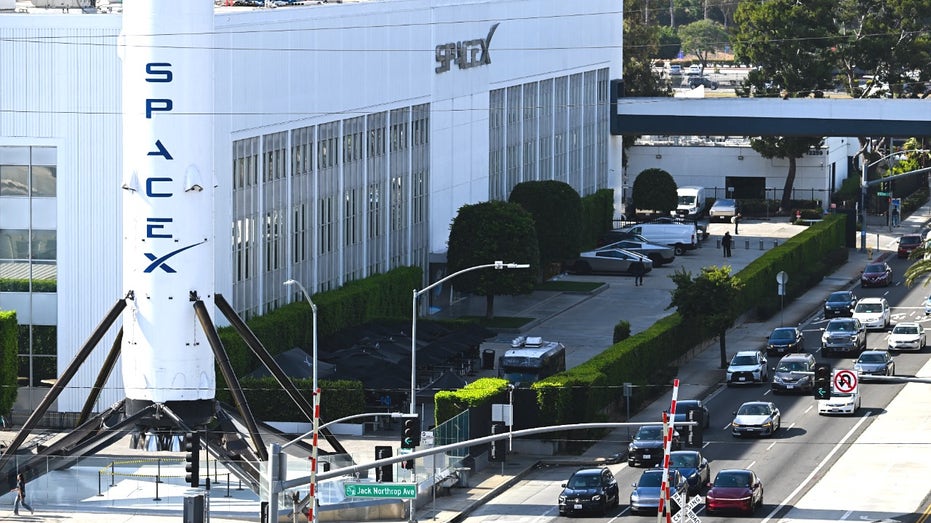
A Tesla Cybertruck drives past a SpaceX Falcon 9 rocket displayed outside a Space Exploration Technologies Corp. facility in Hawthorne, California, on June 8, 2026.(AFP via Getty Images)
Founded by Musk in 2002, SpaceX has undeniably grown into the world’s largest space company and a dominant force in commercial launch services. The company pioneered reusable rocket technology, a revolutionary advancement that has significantly lowered launch costs and reshaped the economics of the space industry. Furthermore, SpaceX has become an indispensable contractor for NASA and the U.S. government, undertaking critical civil and national security missions. Despite the short-term stock volatility, it’s crucial to distinguish between immediate market sentiment and fundamental business strength. The company’s core mission, technological advancements, and strategic importance remain largely unaffected by the daily ebb and flow of stock prices, pointing to a potential disconnect between immediate market reactions and long-term intrinsic value.
The saga of Musk’s trillion-dollar valuation and subsequent decline serves as a potent case study for the current investment climate. It highlights a market that is increasingly discerning, moving away from a “growth at any cost” mentality, especially after years of ultra-low interest rates fostered an environment for sky-high valuations. This recalibration could see a sector rotation, with investors favoring established, profitable companies over speculative, high-growth ventures, pushing for sustainable earnings over ambitious future projections.
**GET FOX BUSINESS ON THE GO BY CLICKING HERE**
*FOX Business’ Bradford Betz and Eric Revell contributed to this report.*
**Market Impact:**
The dramatic fluctuations in Elon Musk’s net worth, directly mirroring the fortunes of SpaceX and Tesla, signal a significant recalibration within the broader technology and growth stock markets. This episode underscores a palpable shift in investor sentiment, moving from an era of exuberant valuation of disruptive potential to a more cautious, fundamental-driven approach. The post-IPO decline of SpaceX, alongside a broader tech sell-off, could temper the appetite for future high-profile public offerings, prompting companies to demonstrate clearer profitability pathways before seeking public capital. Furthermore, the increased scrutiny on AI’s long-term profitability suggests a potential cooling of investment in speculative, futuristic ventures across the board, favoring sectors with more immediate and tangible returns. For the wider market, this trend indicates a potential deleveraging of risk and a return to more traditional valuation metrics, impacting everything from venture capital flows to the performance of innovation-heavy indices and signaling a more challenging environment for companies yet to prove their long-term financial viability.