
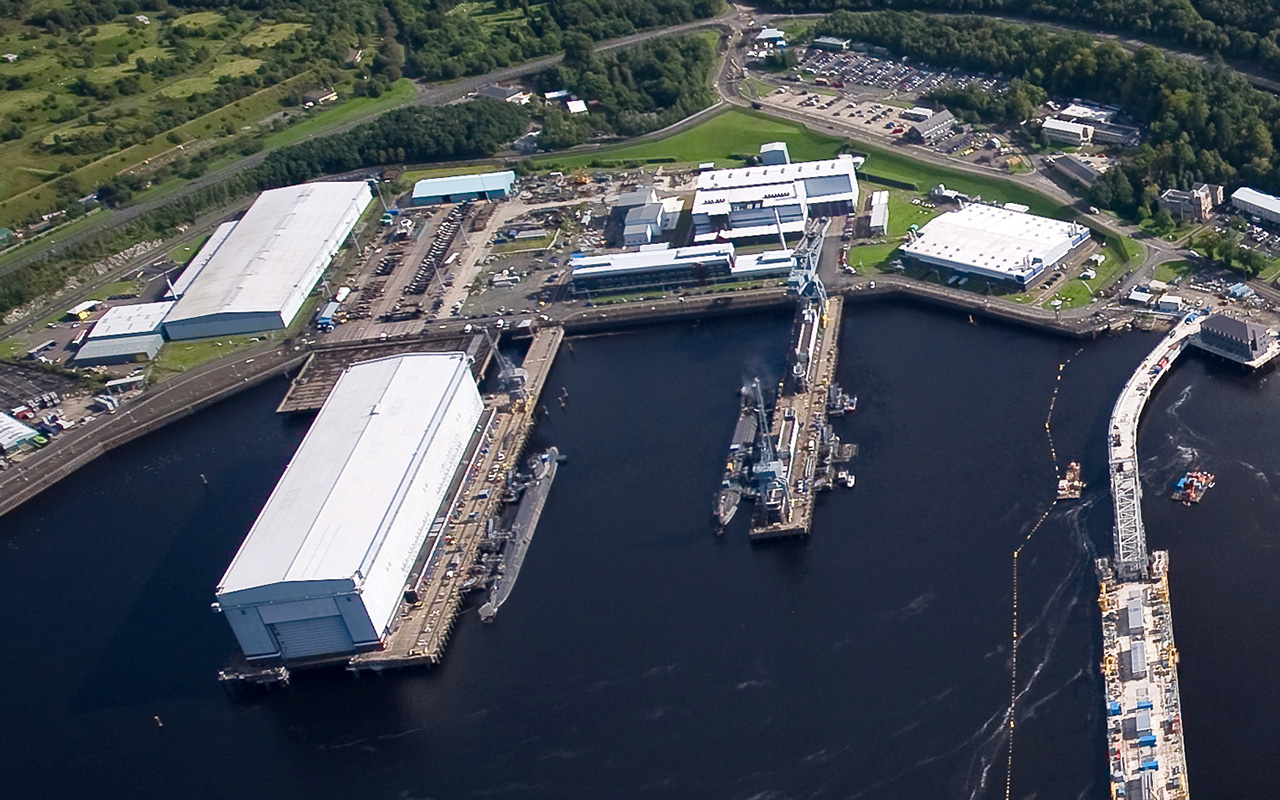
Royal Navy Fortifies Submarine Readiness with Pioneering On-Site 3D Printing Capability at Faslane
The Royal Navy has unveiled a groundbreaking new capability aimed at transforming the maintenance and repair of its critical submarine fleet. Through a strategic partnership with defence technology firm QinetiQ, advanced additive manufacturing (3D printing) solutions are being deployed at Her Majesty’s Naval Base Clyde (Faslane), Scotland, the home of the UK’s submarine force. This initiative, developed under two contracts with the Submarine Delivery Group’s (SDG) Additive Manufacturing team, seeks to dramatically reduce dependence on complex external supply chains and significantly accelerate repair timelines for vital underwater assets.
Central to this initiative is QinetiQ’s “Additive Manufacturing All In One” solution, complemented by its “Market Access Cell.” This integrated system is designed to enable essential submarine components to be manufactured on demand and on-site. The process involves a collaborative effort between QinetiQ engineers and Royal Navy submariners, who will produce parts directly at Faslane and deliver them to the submarines, streamlining a previously intricate logistical challenge.
QinetiQ describes the “All In One” solution as a crucial step towards establishing a UK sovereign point-of-need capability. The primary objective is to enhance the Royal Navy’s operational autonomy by mitigating vulnerabilities associated with traditional, often global, supply chains, which can be prone to delays and complexities. By bringing manufacturing closer to the point of use, the capability is expected to significantly shorten repair times across the entire Royal Navy submarine fleet, thereby boosting overall availability and operational readiness.
The new manufacturing arrangement is structured into two distinct operational strands. The “All In One” containers function as deployable workshops, specifically engineered for routine on-site production. These bespoke containers were designed and manufactured by QinetiQ’s technicians and engineers at their Cody Technology Park headquarters in Farnborough before being transported to Faslane. Within these facilities, one container is dedicated to reverse engineering tasks, utilizing advanced scanning technology to create precise digital blueprints of existing parts. These digital models then facilitate the re-engineering process, with new components manufactured in an adjacent workshop primarily through polymer printing technology. This allows for rapid fabrication of various parts crucial for submarine operations.
For more complex or specialized components that exceed the on-site production capabilities of the “All In One” containers, the “Market Access Cell” provides a sophisticated alternative. Under this system, QinetiQ reverse engineers these intricate parts at its specialist facilities located across the United Kingdom. Once detailed digital blueprints are generated, they are shared with an accredited network of small and medium-sized enterprises (SMEs) spanning both the UK and Australia. This network includes companies renowned for their high-precision manufacturing and rapid prototyping expertise, drawing talent from sectors such as Formula 1 racing. This broadens the Royal Navy’s access to highly specialized manufacturing skills and resources for challenging components.
QinetiQ will be responsible for operating the “All In One” containers at Faslane, providing essential engineering expertise and platform knowledge, and working in close cooperation with Royal Navy submariners. Beyond the initial manufacturing phase, QinetiQ will also support the Submarine Delivery Group in the critical task of qualifying all components produced through either the on-site route or the broader “Market Access Cell” network. This rigorous qualification process is vital to ensure that all newly manufactured parts meet the exacting safety and performance standards required for integration into the wider submarine supply chain and for operational deployment.
Will Blamey, Chief Executive of UK Defence at QinetiQ, highlighted the transformative potential of this combined capability. In a company statement, he affirmed, “Our proven expertise in additive manufacturing combined with the latest technology being installed at HM Naval Base Clyde will see us print, scan and reverse engineer submarine parts on demand, at pace and at dockside, helping to get submarines back on operations more quickly.” This underscores the direct impact on enhancing operational efficiency and fleet readiness.
The introduction of this advanced technology directly addresses long-standing concerns regarding the availability of the Royal Navy’s nuclear-powered submarine fleet and the significant periods these vessels spend undergoing maintenance rather than being deployed at sea. The “Submarine Maintenance Recovery Plan,” launched in January by First Sea Lord General Sir Gwyn Jenkins, was specifically established to tackle these issues. Both the Astute-class attack submarine fleet and the Vanguard-class ballistic missile submarine fleet have faced challenges, with maintenance cycles for the latter, in particular, often extending considerably beyond original schedules. Faslane, as the home port for both classes, is central to this critical recovery effort.
General Sir Gwyn Jenkins characterized the deployment of the new workshops as a significant advancement towards achieving the plan’s objectives. He commented, “The arrival of these deployable workshops marks a step forward in delivering the Submarine Maintenance Recovery Plan. This new technology has the potential to change how we maintain our submarines, cutting time alongside and increasing availability. It represents the real, tangible, progress the Royal Navy is making to strengthen the underwater fleet.”
QinetiQ’s involvement in additive manufacturing for submarine maintenance is the culmination of evolving expertise and prior experiences. Notably, the company provided crucial support during a routine maintenance period for HMS Anson, the fifth Astute-class submarine, when the vessel visited Perth in Western Australia in March 2026. During this engagement, QinetiQ swiftly designed and produced critical components, delivering replacements in approximately four weeks – a timeframe considerably shorter than typical lead times associated with conventional submarine supply chains. This invaluable hands-on experience and the insights gained from it played a key role in informing the design and operational concept of the “All In One” facility now being introduced at Faslane.
Paul Duff, an Associate Materials Scientist at QinetiQ, observed the rapid progression of the project from its initial conceptual phase to a fully fielded operational capability. He stated, “Working in the Additive Manufacturing All-in-One facility alongside Royal Navy personnel will provide us with an incredible opportunity to show how additive manufacturing can transform routine submarine maintenance. It’s been very rewarding to see the facility come together in Farnborough and even more exciting to see it now deployed at HMNB Clyde.”
Commander Max, the SDG Additive Manufacturing Lead, emphasized the tangible benefits that the on-site manufacturing model directly offers to the submarines. He articulated that “by enabling engineers to produce components on-site, we are reducing dependence on complex supply chains and accelerating repair timelines, ultimately improving the submarine’s material state and availability.”
The Royal Navy’s adoption of additive manufacturing is part of a broader, increasing trend within defence engineering globally. Over the past decade, this technology has steadily moved beyond prototype and research applications into mainstream operational use. Allied navies, including those of the United States, Australia, and the Netherlands, are all pursuing similar initiatives to integrate additive manufacturing into the supply chains supporting their fleets. The technology is particularly well-suited for the efficient production of low-volume, high-specification components, especially for legacy platforms where conventional supply chains can be slow or where original equipment manufacturers may no longer readily offer specific parts. This makes it an ideal solution for maintaining complex, long-serving naval assets with greater agility and efficiency.
Why This Matters
The deployment of QinetiQ’s additive manufacturing capability at HMNB Clyde represents a significant strategic advancement for the United Kingdom’s national security and defence posture. Firstly, it directly addresses critical issues of submarine availability, which have historically impacted the Royal Navy’s capacity to maintain its nuclear deterrent and project global power. By significantly cutting maintenance times and accelerating repairs, more submarines will be operational and at sea, bolstering the UK’s strategic capabilities and response times in an increasingly complex geopolitical landscape. This directly translates to enhanced readiness and a stronger deterrent.
Secondly, this initiative dramatically enhances supply chain resilience. Reducing dependence on intricate, often global, external supply chains creates a sovereign manufacturing capability that is less vulnerable to international disruptions, geopolitical tensions, or single points of failure. This self-reliance ensures that vital components can be produced rapidly and securely within national borders, safeguarding the continuity of critical defence operations and reducing strategic dependencies.
Thirdly, it signifies a forward-looking embrace of technological innovation within defence. The integration of advanced manufacturing techniques positions the Royal Navy at the forefront of modern military logistics and engineering. This not only improves the efficiency of current operations but also fosters a culture of innovation, potentially leading to further advancements and applications across other defence sectors. It demonstrates the UK’s commitment to leveraging cutting-edge technology for national defence.
Finally, the involvement of UK and Australian SMEs, including those from high-tech sectors like Formula 1, stimulates economic growth and job creation within the advanced manufacturing industry. It helps to build a robust network of specialized suppliers, diversifying the defence industrial base and ensuring that the UK can draw upon a wide range of expertise to support its most vital assets. This blend of enhanced national security, economic resilience, and technological leadership underscores the profound importance of this new capability for the United Kingdom and its allies.