
‘The Big Money Show’ discusses U.S. control of the Strait of Hormuz, President Donald Trump’s Iran threats, and energy security.
**Key Takeaways:**
1. **Regulatory Scrutiny on Energy Sector:** President Trump’s directive for a U.S. Justice Department investigation into alleged fuel price gouging introduces significant regulatory and reputational risk for major oil companies, potentially impacting investor sentiment and sector valuations amidst broader market uncertainty.
2. **Geopolitical Risk Premium & Supply Chain Volatility:** Ongoing geopolitical tensions, particularly the Iran conflict and increased tanker traffic through the Strait of Hormuz, are adding a substantial risk premium to global crude oil prices. This exacerbates energy security concerns and contributes to the persistent disconnect between fluctuating crude benchmarks and pump prices due to complex supply chain dynamics and refining margins.
3. **Persistent Inflationary Pressures & Consumer Headwinds:** Elevated energy costs continue to be a primary driver of broader inflation, eroding consumer purchasing power and influencing monetary policy decisions. The political spotlight on gas prices ahead of upcoming elections underscores their critical role in economic stability and public sentiment.
President Donald Trump has ignited a fresh wave of market speculation and political debate with his assertion that energy companies are engaging in fuel price gouging, announcing a formal order for the U.S. Justice Department (DOJ) to investigate the matter. This directive sends a clear signal of heightened regulatory scrutiny over the energy sector at a time when global oil markets are already grappling with significant geopolitical instability and fluctuating supply dynamics.
“The big Oil Companies are not dropping their price at the pump commensurate with the sharply lower prices they are paying for Oil. Those prices are dropping like a rock! In other words, customers are being ‘gouged,'” Trump asserted in a Truth Social post, directly challenging the industry’s pricing mechanisms. He continued, “I have instructed the DOJ to immediately start looking into this. Gasoline prices better start going down a lot faster than what I’m seeing!”
This statement, coming from a former President and potential future presidential candidate, immediately adds a layer of political risk to an industry already navigating complex market forces. While crude oil prices, particularly the West Texas Intermediate (WTI) benchmark, have seen some recent declines, the lag in consumer-facing pump price adjustments is a perennial source of public frustration and political opportunism. The disparity is often attributed to factors beyond crude cost, including refining margins, transportation expenses, retail markups, inventory holding costs, and various taxes. A DOJ investigation could delve into these components, potentially leading to antitrust actions or increased regulatory oversight, which could impact the profitability and operational flexibility of integrated oil companies and independent refiners.
OIL TANKER TRAFFIC THROUGH STRAIT OF HORMUZ HITS HIGHEST LEVEL SINCE CONFLICT BEGAN BUT MINES REMAIN
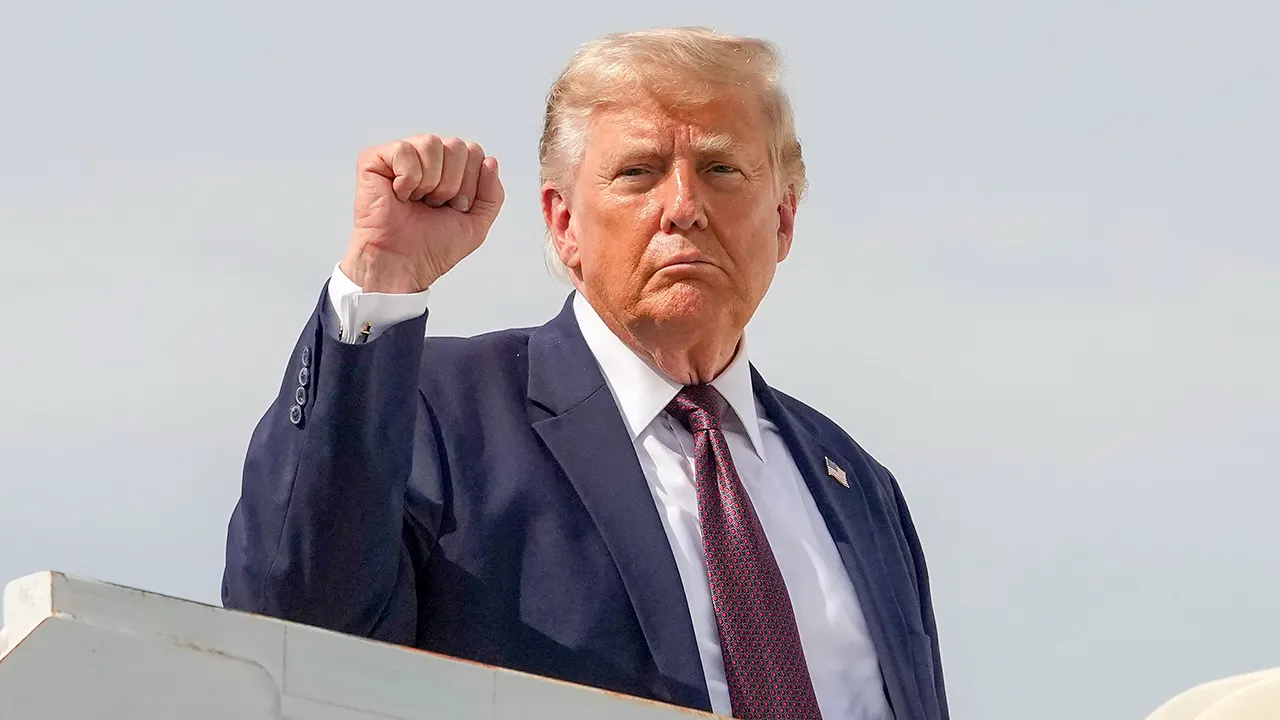
U.S. President Donald Trump gestures as he boards Air Force One to depart Reading Regional Airport on June 23, 2026 in Reading, Pa.(Andrew Harnik/Getty Images / Getty Images)
The geopolitical backdrop to these domestic price concerns is equally, if not more, impactful on global energy markets. Americans have been facing higher fuel prices amidst the ongoing Iran conflict, a situation exacerbated by the strategic importance of the Strait of Hormuz. Recent reports indicate that oil tanker traffic through this vital chokepoint has reached its highest levels since the conflict began, signaling a resumption of key shipping routes despite the lingering threat of naval mines. This seemingly contradictory trend highlights the delicate balance between the imperative of global oil supply and the inherent risks of navigating a conflict zone.
The Strait of Hormuz is a critical artery for global energy supply, through which approximately one-fifth of the world’s total oil consumption, including nearly all of Saudi Arabia’s, Iran’s, UAE’s, Kuwait’s, and Iraq’s crude oil exports, passes. Any disruption or perceived threat to this passage immediately translates into a significant “risk premium” on international crude oil benchmarks like Brent and WTI. The mere presence of naval mines, even if not actively disrupting traffic, elevates insurance costs for tankers, increases shipping times due to precautionary measures, and keeps traders on edge, all of which contribute to higher prices at the pump for consumers globally. The U.S. assertion of control over the Strait, as discussed on ‘The Big Money Show,’ further underscores the geopolitical maneuvering and its potential to either stabilize or destabilize energy flows.
The AAA national average for regular gas stood at $3.928 as of June 24. While this represents a notable decrease from the month-ago average of $4.515, it remains significantly higher than the year-ago average of $3.224. This trend reflects the complex interplay of factors: the recent easing in crude oil prices providing some relief, but the enduring impact of a year of elevated geopolitical risk and robust demand preventing a return to pre-conflict levels. The consumer-facing implications are profound, as higher gasoline prices act as a direct tax on households, reducing discretionary spending and potentially dampening overall economic activity, particularly impacting sectors reliant on transportation and consumer confidence.
INFLATION ROSE AGAIN IN MAY AS ELEVATED ENERGY PRICES SQUEEZE CONSUMERS
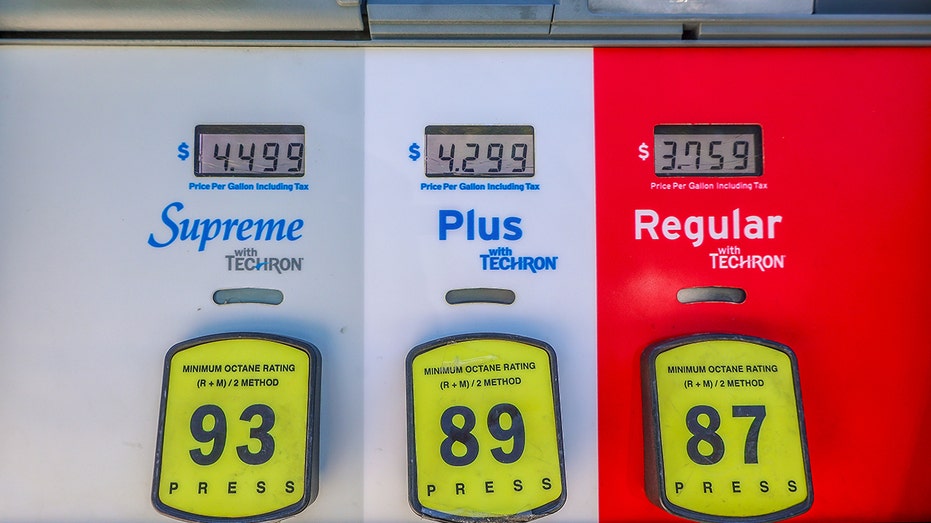
Fuel prices on a pump at a Chevron gas station in Bay Harbor Island, Fla., on Monday, June 22, 2026. (Zak Bennett/Bloomberg via Getty Images / Getty Images)
The broader economic narrative continues to be dominated by inflation, with elevated energy prices playing a pivotal role. The increase in May’s inflation figures directly correlates with the stubbornly high costs of fuel, creating a squeeze on consumers’ wallets. This inflationary pressure puts central banks in a difficult position, potentially compelling them to maintain a hawkish monetary policy stance, including higher interest rates, which could further weigh on economic growth and equity markets.
WTI crude oil futures are currently around $71 as of Wednesday morning, having traded even lower before the onset of the Iran war. U.S. crude closed at $73.21 Tuesday, a modest $6.19 higher than the day before America’s attack on Iran earlier this year, NBC News reported. This specific price differential highlights the “war premium” that has been baked into crude prices. While $6.19 might seem small on a per-barrel basis, when multiplied by millions of barrels traded daily, it represents a substantial additional cost to the global economy. The volatility in WTI futures, influenced by a myriad of factors including OPEC+ production decisions, U.S. strategic petroleum reserve releases, global demand forecasts, and inventory data, underscores the inherent unpredictability of the commodity market. Traders are constantly recalibrating their positions based on geopolitical headlines, economic indicators, and supply-demand imbalances, leading to rapid price swings that complicate energy companies’ hedging strategies and long-term investment planning.
TRUMP VISITS MACK TRUCKS PLANT IN BATTLEGROUND PENNSYLVANIA DISTRICT TO TOUT ECONOMIC AGENDA AS MIDTERMS LOOM
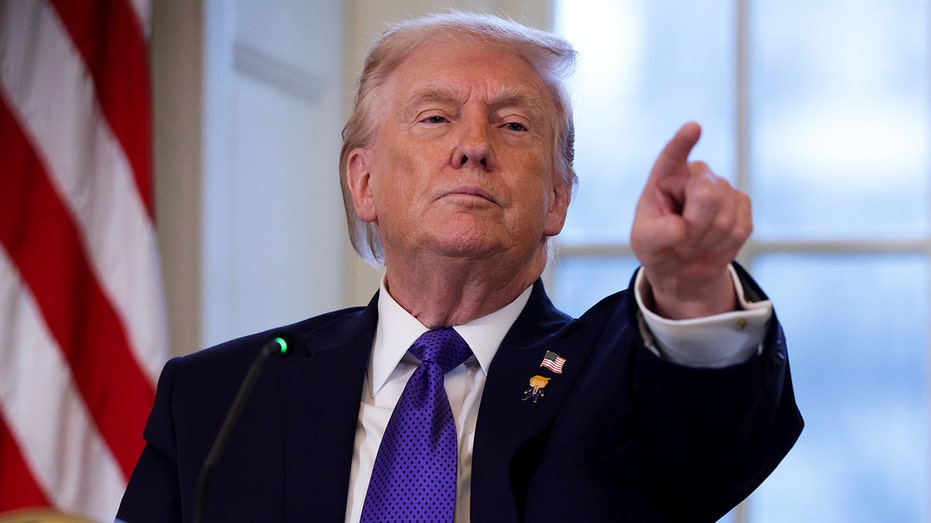
U.S. President Donald Trump takes questions from members of the media during a meeting with oil and gas executives in the East Room of the White House on Jan. 9, 2026 in Washington, D.C. (Alex Wong/Getty Images / Getty Images)
The political implications of energy prices are particularly acute as midterm elections loom. Trump’s visit to a Mack Trucks plant in a battleground Pennsylvania district to promote his economic agenda illustrates how energy costs are intertwined with broader economic prosperity and voter sentiment. High fuel prices can directly impact the profitability of industries like trucking and logistics, which are vital to the U.S. supply chain, creating a ripple effect across the economy. Addressing these concerns through accusations of price gouging, whether substantiated or not, serves as a powerful political message aimed at demonstrating a commitment to alleviating consumer burden.
GET FOX BUSINESS ON THE GO BY CLICKING HERE
Adding another layer to the intricate geopolitical tapestry, Trump signed a Memorandum of Understanding related to Iran last week. While the specifics of this MOU are not detailed, any diplomatic or strategic engagement concerning Iran holds significant sway over global oil markets. Such agreements could potentially lead to shifts in sanctions, alter Iranian oil output, or influence the stability of the broader Middle East, directly impacting global supply expectations and the risk premium associated with the region’s energy resources. Investors and traders will be closely monitoring developments for any cues that could signal a fundamental shift in energy market dynamics.
**Market Impact:**
President Trump’s call for a DOJ investigation injects considerable regulatory uncertainty into the U.S. energy sector, potentially leading to increased legal costs, reputational damage, and a dampening effect on capital investment in oil and gas companies. Share prices of major refiners and integrated oil companies could see downward pressure as investors price in potential enforcement actions or stricter oversight. Simultaneously, the persistent geopolitical risk emanating from the Iran conflict and the Strait of Hormuz continues to underpin a significant risk premium in crude oil prices, contributing to inflationary pressures that erode consumer purchasing power and influence Federal Reserve policy. The combination of political pressure for lower pump prices, ongoing supply chain volatility, and sustained consumer demand for fuel creates a challenging environment for energy companies while posing an ongoing threat to broader economic stability and equity market performance, particularly in sectors sensitive to energy costs and consumer spending. Continued volatility in commodity markets and the potential for new policy directives will keep investors on high alert.