
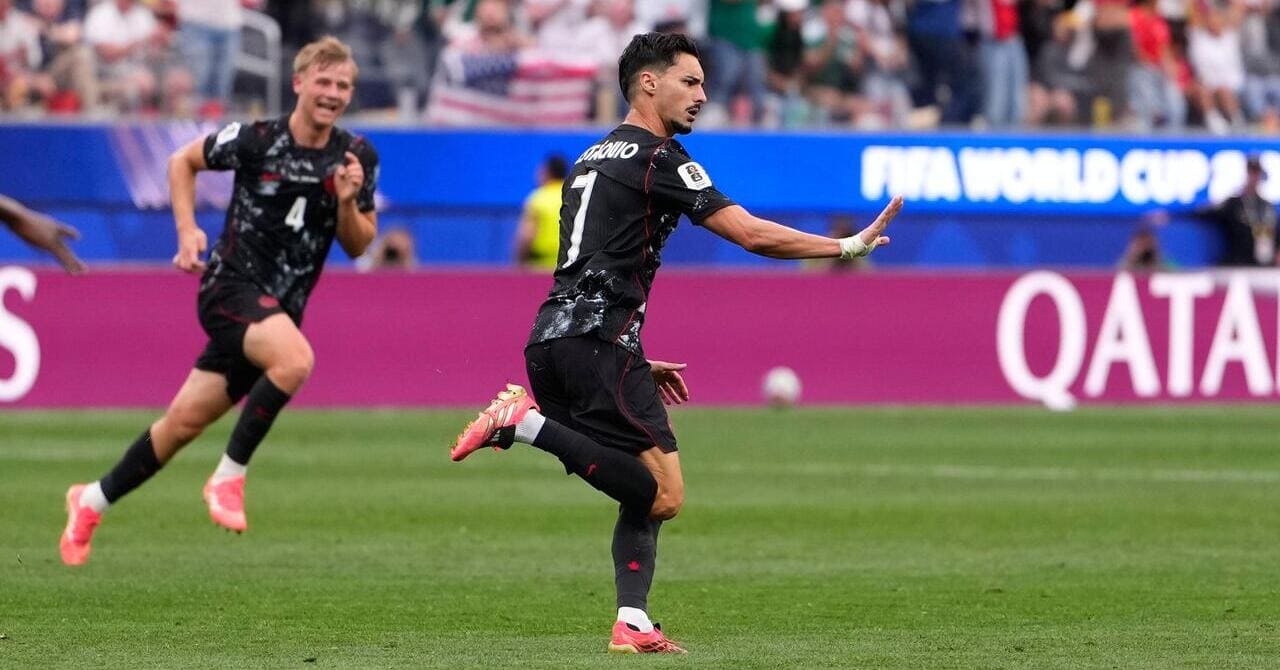
The roar that erupted in Los Angeles wasn’t just a celebration; it was a release. A nation held its breath, and then, in the 92nd minute, it exhaled in an explosion of pure, unadulterated joy. Stephen Eustaquio, Canada’s midfielder maestro, didn’t just score a goal; he etched his name into the annals of Canadian sporting history, unleashing a half-volley that ripped through the net and sent the co-hosts into the World Cup Last 16. “I felt everyone shoot with me,” Eustaquio declared, a testament to the collective belief that pulsed through the Canadian camp and resonated across the vast expanse of their home country.
This wasn’t merely a victory; it was a watershed moment for Canadian football. Having navigated a tricky group stage and now securing their first-ever knockout win, the ‘CanMNT’ proved they belong on the biggest stage. The irony of achieving this historic feat in Los Angeles, a neutral territory for a nation that had failed to top its group, only added to the narrative of resilience and redemption. Jesse Marsch’s side, known for their relentless press and high-octane attacking style, had battered the South African defence for much of the match, creating a multitude of chances that, on another day, would have seen them cruise to a far more comfortable victory.
Yet, comfort was never on the menu when facing South Africa’s indomitable goalkeeper, Ronwen Williams. His performance was nothing short of heroic, a one-man wall repelling wave after wave of Canadian assault. But even the most impregnable fortresses can fall to a strike born of sheer will and emotional power. For Eustaquio, the goal carried an even deeper resonance, a poignant tribute following the loss of both his parents in recent years. It was a cathartic moment, a confluence of personal triumph and national destiny, perfectly encapsulated in his powerful strike.
“I think we worked a lot to get this victory,” Eustaquio continued, his voice heavy with emotion. “We really wanted to give this win to all of the Canadians. We just kept believing, kept pushing and I couldn’t have imagined it any other way. I think it was an amazing goal but when I shot, I felt everyone shoot with me. They put a little bit of power on it and it went into the back of the net. So I am very happy.” This sentiment speaks volumes about the unity Marsch has forged within the squad, transforming a collection of talented individuals into a cohesive, belief-driven unit capable of surprising the world.
Eustaquio Hopeful Canada Can Spring Last-16 Surprise
The euphoria of victory now gives way to the formidable challenge of the Last 16, where Canada awaits either the tactical prowess of the Netherlands or the electrifying flair of Morocco. Eustaquio, ever the realist, acknowledges the underdog tag. “It [the belief] started when we came out of the group stage. I think when it comes to the knockouts of the World Cup, the belief brings a big part to it,” he explained. “Now, we’re going to get Morocco or the Netherlands and who knows, on a good day we can make things happen. Probably the quality is not going to be there, but if we keep believing and keep working, things might go our way.” This isn’t naive optimism; it’s a strategic embrace of their position, a recognition that in knockout football, heart and hunger can often bridge the gap in perceived quality.
South Africa Boss Not Ready to Announce Retirement Decision
On the opposite side of the emotional spectrum, South Africa’s veteran coach Hugo Broos faced the media with a mixture of pride and pragmatism. Despite the agonizing defeat and spending much of their first-ever World Cup knockout match on the back foot, the 74-year-old refused to let the immediate disappointment overshadow the broader achievement of reaching the Round of 32. “We will take the [retirement] decision in the next few days,” Broos stated, reflecting on a “nice World Cup” for his squad. “It will not be an easy decision. I can’t say now if I will stop or I will go.”
Broos articulated a clear understanding of the gap that still exists. “I’m still just as proud as two or three days ago. I think we had a good World Cup but today, when we play against a team like this, with power and speed then we’re running behind. This is something we have to learn. And therefore it was important for this team that we were here.” This experience, he believes, is invaluable. Asked if this signals the start of regular World Cup appearances for Bafana Bafana, he replied with conviction: “For us it’s certainly something we have to do and in the next few months I’m sure this team will be stronger than before because today we played against a team who are a little bit further than we are. We played quite a good game. We could have done more.” Broos’s analysis is astute; South Africa’s journey here was a significant step, providing crucial lessons in competing at the elite level, particularly against teams that combine athleticism with technical proficiency like Canada.
Game Highlights: The Battle of Los Angeles
- **Early Canadian Dominance:** From the first whistle, Canada asserted their intent, pressing high and pinning South Africa deep in their own half. Alphonso Davies and Cyle Larin provided constant threats down the flanks.
- **Williams’ Heroics Begin:** Around the 20-minute mark, South Africa goalkeeper Ronwen Williams produced a spectacular diving save to deny a thunderous shot from Jonathan David, signaling his intent to be the game’s unlikely hero.
- **Missed Opportunities:** Canada continued to carve out chances. Larin narrowly missed a header from a pinpoint cross before halftime, and Davies unleashed a powerful drive that whistled just wide of the post early in the second half, leaving fans on the edge of their seats.
- **South Africa’s Resilience:** Despite the relentless pressure, Bafana Bafana’s backline, marshalled expertly by their captain, held firm, often relying on last-ditch blocks and desperate clearances, frustrating the Canadian attack.
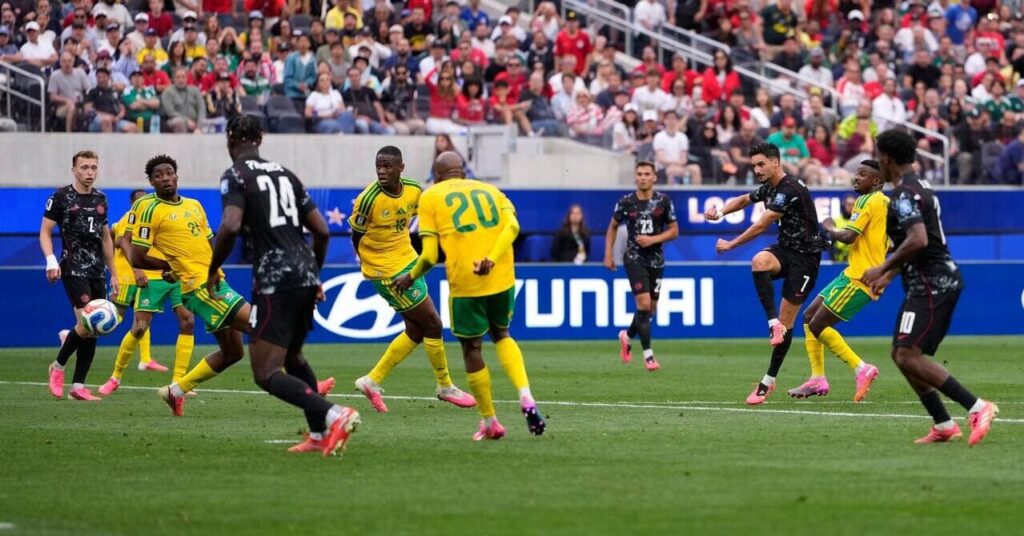
- **The Decisive Strike (90+2′):** As the clock ticked into stoppage time, with extra time looming, Stephen Eustaquio received a lay-off just outside the box. With a moment of pure inspiration, he struck a half-volley that rocketed past the outstretched hand of Williams, igniting pandemonium and securing Canada’s historic victory.
Prediction: Canada’s Next Hurdle
Canada now faces a monumental task against either the Netherlands or Morocco. Both are formidable opponents, boasting significant World Cup pedigree and squad depth. However, the momentum and belief forged in this historic win cannot be understated. Jesse Marsch’s tactical acumen, combined with the raw athleticism and tireless work rate of his squad, makes Canada a dangerous prospect for any team. While the quality gap might still be present, Canada has shown they can punch above their weight, especially when fueled by national pride and a collective spirit.
**Prediction:** Should Canada face the Netherlands, it will be a high-octane, end-to-end affair where Canada’s press could trouble the Dutch. Against Morocco, it would be a battle of technical skill and defensive solidity. Regardless of the opponent, expect Canada to put up a valiant fight. I predict a **narrow defeat for Canada, but not without a significant scare for their esteemed opponents, potentially pushing it to extra time or penalties.** Their journey might end here, but their statement has been made: Canada is a force to be reckoned with on the global football stage.