
### Key Takeaways
1. **Oil Price Volatility Expected:** Renewed hostilities in the Strait of Hormuz, a critical chokepoint for approximately 20% of global oil supply, signal a significant risk premium for crude futures (Brent and WTI). Any sustained disruption or heightened perceived threat will directly translate to upward pressure on energy costs, impacting global inflation and central bank policy.
2. **Shipping Sector Under Pressure:** Increased maritime aggression will likely lead to soaring insurance premiums for commercial vessels, potential rerouting costs, and supply chain disruptions. This directly affects freight rates, impacting global trade, manufacturing inputs, and consumer goods prices, while defense and maritime security stocks may see short-term gains.
3. **Geopolitical Risk Ascends:** The rapid unravelling of the US-Iran interim deal underscores the fragility of Middle Eastern stability. Investors should brace for heightened risk-off sentiment, a flight to safe-haven assets (gold, U.S. Treasuries), and potential downward pressure on equity markets, as geopolitical uncertainty complicates economic forecasts.
The fragile détente between the United States and Iran has shattered, sending a fresh wave of geopolitical risk rippling through global markets. Over the weekend, a series of tit-for-tat strikes between Washington and Tehran dramatically escalated tensions in the Middle East, effectively imperilling an interim agreement forged less than two weeks prior to ensure the safe passage of maritime traffic through the vital Strait of Hormuz.
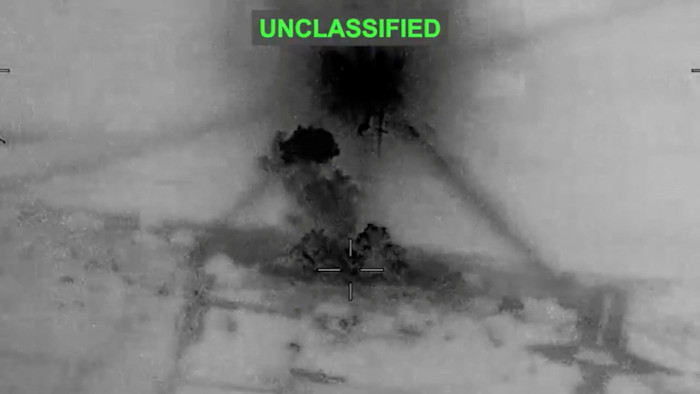
US Central Command (CENTCOM), overseeing American military operations in the region, confirmed a second consecutive day of “strikes against multiple targets” on Saturday. These actions followed Iranian attacks on commercial tankers transiting the Strait, a critical maritime chokepoint through which an estimated 20% of the world’s total petroleum liquids — or roughly 21 million barrels per day — flow. The Strait’s strategic importance cannot be overstated; any significant disruption here has immediate and profound implications for global energy prices, supply chain stability, and inflation.
The latest exchange directly threatens the Memorandum of Understanding signed by the US and Iran on June 17. That agreement had aimed for an immediate cessation of hostilities and for Tehran to allow maritime traffic in the strategic waterway to return to pre-war levels. The deal, which extended an April 8 ceasefire for 60 days, was explicitly designed to ease the persistent global energy crisis and create a window for further negotiations on Iran’s controversial nuclear programme. Its rapid breakdown suggests a return to pre-agreement uncertainty, if not a significant worsening of the regional security outlook.
Both sides were quick to accuse the other of violating the terms. CENTCOM detailed its strikes, targeting Iranian military surveillance infrastructure, communication systems, air defence sites, drone storage facilities, and minelayer capabilities. These were launched, according to CENTCOM, “in direct response to continued Iranian aggression against commercial shipping” under direct orders from US President Donald Trump. Trump, leveraging his Truth Social platform, stated: “United States aircraft just struck Iranian missile and drone storage locations, and coastal radar sites, for violating the Cease Fire Agreement, AGAIN!”
Iran’s Islamic Revolutionary Guard Corps (IRGC) retaliated within hours. State news agency IRNA reported early Sunday that the IRGC had carried out missile and drone strikes targeting eight US military installations, including the Ali Al Salem air base in Kuwait and the US Navy’s Fifth Fleet at Salman port in Bahrain. Kuwait’s military confirmed its air defences were responding to attacks, while Bahrain’s foreign ministry condemned the “renewed Iranian aggression” as a “dangerous escalation.” Such direct targeting of US military assets and regional allies immediately elevates the risk premium across energy markets and could prompt a flight to safety among investors.
A key component of the now-collapsing deal involved the potential release of frozen Iranian funds and the lifting of sanctions by the US, contingent on Tehran’s compliance. This prospect, which had offered a glimmer of hope for a future influx of Iranian oil onto global markets and a potential re-engagement with the global financial system, now appears remote. Trump’s stark warning on Truth Social – “It is very possible that they will never learn! There may come a point when we are no longer able to be reasonable, and will be forced to militarily complete the job that we very successfully started. If that happens, the Islamic Republic of Iran will no longer exist!” – underscores the hardening stance, suggesting that financial sanctions relief is off the table for the foreseeable future, perpetuating Iran’s economic isolation.
The IRGC’s counter-warning that further ceasefire violations would bring talks to a standstill, accompanied by threats of “overwhelming force” and “harsher action” against “any offending ships,” amplifies the maritime risk. Shipping insurance rates, already elevated due to regional instability, are poised to spike further, directly impacting the cost of seaborne trade. This will invariably feed into higher consumer prices globally, affecting inflation metrics and potentially influencing central bank monetary policy decisions.
These weekend clashes were preceded by US attacks on Friday, in response to an Iranian drone offensive on the Singapore-flagged container ship Ever Lovely. Further reports on Saturday detailed another commercial vessel, an oil tanker, coming under attack. Iran’s insistence that only its designated shipping route through the Strait is safe, warning that alternative routes would be considered dangerous and in violation of the agreement, adds another layer of complexity. A diplomat indicated Iran’s frustration over Oman opening an alternative lane for ships, which has lessened Tehran’s control over the waterway – a clear point of economic and strategic contention.
CENTCOM cited Iran’s attack on the Panama-flagged Kiku, an oil tanker carrying over 2 million barrels of crude, in the early hours of Saturday morning as a direct violation of the ceasefire. UK Maritime Trade Operations reported the vessel sustained damage to its bridge. The International Maritime Organization had already paused its evacuation plan for ships stuck in the Strait on Thursday, following the Ever Lovely attack, illustrating the immediate operational impact on global shipping.
Further complicating the regional security landscape, these renewed hostilities unfolded days after Lebanese and Israeli officials, facilitated by the US, signed a framework deal in Washington aimed at ending the war in Lebanon and disarming Hezbollah, the Tehran-backed militant group. Iranian officials have explicitly sought to link the Israel-Hezbollah conflict to its ceasefire deal with the US, suggesting a broader, interconnected regional strategy. The agreement outlines a pathway for Israel’s military withdrawal from a “security zone” in southern Lebanon, with the Lebanese Armed Forces to be deployed. However, Israeli Prime Minister Benjamin Netanyahu’s late Saturday statement that his forces would remain “for as long as it is required for our security” and reserved the right to respond forcefully to threats, underscores lingering tensions.
Both Trump and US Vice-President JD Vance had previously criticized Netanyahu for continuing strikes against Lebanon while Washington attempted to broker the deal with Tehran, highlighting potential divisions within the US administration regarding regional strategy. The Israel Defense Forces confirmed strikes over the weekend against Hezbollah fighters and a launch site in Lebanon, as well as “armed terrorists” in southern Syria. This interconnected web of conflicts suggests a broader regional destabilization, with each flashpoint capable of triggering wider market reactions.
### Market Impact
The immediate market reaction to the escalating US-Iran conflict is likely to be a pronounced surge in crude oil futures. Brent and WTI benchmarks could see significant upward pressure as traders price in an elevated supply risk premium from the Strait of Hormuz. Energy stocks, particularly those of major oil producers, could benefit in the short term, while airlines and other energy-intensive sectors face increased cost pressures. Global shipping indices, like the Baltic Dry Index, are likely to reflect rising freight and insurance costs, impacting consumer goods supply chains and potentially exacerbating inflationary trends. Investor sentiment will undoubtedly shift towards risk-off, favouring safe-haven assets such as gold, the U.S. dollar, and government bonds, particularly U.S. Treasuries, while equity markets could experience increased volatility and downward corrections, especially in indices with high exposure to global trade or energy imports. Defense sector stocks, conversely, may see a boost. The potential for prolonged instability also weighs heavily on expectations for global economic growth, complicating the outlook for central banks already grappling with inflation.