
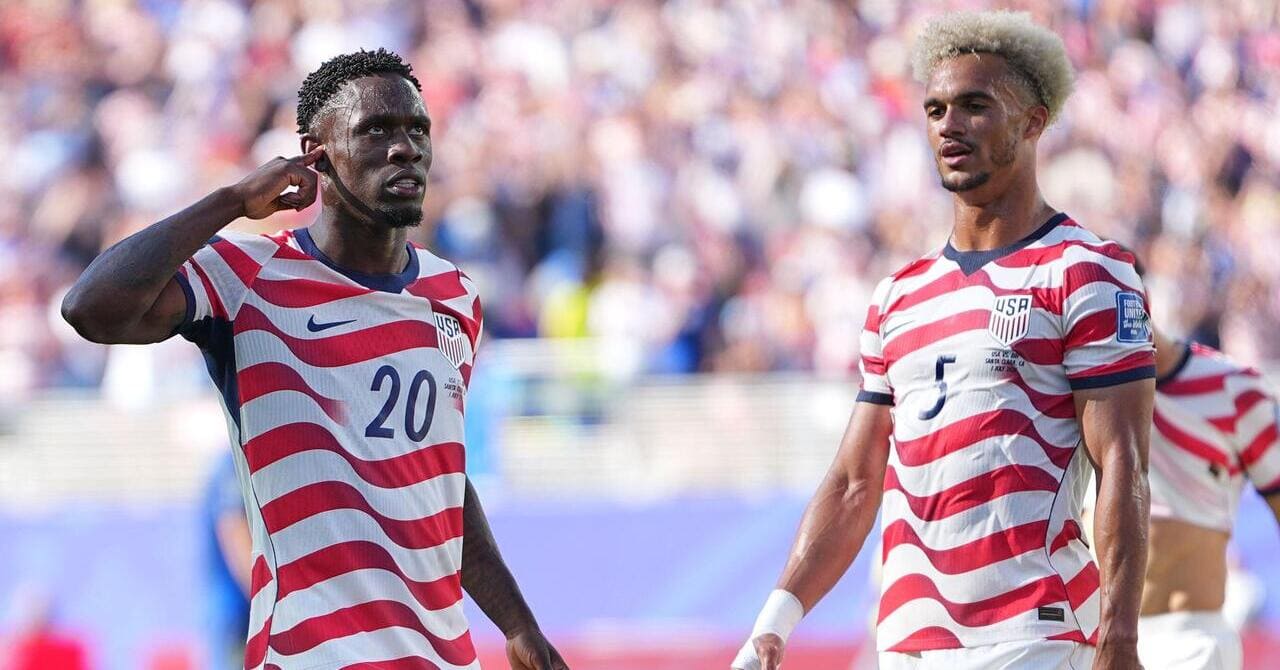
The football world is in an unprecedented uproar, reeling from a decision that has shattered norms, ignited fury, and cast a long, dark shadow over the integrity of the beautiful game. In a move that defies belief and common sense, FIFA has sensationally suspended USA striker Folarin Balogun’s one-game ban, a ruling UEFA has branded “unprecedented, incomprehensible and unjustifiable.”
Balogun, the prodigious 25-year-old American spearhead, was fully expected to sit out Monday’s blockbuster clash against Belgium. His sending-off during the USA’s hard-fought victory over Bosnia-Herzegovina in the Round of 32 for a challenge on Tarik Muharemovic seemed like a cut-and-dried case. A red card, an automatic one-match suspension – that’s the immutable law of football, right?
Apparently not. In a bombshell announcement that dropped on Sunday, FIFA declared Balogun’s one-match ban had been suspended for a staggering 12 months. The catalyst? None other than an intervention from US President Donald Trump, a figure famously close to FIFA President Gianni Infantino. Trump, in a post on Truth Social that sent shockwaves across the globe, triumphantly thanked FIFA for “reversing a great injustice.” The implications are staggering, the precedent terrifying.
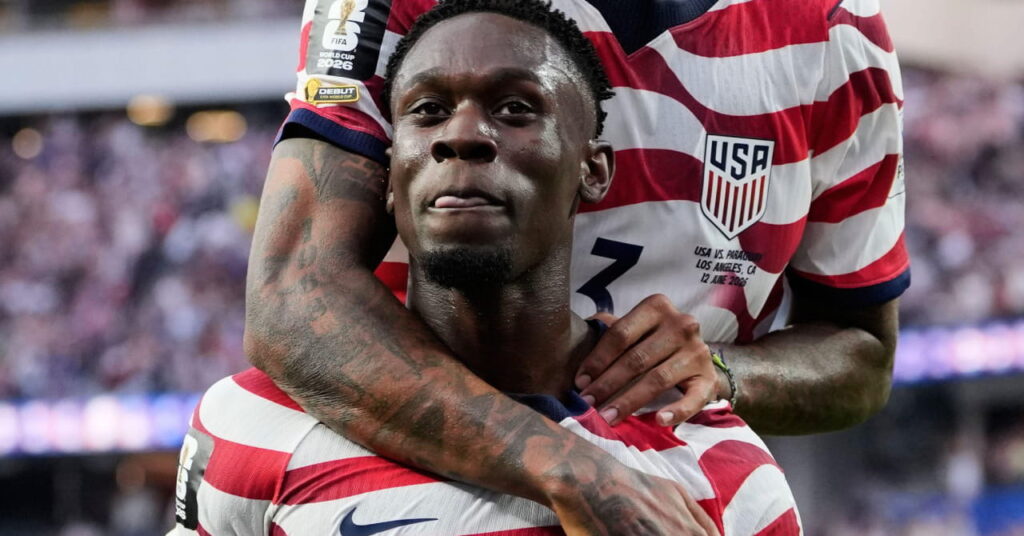
FIFA Has ‘Crossed a Red Line’, Says UEFA in Blistering Attack
The reaction from UEFA was swift, scathing, and utterly uncompromising. European football’s governing body launched an extraordinary, no-holds-barred attack on FIFA, accusing the world game’s ruling body of tearing up the very fabric of fair competition.
Their statement pulled no punches: “Yesterday’s decision to suspend for a probationary period of a year the implementation of the one-match automatic suspension following the red card issued to the player Folarin Balogun crossed a red line. Football, like any other sports, relies on rules, which are the basis for fair, honest and transparent competition. Sometimes rules are open to interpretation. In this case not. A minimum automatic suspension of one match following a red card is not a discretionary option and does not require the decision of a competent body to be enacted. It is a principle embedded in regulations, which cannot be made subject to exceptions, let alone in the middle of a tournament where several other players have been in the same situation and regularly served their suspension.”
This isn’t just bureaucratic grumbling; it’s a desperate plea for sanity amidst a storm of chaos. UEFA powerfully articulated the existential threat posed by FIFA’s decision: “When the certainty of rules is no longer guaranteed by its guardians, the integrity of the game is at stake and the credibility of a competition is undermined. Equally, such decision creates a precedent in the ongoing tournament, where similar situations will now require an equal treatment, to the detriment of the competition.”
The statement concluded with a stark warning: “Football is the most loved sport in the world because it is a beautiful game and is trusted because it is played everywhere with the same laws. A tournament is never a pure standalone and, if the tournament in question is the World Cup, it has the power to drive positive or negative consequences on the game as a whole. We express our disbelief at such an unprecedented, incomprehensible and unjustifiable decision.” This isn’t just about one player or one match; it’s about the very soul of football.
Belgium Boss Garcia Thought Balogun Decision Was a Joke, Now Faces Tactical Nightmare
Unsurprisingly, the Belgian camp was incandescent with rage. Their meticulously crafted tactical plans for the Round of 16 clash against a Balogun-less USA have been thrown into utter disarray. Balogun, after all, is the United States’ lethal weapon, their top-scorer at this World Cup with three crucial goals. Red Devils boss Rudi Garcia’s initial reaction perfectly encapsulated the disbelief echoing around the football world.
“I didn’t know that at the World Cup, the 5th of July is actually the first of April – it’s April Fools,” Garcia quipped yesterday, his sarcasm barely masking a deep-seated frustration. The Belgian Football Association wasted no time in releasing their own statement, expressing profound dissatisfaction and confirming they were actively “examining its options in response to the ruling.” What those options might be – a formal protest, a legal challenge – remains to be seen, but the air is thick with tension.
The sheer hypocrisy is galling: Balogun was the 12th player to be sent off at this World Cup, yet he stands alone as the solitary recipient of this extraordinary, politically charged reprieve. Every other player served their time. Why Balogun? The question hangs heavy, poisoning the atmosphere of the tournament.
FIFA’s Shady History: Ronaldo’s Reprieve and Madibo’s Harsh Fate
This isn’t FIFA’s first rodeo when it comes to controversially tweaking the rulebook for suspensions. While the Balogun case is unprecedented in its brazenness and timing, previous decisions hint at a disturbing pattern of selective justice.
Consider the case of Cristiano Ronaldo. His three-game ban, incurred after a red card playing for Portugal against the Republic of Ireland in the qualifiers, was inexplicably reduced to just one. This allowed the superstar to participate in crucial World Cup group stage games, a decision that raised eyebrows but didn’t attract the same level of outrage, perhaps due to its timing prior to the tournament proper. It was a subtle bend of the rules, not a complete break.
Then there’s the stark contrast of Qatar midfielder Assim Madibo. Sent off in the game with Canada for a challenge that tragically broke the leg of Ismael Kone, Madibo’s standard one-match suspension was not reduced, but *increased* by FIFA to five games. The logic is dizzying: a severe injury-inducing foul garners a harsher punishment, while a seemingly clear red card for Balogun is overturned. FIFA’s disciplinary decisions appear less about consistent application of rules and more about political expediency or a capricious whim, leaving a bitter taste of unfairness for all but the favored few.
Game Highlights: USA vs. Bosnia-Herzegovina (Round of 32)
The match against Bosnia-Herzegovina had been a hard-fought encounter, a true test of grit and determination for the Stars and Stripes. The USA, flying high on a wave of national support, had taken an early lead through a magnificent header from Christian Pulisic in the 22nd minute, sending the crowd into raptures. Bosnia, however, refused to lie down, pressing hard and finding their equalizer just before halftime with a clinical finish from Edin Džeko, setting up a thrilling second half.
The game truly opened up after the break. Balogun, a live wire throughout, had been a constant threat, his blistering pace and intelligent runs creating numerous opportunities. He looked destined to add to his World Cup tally, narrowly missing a one-on-one chance in the 65th minute after a sublime through ball from Yunus Musah. His energy was infectious, driving the American attack forward.
The moment of controversy arrived in the 78th minute. As Bosnia launched a dangerous counter-attack, Balogun, tracking back with urgency, launched into a desperate challenge on midfielder Tarik Muharemovic near the halfway line. It was a high-footed, studs-up tackle born more of desperation than malice, but undeniably reckless. The referee, after a brief consultation with VAR, had no hesitation in brandishing a straight red card. Balogun’s face was a picture of anguish as he trudged off, the weight of the potential suspension clearly visible. The USA, down to ten men, dug deep, bravely holding on for a 1-1 draw before eventually winning a tense penalty shootout thanks to two heroic saves from Matt Turner. The victory was sweet, but the shadow of Balogun’s absence loomed large – or so we thought.
Prediction: USA vs. Belgium (Round of 16)
This match was always going to be a titanic clash, a tactical chess game between two highly motivated nations. Now, with the Balogun bombshell, it has transcended sport and become a charged political spectacle. The USA, with their talismanic striker back in the fold, will undoubtedly feel a surge of confidence, perhaps even a sense of divine right. Balogun’s raw power and clinical finishing up front will provide a crucial focal point against Belgium’s experienced defense.
Belgium, on the other hand, will be seething. Rudi Garcia’s men will use the perceived injustice as fuel, a potent motivator to prove a point not just against the USA, but against FIFA itself. Their midfield, marshaled by the likes of Kevin De Bruyne, will be looking to dominate possession and exploit any defensive frailties. Romelu Lukaku, if fit and firing, remains a formidable threat.
The psychological warfare surrounding this fixture is unprecedented. The USA will want to justify FIFA’s controversial decision with a stellar performance, while Belgium will be playing with a righteous fury. While the return of Balogun undoubtedly strengthens the USA’s attack, the sheer mental burden and global scrutiny might be a double-edged sword. Belgium’s tactical discipline and star quality, combined with their justifiable anger, could make them incredibly dangerous.
I predict a fiercely contested, emotionally charged battle. Belgium’s experience and tactical nous will ultimately prove too much for a USA side that, while talented, might find itself distracted by the circus surrounding their star player. Expect Belgium to edge it in a narrow victory, perhaps 2-1, with a late goal sealing their passage to the quarter-finals, ensuring that the football world continues to dissect this unprecedented controversy for weeks to come.