
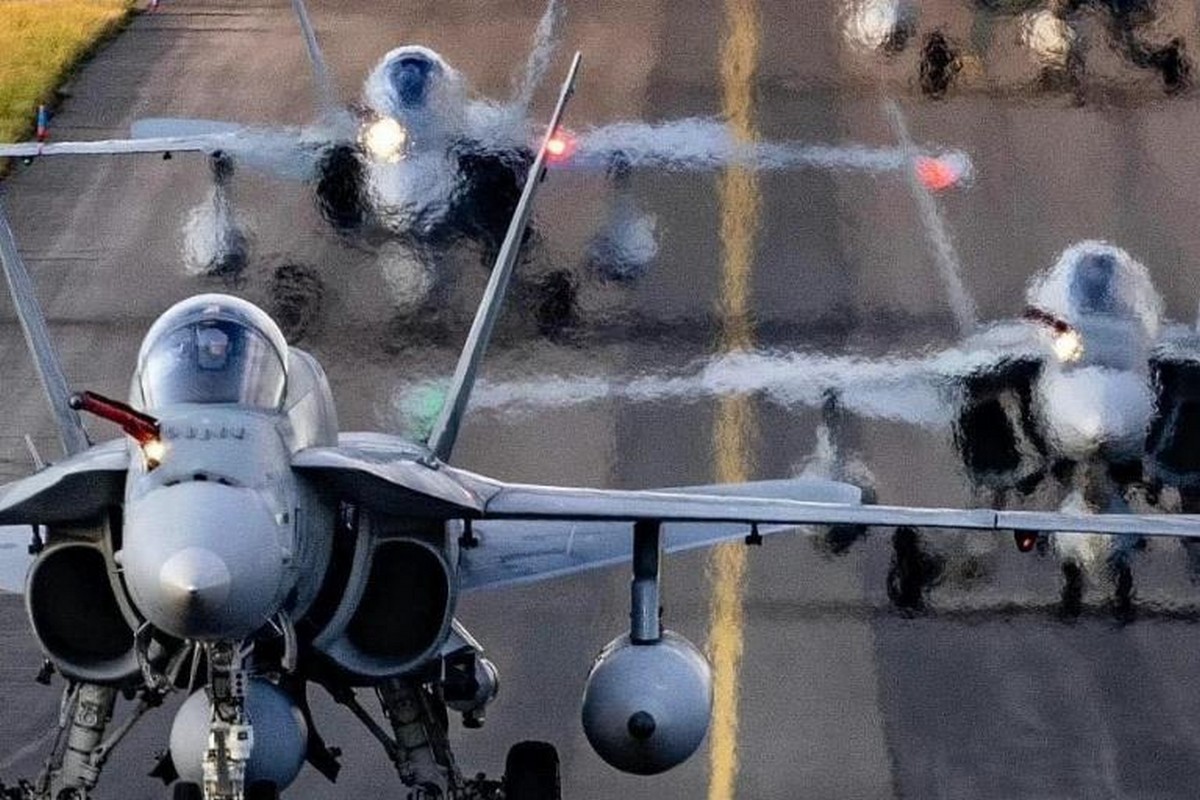
Exercise Cobra Warrior 26-2 Concludes, Bolstering Allied Air Force Interoperability
Exercise Cobra Warrior 26-2, a major multinational air combat exercise hosted by the Royal Air Force (RAF), has successfully concluded after three and a half weeks of intensive operations. The exercise, which commenced on September 14, saw the execution of 14 complex missions, resulting in 942 sorties and exceeding 2,500 flying hours, according to official reports from the RAF.
Approximately 1,800 military personnel from five nations – the United Kingdom, Germany, Italy, the Netherlands, and the United States – participated in the comprehensive training event. Delivered by the RAF’s Air and Space Warfare Centre and sponsored by No 11 Group, the exercise aimed to enhance the rapid integration, resilience, and combat effectiveness of allied air forces. Its overarching objectives included demonstrating the collective capability to deter threats, defend sovereign territory, and operate cohesively as part of a broader NATO force.
A wide array of military capabilities were brought together and rigorously tested during the exercise. These included advanced combat air operations, intelligence, surveillance, and reconnaissance (ISR) assets, air mobility operations, the deployment of support helicopters, force protection measures, cyber warfare capabilities, and sophisticated command and control (C2) systems. The integration of these diverse elements was central to simulating a modern, multi-domain conflict environment.
For many participants, Exercise Cobra Warrior 26-2 represented a critical culmination point, particularly for prospective tactical leaders undergoing the demanding Typhoon Qualified Weapons Instructor Course. The exercise provided these candidates with an unparalleled opportunity to apply their training in a high-pressure, multinational setting, requiring swift and effective decision-making under simulated operational conditions.
Squadron Leader Mike, who serves as the officer commanding the Typhoon Qualified Weapons Instructor Course with 29 Squadron, emphasized the significance of the exercise. “Exercise Cobra Warrior 26-2 has once again provided the culmination of the Typhoon Qualified Weapons Instructor Course, allowing candidates to test themselves alongside allied air forces in a demanding multinational environment,” he stated. He further noted that the exercise “challenges prospective Weapons Instructors to demonstrate the judgement, adaptability and leadership required of the next generation of Typhoon tactical leaders.”
The intricate coordination of both British and international participants throughout the planning and execution phases of the missions was managed by the Air Command and Control Force. Group Captain Chris Misiak, Commander of the Air C2 Force, highlighted their pivotal role. “The Air C2 Force has been central to the success of Cobra Warrior, integrating UK and international participants into a single coordinated air operation,” Group Captain Misiak commented. He underscored that “Exercises such as this ensure Allied air forces can plan, operate and respond together in an increasingly complex security environment.”
Participating nations contributed significant assets and personnel to the exercise. Germany, for instance, deployed a contingent of eleven Eurofighter Typhoons and approximately 200 personnel from its Tactical Air Wing 31 Boelcke. Oberstleutnant Mike Schill, the German detachment commander, articulated the benefits of this joint training. “The exercise gives us the opportunity to hone operational tactics and strengthen readiness alongside our NATO partners,” Oberstleutnant Schill remarked, adding that “Training together deepens cooperation and improves our ability to operate collectively in defence of the Alliance.”
Similarly, Italy’s participation was crucial in testing integrated capabilities. Maggiore Valerio C, the Italian detachment commander, lauded the exercise as a premier training event. “Cobra Warrior has confirmed itself as a first-class training exercise, offering an opportunity to test the capabilities of Air Forces, the integration between assets, and the level of standardization required to operate effectively with allied nations in modern scenarios,” he affirmed, highlighting the importance of interoperability for contemporary defense operations.
The successful execution of the extensive flying efforts was supported by a dedicated network of support units. Personnel from RAF Global Enablement, the Tactical Medical Wing, the RAF Regiment, and various allied support units provided essential logistical, medical, and protective services, ensuring the sustainment of deployed operations and the safety of all participants throughout the duration of the exercise. These support elements are critical for maintaining continuous operations in complex environments.
The conclusion of Exercise Cobra Warrior 26-2 marks another milestone in the ongoing efforts by NATO and its allies to enhance their collective defense capabilities and ensure a high degree of interoperability across diverse military domains. Such exercises are considered indispensable for maintaining readiness and adapting to evolving global security challenges.
Why This Matters
Exercise Cobra Warrior 26-2 is more than just a routine military drill; it represents a crucial investment in the collective security and defense posture of participating nations, particularly within the NATO framework. Its significance can be understood through several key lenses:
Enhanced Interoperability and Cohesion:In an increasingly complex global security landscape, the ability of allied forces to operate seamlessly together is paramount. This exercise directly addresses that need by bringing together diverse air assets, personnel, and command structures from multiple countries. By training in a multinational environment, forces refine common procedures, communication protocols, and tactical doctrines, ensuring they can integrate quickly and effectively during real-world crises. This shared understanding reduces friction and enhances the overall combat effectiveness of a coalition force.
Deterrence and Readiness:Large-scale, high-intensity exercises like Cobra Warrior serve as a powerful signal of collective resolve and capability. They demonstrate to potential adversaries that NATO and its partners possess the readiness, resources, and shared will to defend their interests and territories. In an era marked by geopolitical instability, including ongoing conflicts and assertive state actors, showcasing robust defense capabilities acts as a vital deterrent, contributing to regional and global stability. The ability to rapidly deploy and integrate sophisticated airpower is a cornerstone of modern deterrence.
Advanced Tactical Leadership Development:The inclusion of courses like the Typhoon Qualified Weapons Instructor Course highlights the critical focus on developing future leaders. Modern warfare demands highly skilled and adaptable tactical commanders who can make rapid, informed decisions under immense pressure and within a multinational context. By subjecting prospective leaders to complex scenarios alongside international peers, the exercise cultivates the judgment, adaptability, and leadership qualities essential for navigating the complexities of contemporary military operations. This ensures a pipeline of highly capable individuals ready to lead allied forces.
Testing and Integration of Advanced Capabilities:The exercise provided a platform to test and integrate a broad spectrum of advanced military capabilities, from combat air and ISR to cyber and command and control systems. This allows for the evaluation of new technologies, tactics, and operational concepts in a realistic setting. Identifying strengths and weaknesses in a training environment helps refine strategies and procurements, ensuring that allied forces maintain a technological edge and can effectively counter emerging threats across all domains.
Reinforcing Alliance Commitments:The active participation of the United Kingdom, Germany, Italy, the Netherlands, and the United States underscores their commitment to mutual defense and security obligations, particularly within NATO. Such exercises are tangible manifestations of alliance solidarity, reinforcing political and military bonds. They provide opportunities for diplomatic engagement at the operational level, strengthening trust and cooperation among member states and contributing to the enduring strength and relevance of multilateral defense organizations.