
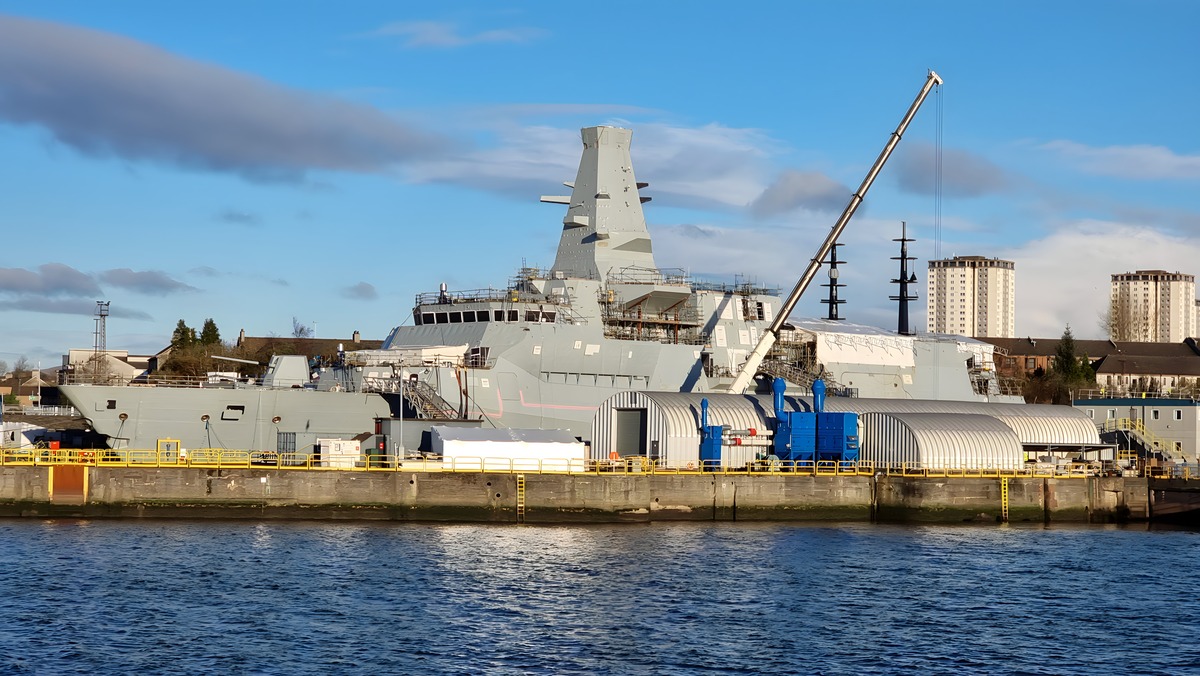
Negotiations Continue on Allocation of Type 26 Frigate Build Slots for UK and Norwegian Navies
The precise allocation of individual Type 26 Global Combat Ship build slots between the Royal Navy and the Royal Norwegian Navy remains under negotiation, with detailed production scheduling actively being developed alongside industry partners and international stakeholders. This update was provided by Defence Minister Luke Pollard to Parliament, addressing a query regarding the near-term investment period outlined in the Defence Investment Plan.
Responding to a written question from Conservative MP Ben Obese-Jecty, Minister Pollard emphasized that the overarching program’s objective “remains focused on delivering a combined fleet of at least 13 frigates to hunt for Russian submarines in the North Atlantic.” He further described the initiative as “the biggest British warship deal in history and centrepiece of the Lunna House Agreement.” This combined fleet is envisioned to comprise eight Type 26 anti-submarine warfare (ASW) frigates for the Royal Navy and at least five for Norway. Pollard reiterated that the “detailed production scheduling and the allocation of individual build slots associated with United Kingdom and Norwegian requirements continue to be developed with industry and international partners.”
This statement follows earlier government acknowledgements this year concerning potential adjustments to the build schedule. In a previous written answer to Conservative MP Mark Francois, Minister Pollard had confirmed that the UK was “working together with our Norwegian Partners” and “assessing options for offering Type 26 build slots currently allocated to the Royal Navy to the Royal Norwegian Navy.” While discussions around such a possibility had been circulating within defence industry circles for some time, particularly given the shared operational theatre and objectives of the combined fleet, this marked the first direct governmental confirmation that a slot transfer was under active consideration.
Despite the ongoing discussions regarding production slot allocation, ministers have consistently maintained that the Royal Navy’s total order for eight Type 26 frigates will not be reduced. “The Royal Navy will receive all eight Type 26 ships during the late 2020s and 2030s as planned,” Pollard affirmed in his earlier communication. He further highlighted that Norway’s substantial defence procurement, which he referred to as the nation’s biggest ever, is designed to create a powerful Anglo-Norwegian force of thirteen anti-submarine warfare frigates. This joint force is intended to operate cohesively in Northern Europe, significantly strengthening NATO’s strategic northern flank against emerging maritime threats.
Norway formally selected the Type 26 platform in 2025 as the successor to its aging Fridtjof Nansen-class frigates. Under the agreement, these vessels are slated for construction by BAE Systems on the Clyde, Scotland, alongside the Royal Navy’s own frigates. A central challenge within this collaborative arrangement has been the precise sequencing of Norwegian hulls within the existing production run. This is particularly complex given Oslo’s expressed desire to rapidly field its new frigates to modernize its naval capabilities, juxtaposed with the Royal Navy’s pressing need to replace its Type 23 frigates. The Type 23s are currently leaving service at a faster rate than their Type 26 successors are expected to enter active duty, creating a potential capability gap that the production schedule must carefully address.
Notwithstanding these detailed scheduling discussions, the Type 26 program continues to advance. A significant milestone was achieved in December when the first-of-class vessel, HMS Glasgow, was powered up for the first time. This event saw the frigate generate its own electricity through its onboard diesel generators, which form a crucial part of the class’s sophisticated hybrid propulsion architecture. This advanced propulsion system is specifically designed to support the vessel’s exceptionally low acoustic signature, a critical feature for effective anti-submarine warfare operations, allowing the ship to detect threats while remaining difficult to detect itself.
Britain confirms no cuts to Type 26 frigate order plans
Why This Matters
The ongoing negotiations surrounding the allocation of Type 26 frigate build slots between the Royal Navy and the Royal Norwegian Navy carry significant strategic, industrial, and geopolitical implications for both nations and the broader NATO alliance. This issue extends beyond mere logistics, touching upon critical aspects of national defence, international cooperation, and economic investment.
Strategic Importance in the North Atlantic:The North Atlantic is a vital maritime domain, particularly in light of increased Russian naval activity, including submarine patrols. The Type 26 Global Combat Ship is a state-of-the-art anti-submarine warfare platform, designed specifically to detect and track advanced submarines. The combined Anglo-Norwegian fleet of at least 13 such frigates will significantly bolster NATO’s capabilities on its northern flank. Ensuring timely delivery of these vessels is paramount for maintaining maritime security, protecting critical sea lanes, and deterring potential adversaries in this strategically crucial region.
Strengthening NATO Cohesion and Interoperability:This joint procurement and operational agreement between the UK and Norway is a powerful demonstration of allied cooperation within NATO. By fielding a common platform, both navies enhance interoperability, streamline training, logistics, and maintenance, and foster deeper military collaboration. This collective approach to defence strengthens the alliance’s ability to respond coherently and effectively to shared security challenges, reinforcing the principle of collective defence.
Addressing Naval Capability Gaps:For the Royal Navy, the Type 26 frigates are essential replacements for the aging Type 23 fleet, which are nearing the end of their service lives. A potential delay in the delivery of Royal Navy ships, occasioned by a transfer of build slots to Norway, could exacerbate an existing capability gap. Balancing Norway’s urgent modernization needs with the Royal Navy’s critical replacement schedule is therefore a delicate act, directly impacting the operational readiness and capacity of both navies. For Norway, acquiring these advanced frigates represents a significant upgrade to its naval power, allowing it to better protect its extensive coastline and maritime interests.
Industrial and Economic Impact:The Type 26 program is a substantial investment in the UK’s defence industrial base, particularly for BAE Systems’ shipyards on the Clyde. It sustains thousands of highly skilled jobs, drives technological innovation, and supports a vital sector of the British economy. The program’s status as the “biggest British warship deal in history” underscores its economic significance. The inclusion of Norwegian orders further solidifies the long-term viability of the production line and enhances the UK’s position as a leading defence exporter, potentially attracting future international partners.
Lessons for Future Defence Procurement:The complexities of managing a multinational defence procurement program, including the allocation of production slots and balancing diverse national requirements, offer valuable lessons for future collaborative projects. The transparent discussions, even on challenging issues like delivery schedules, highlight the commitment of both nations to make the partnership work. The resolution of these logistical challenges will set a precedent for how NATO allies can effectively pool resources and share industrial capacity to meet common defence objectives efficiently.