
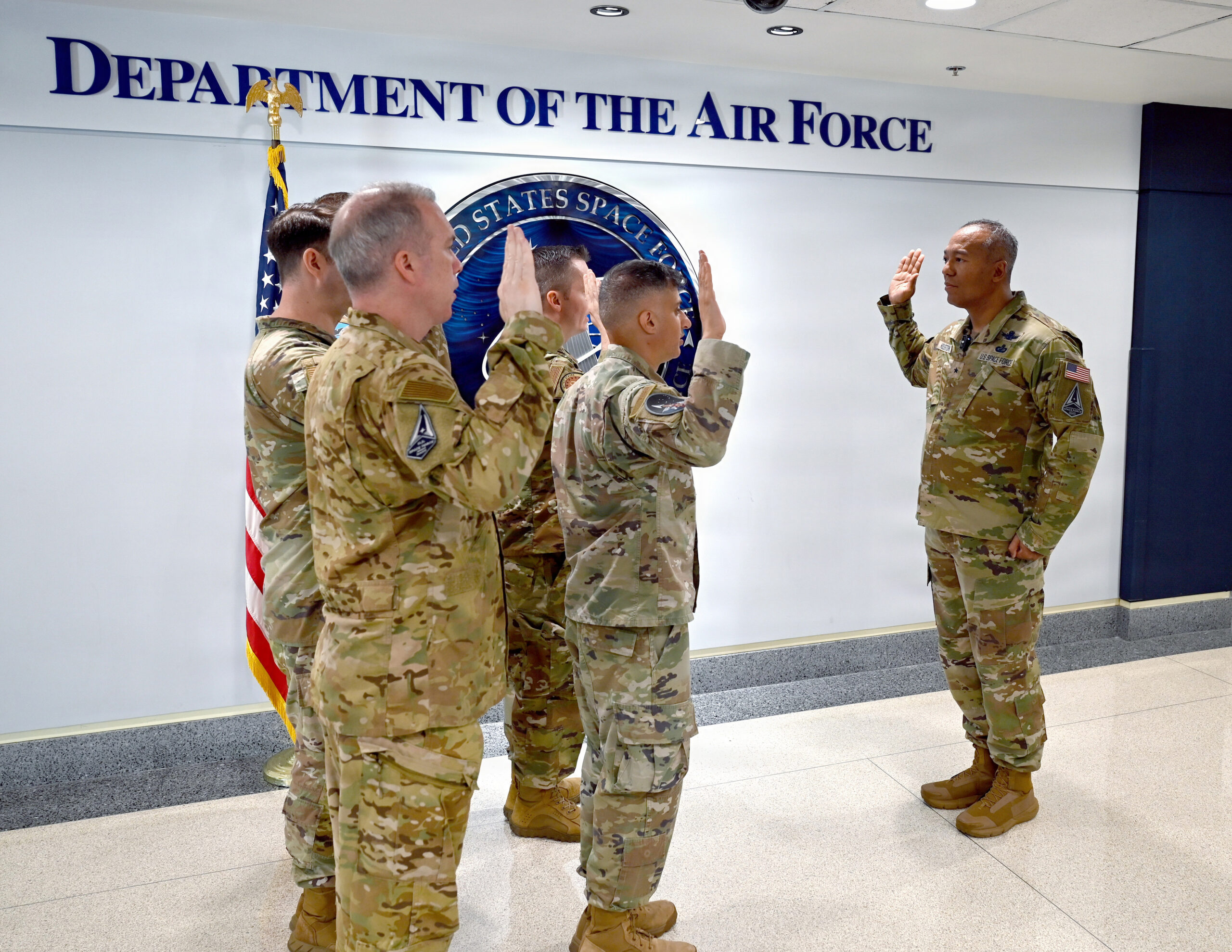
Eighteen Air Force Reservists officially transferred to the United States Space Force on July 15, marking a significant milestone as they became the inaugural group of part-time Guardians within the newest branch of the U.S. military. This transfer represents the culmination of more than two and a half years of dedicated effort to establish a unique personnel system, distinct from any other military service component.
The Space Force anticipates a continued expansion of its part-time component, with plans for an additional 225 part-timers from the Air Force Reserve to transfer over the coming months. Ultimately, the service aims to integrate approximately 800 part-time Guardians into its ranks. This figure is expected to include members from the Air National Guard, although the application process for Guard members has not yet been initiated.
The legislative foundation for this structural change was laid by the 2024 and 2025 National Defense Authorization Acts (NDAA). These acts granted the Space Force the authority to absorb the space-related missions and units previously managed by the Air Force Reserve and Air National Guard. The core objective behind this legislative mandate is to establish what Space Force leaders term a “single-component” force. This model is designed to unify full-time and part-time service members under a single, cohesive system, eliminating the traditional, separate structures of the Guard and Reserve. Proponents of this new system assert that it will offer Guardians enhanced career flexibility and more effectively address the specific operational and talent requirements of the Space Force.
Implementing such a novel system, however, presented considerable challenges. Officials were tasked with overhauling existing human resources (HR) systems, developing entirely new frameworks for promotions, and crafting a comprehensive set of policies without any direct precedent or template from other military branches. Furthermore, the transition necessitated extensive communication and engagement to address a myriad of questions and concerns from Air Force Guard and Reserve members. While many expressed eagerness to join the nascent service, others opted not to transfer, highlighting the complexities involved in such a transformative shift.
The operational framework for these new part-time Guardians will diverge significantly from the conventional Guard and Reserve model. Their roles will primarily focus on specialized functions such as test and evaluation, advanced training, and strategic planning. Crucially, front-line operational assignments will remain exclusively within the purview of full-time Guardians. These part-time positions are designed to be “episodic,” with an average duration of three years, rather than constituting a long-term, secondary career path. The scheduling for these roles will also be more flexible and varied than the traditional “one weekend a month, two weeks a year” commitment. While a minimum requirement of 36 days per year is stipulated, individual positions may demand a greater time commitment, tailored to specific project needs and objectives.
Space Force leaders anticipate that this innovative system will yield multiple benefits. They hope it will enable more effective force management, improve the overall quality of life for Guardians, and bolster retention rates. A key advantage is the ability to leverage the diverse skill sets and expertise that many reserve component service members acquire through their civilian professions. Historically, service members transitioning between regular and reserve work have reported frustrations regarding finances and benefits, as detailed in a 2023 RAND Corporation report. While these challenges are not unique to the Space Force, the new single-component model is one of several reforms the service is implementing to eliminate such barriers, thereby enhancing its appeal and competitiveness in attracting and retaining top talent.
In the long term, Space Force officials envision part-time roles as a flexible mechanism for Guardians to adapt to changing personal circumstances, such as family needs, educational pursuits, or civilian career opportunities. This system aims to provide an alternative to the cumbersome bureaucratic processes typically involved in switching between different military components. In the immediate future, a portion of these part-time positions will facilitate a smooth transition for existing Guard and Reserve jobs into the Space Force. Notably, Air Force Reservists transferring into the Space Force who have accumulated between 15 and 18 years of satisfactory service will be permitted to remain in a part-time capacity until they qualify for retirement benefits, ensuring a stable pathway for seasoned personnel.
The application process for this initial group of Reservists commenced in September 2023, specifically targeting members of the 310th Space Wing. Following a rigorous selection process, the Space Force announced in April that 247 Airmen had been chosen for transfer. This recent integration of part-time Guardians follows a previous phase in which 252 Reservists were transferred to become full-time Guardians, underscoring the service’s methodical approach to building its unique workforce structure.
Why This Matters
The establishment of the Space Force’s part-time Guardian component is a significant development with wide-ranging implications for national security, military talent management, and the future of military service. By creating a “single-component” force that integrates full-time and part-time personnel under a unified structure, the Space Force is pioneering a new model for military organization.
This initiative is a direct response to the unique demands of the space domain, which requires highly specialized technical skills, rapid innovation, and continuous adaptation. A traditional, rigid separation between active duty and reserve components can impede agility and the seamless integration of expertise. By allowing for greater flexibility and the ability to leverage the advanced skills Guardians develop in their civilian careers, the Space Force aims to maintain a competitive edge in an increasingly contested and critical operational environment.
For military personnel, this model offers unprecedented career flexibility, potentially enhancing quality of life and improving retention. It acknowledges the changing demographics and career aspirations of modern professionals, allowing individuals to serve while accommodating evolving personal and professional circumstances. This could mitigate the historical “friction points” associated with transitioning between different military components, making military service a more sustainable long-term option for a broader pool of talent.
Furthermore, the Space Force’s approach could serve as a blueprint for other branches of the U.S. military, and even allied forces, as they grapple with similar challenges in recruiting and retaining highly skilled personnel in an era of rapid technological change and competition with the private sector. The success or challenges encountered by this new system will provide valuable lessons on how to modernize military human resources and adapt to the demands of 21st-century warfare.
Ultimately, the ability of the Space Force to effectively integrate its part-time Guardians will directly impact its operational readiness, its capacity for innovation, and its long-term ability to protect U.S. interests in space, which are increasingly vital for economic stability, communication, and global security.