
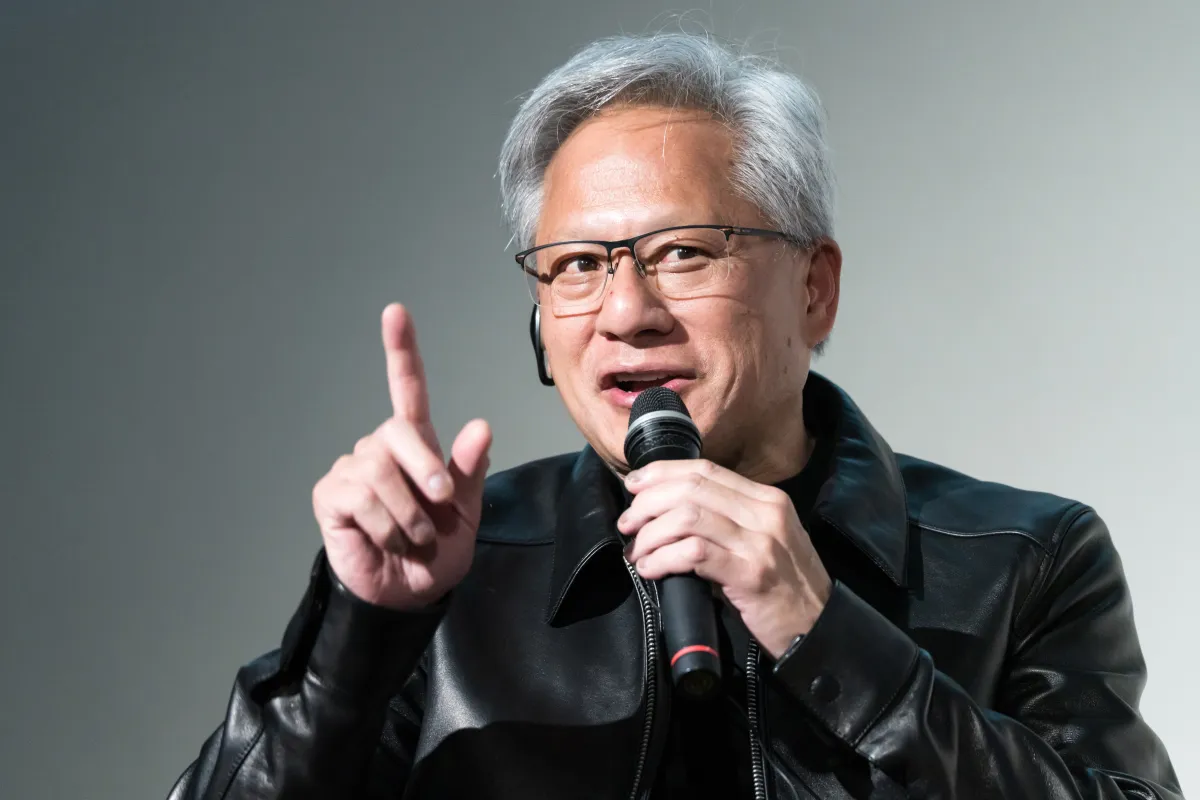
Nvidia’s board announced Sunday that it’s launching an independent investigation after CEO Jensen Huang told staff he was unfaithful to his wife. But this isn’t a case of just another CEO having an extramarital affair. The romantic interest is Megaspeed executive Alice Huang, whom U.S. officials believe is a Chinese spy who was feeding information back to Beijing. In short, the stakes reach well beyond Nvidia, given how many tech and financial partners depend on its place at the center of the AI economy. “I’m responsible for an entire industry,” Huang recently told Bloomberg in a sit-down.
***
Key Takeaways:
- The scandal surrounding Nvidia CEO Jensen Huang transcends a personal affair, touching on serious U.S. national security concerns involving alleged Chinese espionage.
- Huang’s continued leadership of Nvidia, a linchpin of the global AI economy, hangs in the balance, presenting an unprecedented succession challenge for the company.
- The incident highlights critical vulnerabilities in the tech industry’s security protocols, prompting broader questions about safeguarding sensitive information amidst escalating geopolitical tensions.
***
The headlines screamed “affair,” but the reality unfolding around Nvidia CEO Jensen Huang is far more complex and potentially devastating than a mere personal indiscretion. What began as a confession of infidelity has rapidly escalated into a full-blown national security crisis, placing the future of one of the world’s most influential tech companies, and indeed the broader AI economy, in jeopardy.
The Dual Crisis: Personal Imprudence Meets Geopolitical Intrigue
Nvidia’s board on Sunday initiated an independent investigation after Huang’s revelation to staff. However, the true bombshell lies in the identity of the romantic interest: Megaspeed executive Alice Huang, whom U.S. officials reportedly suspect is a Chinese spy. These officials believe she was systematically feeding sensitive information back to Beijing. While the Chinese Embassy in Washington dismissed the allegations as “groundless smears,” and no charges have been filed, the gravity of the situation is undeniable.
Reports indicate that U.S. intelligence officials briefed President Donald Trump on their concerns a year ago. Unnamed senior officials reportedly expressed doubt that Jensen Huang could have remained unaware of Alice Huang’s alleged intelligence-gathering role for China, though earlier assessments suggested otherwise. For now, Nvidia’s board maintains it has seen no sign of compromised national security or company secrets. Yet, the specter of espionage casts a long shadow over Huang’s leadership and Nvidia’s operations.
The Unprecedented Challenge to a Tech Titan
Jensen Huang has long been revered as a visionary, transforming Nvidia from a graphics card pioneer into the indispensable architect of the AI revolution. His persona, often seen in his signature leather jacket, embodies the innovative spirit of Silicon Valley. But this crisis strikes at the core of that trust. Jeffrey Sonnenfeld, senior associate dean for leadership studies at the Yale School of Management, a longtime observer of Huang, views the episode as “remarkably poor judgment.” Sonnenfeld, who has hosted Huang at his CEO summits, gives Huang’s career “about a 50-50” chance of survival, emphasizing that even if merely naive, “any employee in Nvidia other than him would be fired over this.” Such recklessness, he contends, could lead to an “irretrievable loss of confidence.”
Idiosyncrasy Credits: A CEO’s Last Stand?
Sonnenfeld points to the concept of “idiosyncrasy credits” as Huang’s potential saving grace. Coined by social psychologist Edwin Hollander, this theory suggests individuals earn latitude within a group through competence and adherence to norms. Since co-founding Nvidia in 1993, Huang has undoubtedly amassed a wealth of such credits. However, this goodwill is not infinite. It can rapidly deplete when actions appear self-serving or violate core group norms—a group that now implicitly includes Nvidia’s board, its 42,000 employees bound by strict security protocols, and the U.S. government, which regulates its exports. Proving he was genuinely duped might be Huang’s only path to retaining these crucial credits.
Nvidia’s Singular Position: A Fragile Ecosystem
Unlike many corporate scandals where a CEO might transition to another company, Huang’s situation is unique. “Nvidia is his company,” as Sonnenfeld notes, meaning there’s no “picking up where he left off” elsewhere à la former HP CEO Mark Hurd, who resigned amidst scandal only to be hired by Oracle. Moreover, Nvidia lacks a clear succession bench. Huang’s preference for a flat organizational structure, with some 60 direct reports, makes identifying a successor exceptionally difficult. While his children, both employed at Nvidia, are sometimes mentioned in succession whispers, a crisis often sees boards seek “messianic solutions” from outside, with names like former Google CEO Eric Schmidt being floated.
The true complexity, and terror, of this predicament stems from Nvidia’s unparalleled centrality to the AI economy. Nvidia isn’t just the dominant chip provider; it’s a financial behemoth, acting as a crucial bank behind the industry’s buildout. With stakes in hundreds of startups, including OpenAI, Anthropic, and xAI, and recent agreements with financial titans like Apollo and BlackRock to mobilize over $500 billion, Nvidia’s stability underpins a vast, interconnected web. A leadership crisis at its core could trigger a systemic collapse, impacting countless investors, partners, and the very trajectory of AI development.
Boardroom Under Pressure: Navigating China and Scrutiny
The board’s independent members now face the daunting task of unraveling potential compromises. Questions will undoubtedly focus on Nvidia’s relationship with Megaspeed, a Singapore cloud company that became Nvidia’s largest buyer in Southeast Asia, reportedly purchasing $2 billion in chips. Broader concerns about Megaspeed helping China circumvent U.S. export restrictions have been raised, though an Nvidia spokesperson previously stated these allegations were “thoroughly investigated and debunked.” This investigation also brings Huang’s past advocacy for selling advanced chips to China into sharper focus—a stance that already made some, including Anthropic’s Dario Amodei, anxious enough to liken it to “selling nuclear weapons to North Korea” at Davos.
A New Era of Tech Security?
This incident serves as a stark reminder of the tech industry’s often lax security compared to the stringent clearance regimes of defense contractors. Sonnenfeld argues tech has been “way too lax,” a point underscored by the recent arrest of an OpenAI engineer accused of hiding a recording device. While OpenAI reported no indication of data compromise, such cases highlight the profound vulnerabilities when high-value intellectual property and strategic insights are exposed to individuals who gain close access. The Huang scandal pushes this concern to its most extreme, intertwining personal conduct with national security at the highest corporate levels.
The Road Ahead for Jensen Huang
For now, Huang remains at the helm. However, his immediate future is fraught with challenges. Three House chairmen have requested a closed-door briefing on November 18, just a day after Nvidia reports its latest earnings on November 17. Sonnenfeld anticipates that even if Huang retains his title, a significant handoff of day-to-day decision-making will be inevitable. A critical factor in his ultimate fate is the absence of super-voting stock, which would have entrenched his power. While Sonnenfeld often champions dual-class structures for founders, Huang’s success without one has historically been a counter-argument—a situation that now makes his removal, if deemed necessary, considerably less difficult.
***
Bottom Line:
Jensen Huang may weather the immediate storm, potentially cleared of knowingly aiding any espionage. Yet, the enduring challenge extends beyond the investigation. The scandal has fundamentally eroded the implicit trust placed in Huang’s judgment, raising profound questions for Nvidia’s employees, customers, partners, and the millions of investors whose 401(k) plans hold Nvidia stock. As the architect of the AI era, Huang’s personal and professional integrity was woven into the fabric of the industry. The unraveling of that fabric now forces a reckoning: can an AI economy built so centrally on the judgment of one man, now tarnished by allegations of espionage and imprudence, still credibly move forward?
When you purchase through links in our articles, we may earn a small commission. This doesn’t affect our editorial independence.
{content}
Source:{feed_title}