
Royal Navy and Royal Marines Secure Inter-Services Shooting Title, Marking Rare Achievement and Showcasing New Rifle
A combined team of expert marksmen from the Royal Navy and Royal Marines has secured the United Kingdom Armed Forces’ premier shooting prize, the Inter-Services Operational Shooting Contest. This victory represents only the fourth time in 117 years that the Senior Service has claimed the coveted title, underscoring a significant achievement in military marksmanship.
The competition, held at the historic range in Hythe, Kent, saw the naval contingent outperform their counterparts from the British Army and Royal Air Force. The victorious nine-strong team was composed of highly skilled Royal Marines drawn from 30 Commando and the Commando Training Centre Royal Marines, located at Lympstone. Leading the team was Petty Officer Chris McIntyre, whose leadership contributed to their success.
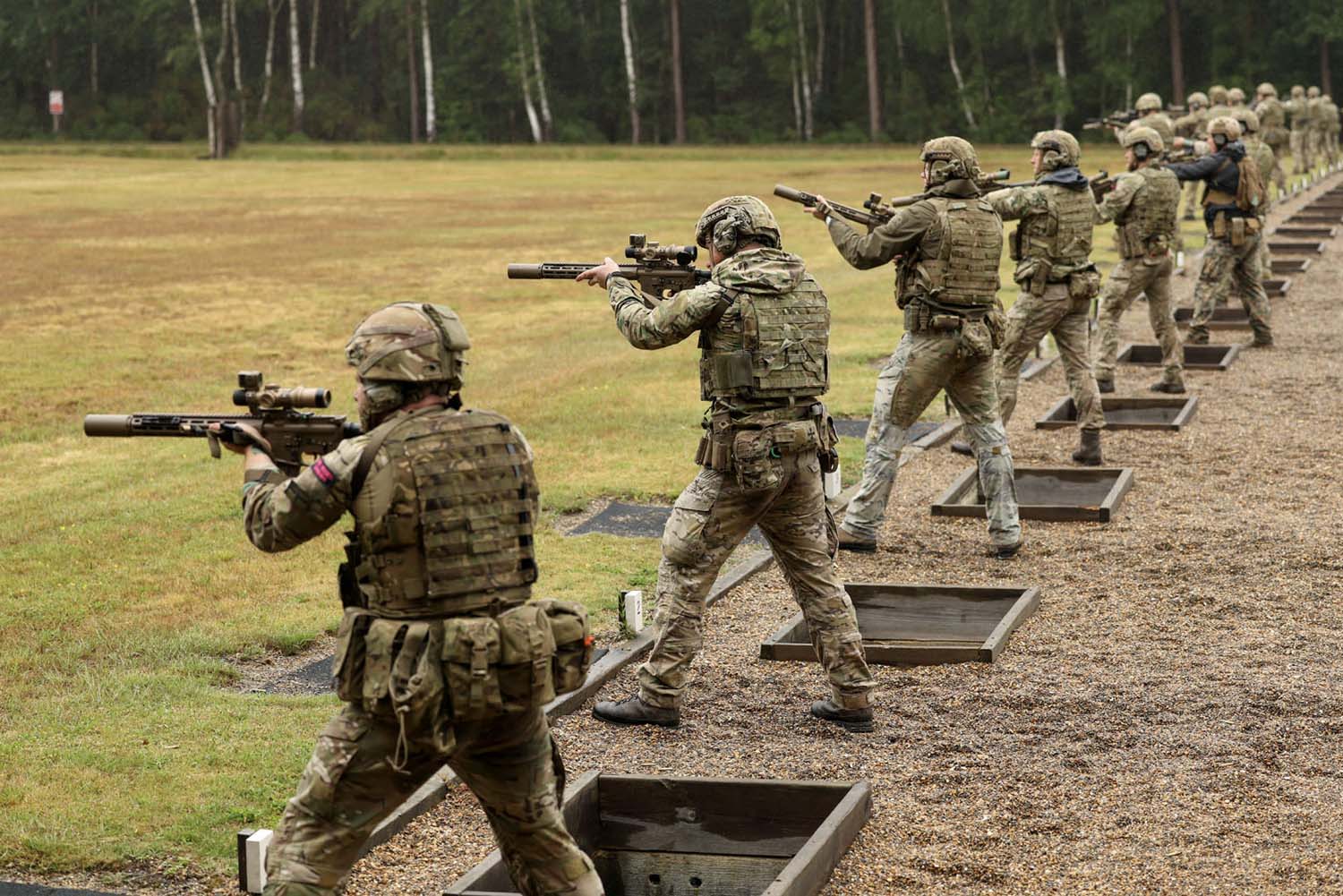
A notable aspect of this year’s contest was the team’s deployment of the new KS1 rifle. According to statements from the Royal Navy, the weapon demonstrated discernible improvements in performance compared to the SA80 A2, which has historically served as the standard-issue service rifle for the UK military. The use of the KS1 in such a high-profile operational competition marks one of its more significant public appearances since its phased introduction into British service.
Prior to the Inter-Services contest, the Royal Navy and Royal Marines shooters honed their skills and qualified for the national event at the Royal Navy Operational Shooting Contest. This rigorous preliminary competition was hosted at the National Shooting Centre in Bisley, Surrey, over a two-week period. Thirty competitors engaged in 22 distinct live-firing serials, designed to test a comprehensive range of combat scenarios. These serials encompassed shooting from various positions—standing, prone, sitting, and kneeling—and involved both stationary and dynamic engagements. Participants utilized both pistols and rifles, engaging targets at distances ranging from 500 meters down to a mere ten meters, simulating diverse operational requirements.
The Royal Navy consistently emphasizes that these events are fundamentally military training exercises, rather than conventional sporting competitions. The contest conditions are meticulously designed to push participants towards the highest possible operational standards, simulating the intense pressures of combat. The core objective, as articulated by the service, is the development of instinctive combat marksmanship. This involves cultivating the ability to deliver a more accurate shot, more rapidly, and under extreme duress. The aim is to ingrain the skill of calmly and precisely delivering a well-aimed shot until it becomes second nature—a capability the Royal Navy asserts remains absolutely vital, even in an era increasingly defined by advanced technologies such as drones and sophisticated missile systems.
This year’s recipient of the King’s Medal for Champion Shot of the Royal Navy and Royal Marines, the United Kingdom’s most prestigious award for military marksmanship, was Sergeant ‘Robbo’ Robinson from Yorkshire. In a time-honored military tradition, Sergeant Robinson was carried around in a sedan chair following his commendation. He received a provisional presentation from Major General Rich Cantrill, Commander Operations for the Royal Navy, acting on behalf of the Fleet Commander. The medal itself was later presented by His Majesty King Charles, who also bestowed honors upon the top shooters from the Army and Royal Air Force. This marked Sergeant Robinson’s second attempt at the highly sought-after prize, having previously placed seventh in the 2023 competition.
Beyond the individual accolades, a further nine shooters distinguished themselves by earning the coveted Service Marksman badge. This emblem, symbolizing superior marksmanship proficiency, will be worn on their parade uniforms for the duration of their careers, serving as a permanent mark of their skill. In the Senior Officer’s Pistol Competition, which featured ten participants, Commodore Matt Flegg from Navy Headquarters in Portsmouth emerged victorious, securing the trophy by a single point in a tightly contested event.
The introduction and showcasing of the KS1 rifle within this context are part of a broader small arms replacement program currently underway within the British armed forces. The KS1 has been selected to gradually succeed elements of the long-serving SA80 family of weapons, which has equipped UK forces since the 1980s. Its prominent use by the Royal Navy’s elite marksmen underscores its operational readiness and marks one of its most visible public deployments as the UK military continues its modernization efforts.
Why This Matters
The success of the Royal Navy and Royal Marines in the Inter-Services Operational Shooting Contest extends beyond the prestige of a rare victory. It offers critical insights into the operational readiness, training philosophy, and ongoing modernization of the UK’s armed forces. Firstly, the emphasis on “instinctive combat marksmanship” highlights a fundamental truth of modern warfare: despite the proliferation of drones, precision-guided missiles, and advanced surveillance technologies, the individual soldier’s ability to engage threats accurately and rapidly with a small arm remains indispensable. Close-quarter battle, force protection, and specialized operations still rely heavily on the precise application of individual firepower, making these fundamental skills a cornerstone of combat effectiveness.
Secondly, the integration and successful deployment of the new KS1 rifle during this competition is a significant indicator of the UK military’s commitment to equipping its personnel with modern, effective weaponry. The KS1’s demonstrated improvements over the venerable SA80 A2 suggest a tangible upgrade in capabilities, which translates directly to enhanced lethality, reliability, and adaptability for troops in the field. This weapon modernization is not merely about new hardware; it represents an investment in the safety and effectiveness of service personnel, ensuring they possess the tools necessary to meet contemporary threats. The competition serves as a high-stakes proving ground for such new equipment, offering valuable feedback under simulated combat conditions.
Furthermore, the nature of the Inter-Services contest as a “military training exercise” rather than a sport underscores the British Armed Forces’ dedication to continuous professional development. It fosters a culture of excellence and competitive drive that pushes individuals to master critical combat skills under pressure. Such rigorous training environments are crucial for developing the mental fortitude and physical precision required in high-stress operational scenarios. The recognition of individual achievements, such as the King’s Medal and Service Marksman badges, not only boosts morale but also sets benchmarks for proficiency across the services, encouraging others to strive for similar standards.
In a geopolitical landscape marked by evolving threats and complex operational demands, the proficiency demonstrated by the Royal Navy and Royal Marines is a testament to the overall capabilities of the UK Armed Forces. It signals to allies and potential adversaries alike that British military personnel are highly trained, expertly equipped, and committed to maintaining a leading edge in fundamental combat skills, reinforcing the nation’s defense posture and its capacity to project power and protect national interests.