
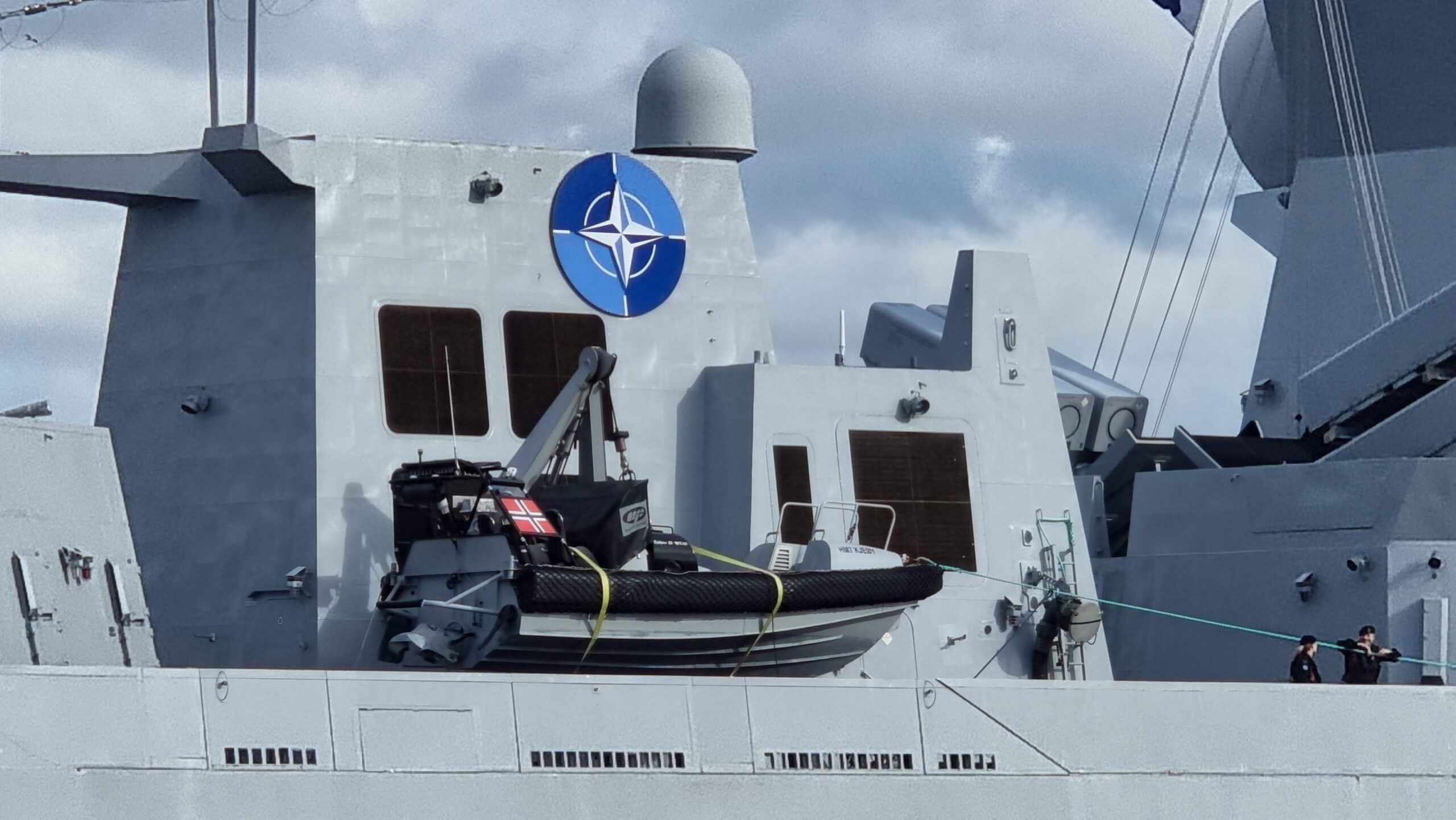
NATO Standing Maritime Group One Vessels Arrive on the Clyde
Warships belonging to Standing NATO Maritime Group One (SNMG1) have arrived on the Clyde in Scotland for a scheduled port visit. The Canadian frigate HMCS Ville de Québec, currently serving as SNMG1’s flagship, and the Norwegian frigate HNoMS Fridtjof Nansen berthed at King George V Dock in Glasgow. The German fleet tanker FGS Rhöne arrived the previous day, docking at the Repair Quay at Inchgreen.
The arrival of these vessels underscores NATO’s ongoing commitment to maritime security, interoperability among allied navies, and the maintenance of a persistent naval presence in strategically important European waters. Port calls such as this are routine for allied warships, facilitating resupply, crew rest, and engagement with host nations, while also serving as a visible demonstration of NATO’s collective defense capabilities.
On Friday morning, the Norwegian frigate HNoMS Fridtjof Nansen transited the river, assisted by the tug CMS Thunderer, before mooring at King George V Dock. She was followed later by the Canadian frigate HMCS Ville de Québec, which passed Erskine with a CH-148 Cyclone helicopter secured on its flight deck and crew members visible on the upper deck. The German fleet tanker FGS Rhöne had arrived the preceding evening, taking up position at the Inchgreen Repair Quay.
HMCS Ville de Québec is currently leading SNMG1, having assumed flagship duties from the German frigate FGS Sachsen earlier this month during a port visit to Halifax, Nova Scotia. This transfer of command saw the UK-led battle staff, under Royal Navy Commodore Maryla Ingham, embark on the Canadian vessel, signifying the multinational nature of NATO’s command structures. The Canadian frigate departed Halifax on July 15th as part of Operation Reassurance, Canada’s contribution to NATO deterrence measures in Europe. Its mission involves operations in the North Atlantic, North Sea, and Baltic Sea until December, supporting both the standing group and the maritime component of the NATO Allied Reaction Force.
Standing NATO Maritime Group One is one of the alliance’s four permanent naval forces, maintained at high readiness to provide a constant maritime presence and ensure a rapid response to emerging threats. These forces are integral to NATO’s collective defense strategy, conducting exercises, patrols, and demonstrating solidarity across the alliance’s area of responsibility. Beyond the Canadian, Norwegian, and German vessels currently in port, SNMG1’s composition also includes the Dutch frigate HNLMS Van Amstel and combat support ship HNLMS Den Helder, the Turkish frigate TCG Oruçreis, and the German frigate FGS Sachsen. This diverse multinational composition highlights the collaborative nature of NATO’s maritime operations.
The group operates under the overarching command of Commander Task Force Atlantic (CTF Atlantic), a NATO command responsible for coordinating allied maritime forces across the Atlantic basin. Spanish Vice Admiral Juan Bautista Pérez Puig assumed command of CTF Atlantic in July and is scheduled to hold this critical leadership position until the end of June 2027, overseeing the strategic deployment and operational readiness of naval assets across a vast maritime theatre.
The individual vessels comprising SNMG1 bring distinct capabilities to the group. HNoMS Fridtjof Nansen is the lead ship of Norway’s five-strong frigate class. These frigates are built around the advanced Aegis combat system and equipped with the SPY-1F radar, specializing heavily in anti-submarine warfare. This configuration is particularly vital for operations in the challenging waters off the Norwegian coast and further north, areas of significant strategic importance. HMCS Ville de Québec, a Halifax-class frigate, has undergone extensive modernization over the past decade. Designed for anti-submarine and anti-surface warfare in the open ocean, these vessels are crucial for Canada’s contribution to naval operations. The Halifax-class frigates are slated for replacement by the future River-class destroyer, a design developed from the Type 26 Global Combat Ship currently being constructed for the Royal Navy at BAE Systems’ yards located further up the Clyde at Govan and Scotstoun.
Supporting these combat vessels is the FGS Rhöne, a Walchensee-class fleet tanker. One of two such vessels that entered German service in the 1970s, the Rhöne continues to play a vital role in providing essential fuel replenishment to NATO task groups at sea. The ability to refuel at sea significantly extends the operational endurance of warships, allowing them to remain deployed for longer periods without returning to port, thereby enhancing NATO’s sustained presence and responsiveness.
The Clyde’s strategic importance as a regular destination for allied warships is well-established. Its deep-water access and existing naval infrastructure, including King George V Dock in Glasgow and HM Naval Base Clyde at Faslane, make it a valuable port of call. Such visits not only provide logistical support but also reinforce the United Kingdom’s role as a key member of NATO and a host nation for allied forces.
Why This Matters
The arrival of NATO’s Standing Maritime Group One vessels on the Clyde is more than a routine port visit; it carries significant strategic weight, particularly in the current geopolitical climate. This deployment underscores several critical aspects of NATO’s operational readiness and collective defense posture.
Firstly, it serves as a powerful demonstration of NATO’s deterrent capability. By maintaining a continuous presence of high-readiness naval forces like SNMG1, the alliance sends an unequivocal message about its commitment to protecting its members and upholding international maritime security. In an era of increased geopolitical instability, visible deployments such as this reinforce the credibility of NATO’s Article 5 collective defense pledge, assuring allies and deterring potential adversaries.
Secondly, these port visits and joint operations are crucial for fostering and refining interoperability among allied navies. Each nation’s ships and crews operate under common NATO doctrines, but practical experience working together, communicating, and coordinating in diverse environments is indispensable. The ability for vessels from Canada, Norway, Germany, and other allied nations to seamlessly integrate into a single task group, transfer flagship duties, and conduct complex operations is a testament to years of training and cooperation. This interoperability is foundational to NATO’s effectiveness in any potential crisis or conflict.
Thirdly, the mission areas of SNMG1 – the North Atlantic, North Sea, and Baltic Sea – are vital waterways for global trade and strategic military movement. The presence of these forces helps ensure the security of sea lines of communication, monitor maritime activity, and respond to any threats that could disrupt regional stability or economic interests. Canada’s specific contribution through Operation Reassurance further highlights the transatlantic bond and the shared responsibility among allies for European security.
Finally, the Clyde’s role as a recurring host for allied warships emphasizes the United Kingdom’s strategic importance within NATO. As a maritime nation with a significant naval presence and advanced shipbuilding capabilities, the UK provides essential logistical and operational support for allied forces. The ongoing development of new naval assets like the Type 26 frigates on the Clyde further integrates the UK into the future of NATO’s maritime capabilities, solidifying its position as a cornerstone of the alliance’s collective defense.