
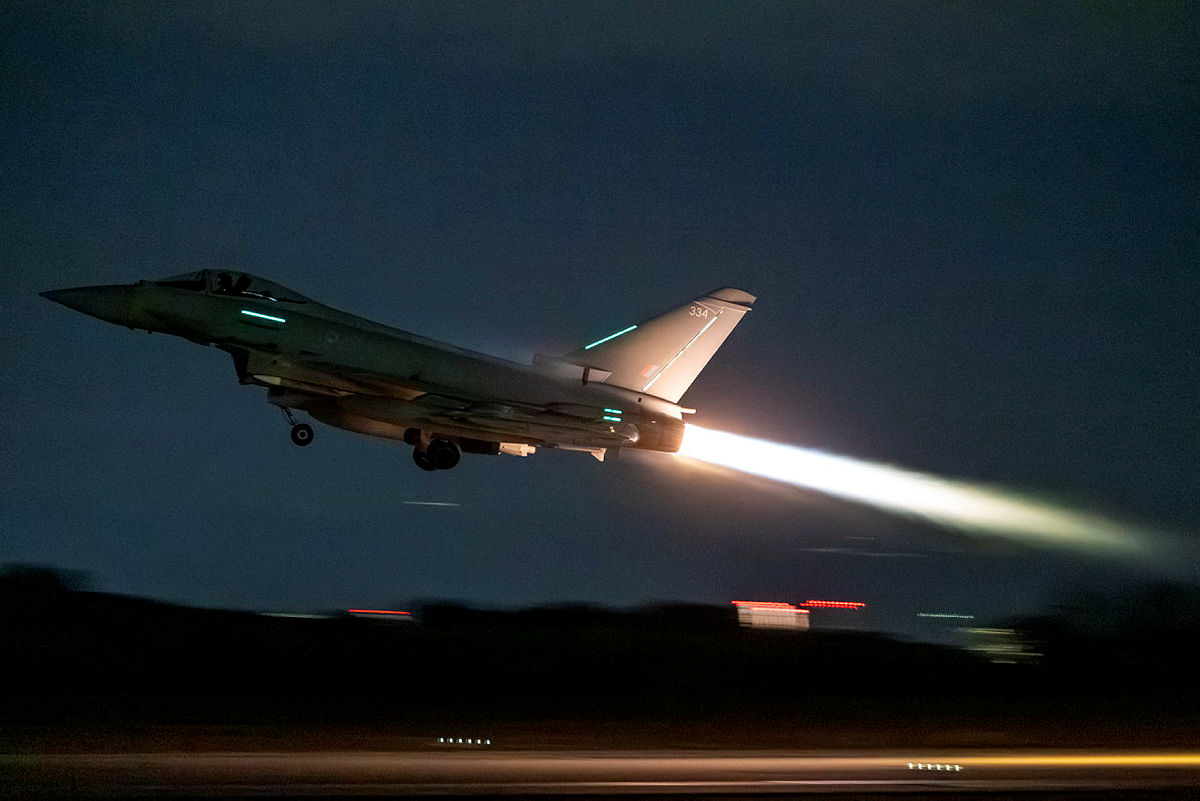
A recent incident involving a Quick Reaction Alert (QRA) launch by the Royal Air Force (RAF) underscores the critical importance of national air defence protocols and the swift response capabilities of military forces. On a specified date, two RAF Eurofighter Typhoon FGR4 fighter jets were scrambled to intercept a Qatar Airways Boeing 777-300 commercial airliner, which was reportedly causing concern to civil aviation authorities.
The interception, pieced together from open-source flight tracking data, appeared to be a genuine operational launch rather than a routine training exercise. The two RAF aircraft, operating under the callsigns RIGID 11 and RIGID 12, took off from RAF Coningsby in Lincolnshire, which serves as the base for QRA (South) operations. These highly capable multi-role fighters are maintained at a constant state of readiness to respond to potential threats or incidents within or near UK airspace.
The intercepted airliner was identified as Qatar Airways Flight QR23 (callsign QTR52N), a Boeing 777-300 travelling from Doha, Qatar, and inbound for Manchester Airport. Open-source tracking information indicated that the aircraft was not responding to air traffic control communications and did not commence its descent into Manchester at the expected point. This deviation from standard flight procedures and the loss of communication triggered the alert among civil aviation authorities, prompting the RAF’s intervention.
While the full details surrounding the incident remain undisclosed by official sources, reports from the UK Defence Journal indicated that the intercept was related to an incident where a specific threat had been made. The exact nature of this threat, and whether it was ultimately assessed as credible, has not been publicly established. However, the decision to launch a QRA suggests that the concerns were significant enough to warrant military intervention.
An RAF spokesperson confirmed the operation, stating: “We can confirm that an RAF Quick Reaction Alert was launched for a Qatar Airways flight which was causing concern to civil authorities. The incident was resolved and landed safely at Manchester Airport.” This statement affirmed the seriousness of the initial concern while reassuring the public of a positive outcome.
Tracking data further revealed the operational details of the interception. The intercepting Typhoons squawked a transponder code specifically allocated to NATO Air Policing, which is utilized for air defence priority flights, signifying the urgent and critical nature of their mission. The escort path for the fighter jets and the airliner was observed over the Midlands and Yorkshire regions of England. The Typhoons maintained their escort as the airliner continued past Manchester, eventually ensuring its safe approach and landing. Following the successful resolution, one of the fighter aircraft was later seen performing holding patterns over Lincolnshire before returning to its base at RAF Coningsby.
Qatar Airways also issued a statement regarding the event, clarifying their perspective: “Qatar Airways confirms that, as a precautionary measure and in line with standard procedure, flight QR23 from Doha to Manchester was provided with an escort for part of its journey prior to landing following a security notification from UK authorities. At no point was the aircraft in any danger, and normal operations continued on board throughout. The flight landed safely, and all passengers and crew disembarked without incident. The safety and security of our passengers and crew remain our highest priority. We thank our passengers for their understanding.” This statement emphasized that passengers were never in danger and that the escort was a precautionary measure taken in response to external security advisories.
The Quick Reaction Alert (QRA) system is a fundamental component of the United Kingdom’s national security framework. It represents a standing task under which armed RAF Eurofighter Typhoons are maintained at an extremely high state of readiness, twenty-four hours a day, seven days a week. Their primary role is to respond immediately to any aircraft causing concern within or near UK sovereign airspace. Launches can be ordered for a diverse range of reasons, the most common being the approach of unidentified aircraft, the loss of contact with a civilian flight, or suspected breaches of airspace. A communications failure by an airliner, while often benign and resolvable, is considered among the more routine triggers for a QRA launch due to the potential for more serious underlying issues.
The UK’s QRA capability is geographically distributed to ensure comprehensive coverage. RAF Coningsby handles the southern QRA area, as was the case in this incident, while RAF Lossiemouth in Scotland maintains similar aircraft and personnel at readiness to cover the northern QRA area. This dual-base system ensures that the RAF can rapidly respond to incidents across the entire breadth of the United Kingdom’s flight information region.
Why This Matters
This incident, though safely resolved, carries significant implications and highlights several critical aspects of national security and civil aviation:
- Demonstration of Robust Air Defence Capability: The rapid launch and effective interception of the Qatar Airways flight unequivocally demonstrate the UK’s well-maintained and highly responsive Quick Reaction Alert system. It proves that the RAF possesses the immediate capability to identify, intercept, and manage potential aerial threats or serious incidents within its airspace, providing a crucial layer of national security.
- Vigilance Against Potential Threats: While the nature of the “threat” remains unspecified, the decision to scramble military jets for a commercial flight suggests that authorities took the information seriously. This underscores the constant vigilance required in an era of complex global security challenges, where even a potential threat to civil aviation must be met with immediate and decisive action.
- Public Reassurance and Trust: The swift and successful resolution of the incident, leading to the safe landing of the aircraft and the disembarkation of all passengers, serves to reassure the public. It reinforces trust in the effectiveness of national security protocols and the competence of military and civil aviation authorities to manage critical situations without compromising safety.
- Interagency Coordination: An incident of this nature requires seamless and rapid coordination between multiple entities: civil air traffic control, intelligence agencies (if a threat was indeed identified), the Royal Air Force, and the airline itself. The safe outcome indicates that these interagency communication and response protocols functioned effectively under pressure.
- Importance of Communication and Protocols: The initial trigger for the QRA was a loss of communication and deviation from expected flight path. This highlights the absolute criticality of continuous communication between aircraft and air traffic control. Any lapse, even if unintentional, can escalate rapidly into a national security concern, emphasizing the strict adherence to aviation protocols.
- Deterrence Factor: The public knowledge of the UK’s QRA capability serves as a significant deterrent against any individual or group contemplating malicious acts involving aircraft in British airspace. The readiness to deploy armed fighters sends a clear message about the consequences of such intentions.
- Global Relevance: In a world grappling with various forms of security risks, this incident is a reminder that even routine commercial flights operate within a complex security environment. It underscores the global imperative for robust national air defence systems and international cooperation in safeguarding civil aviation.
The incident stands as a testament to the dedication and preparedness of the UK’s defence forces and civil aviation authorities in ensuring the safety and security of its skies.