
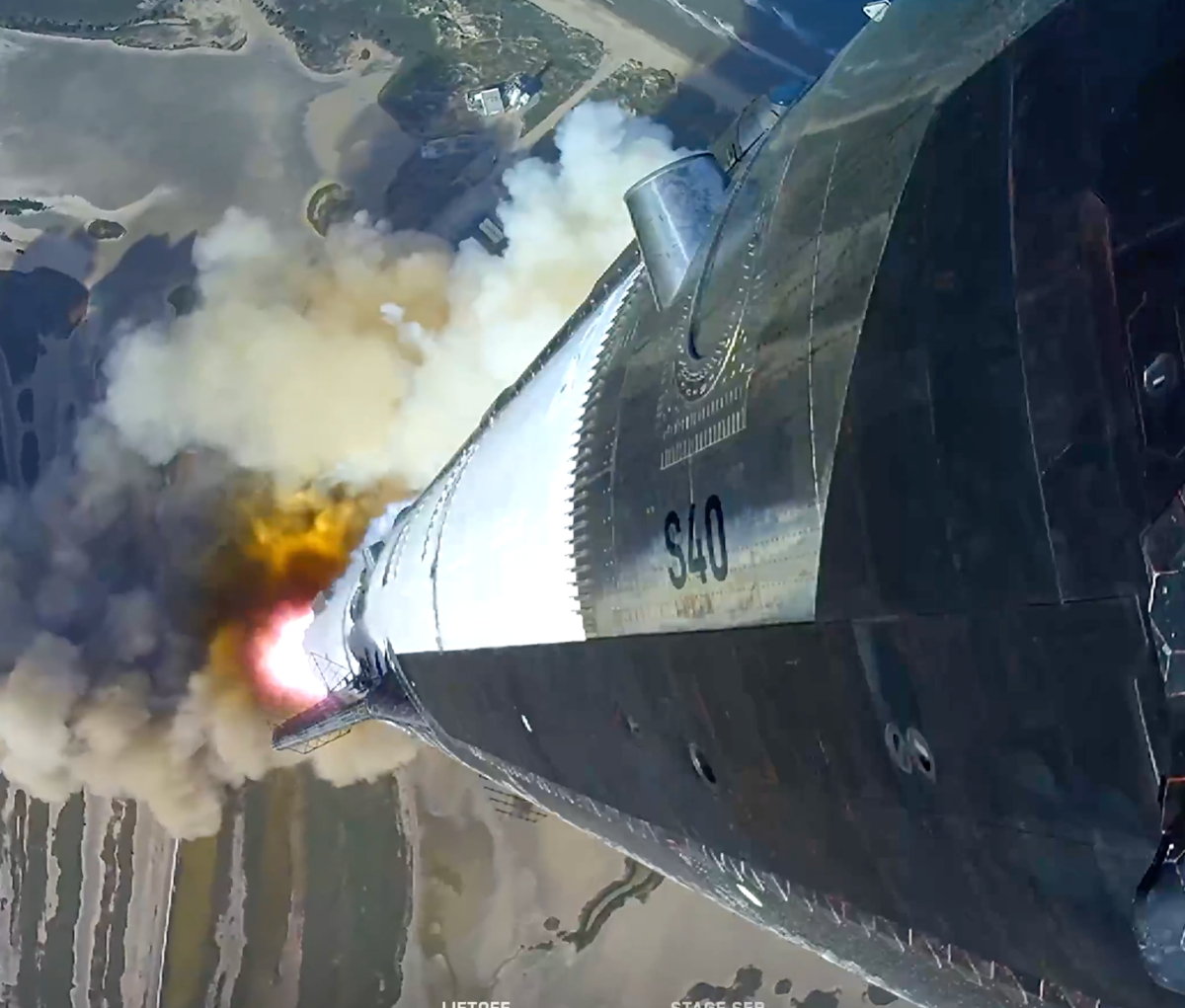
SpaceX’s ambitious Starship program continues its iterative dance of triumph and trial. The 13th test flight of the colossal rocket system delivered a mixed bag of results: a critical success in deploying third-generation Starlink satellites and a smooth simulated landing for the Starship upper stage, yet another setback for its Super Heavy booster during a planned landing attempt. This latest mission, the first since SpaceX’s landmark public offering, put the company’s “fly, fail, fix” philosophy under intense market scrutiny.
Key Takeaways
- Mixed Fortunes in the 13th Starship Test: SpaceX successfully deployed its advanced third-generation Starlink satellites and landed Starship’s upper stage, marking crucial progress for its space internet constellation.
- Super Heavy Booster Struggles Persist: The Super Heavy booster failed its simulated landing for the second consecutive time, encountering engine issues that led to its rapid impact and explosion, highlighting ongoing challenges in achieving full reusability.
- Post-IPO Scrutiny Intensifies: As the first launch since its record-breaking IPO, the mission’s mixed results, particularly the booster failure, contributed to a continued decline in SpaceX’s stock, underscoring the market’s sensitivity to its “fly, fail, fix” development strategy.
Starship’s Latest Saga: A Tale of Two Stages
SpaceX’s latest Starship test flight, the 13th in its rapid development cadence, proved to be a compelling demonstration of both significant progress and persistent challenges. Following an abortive launch attempt just a week prior due to multiple engine failures—a problem SpaceX addressed by replacing six engines—Friday’s flight saw the mega-rocket successfully ascend from its South Texas launchpad, carrying a vital payload for the company’s booming Starlink constellation.
Upper Stage Triumph: Deploying Starlink V3 and a Gentle Splashdown
The Starship V3 upper stage, often referred to as ‘Ship’ by SpaceX, delivered a near-flawless performance. Unlike its maiden V3 flight in May, which saw an engine loss, this mission experienced no such issues, propelling the vehicle to its designated altitude. Critically, the Ship successfully deployed the first batch of third-generation Starlink satellites, a major milestone for the company’s internet service. While Starship is not yet capable of reaching sustained Earth orbit, the ability to launch and communicate with these more capable V3 satellites—even for a brief period before they burned up in the atmosphere roughly 20 minutes post-deployment—represents a significant step forward for the program.
Following satellite deployment, the Ship showcased its resilience by surviving the intense forces of atmospheric reentry. It then executed a simulated landing in the Indian Ocean approximately an hour after liftoff. In a notable improvement, the Ship did not explode upon tipping over into the water, as observed in some previous tests. Instead, it remained largely intact, floating on the surface. This unprecedented stability allowed SpaceX to deploy a drone for close-up aerial inspection of its heat shield tiles, providing invaluable data for future design refinements and reusability efforts.
Super Heavy’s Struggle: A Second Consecutive Booster Failure
The success of the Ship, however, was overshadowed by yet another failure of its Super Heavy booster. This marks the second consecutive mission where the V3 version of Starship’s first stage has encountered issues during its simulated landing attempt. In the May V3 flight, the Super Heavy booster suffered a failure during separation from the upper stage. This time, while the booster managed to progress further into its planned flight profile, it ultimately failed to ignite all the necessary engines for its crucial landing burn sequence. The result was a faster-than-expected impact with the Gulf of Mexico, leading to its explosion.
These recurring booster failures represent a significant hurdle for SpaceX, as the company’s long-term vision for Starship relies entirely on rapid and full reusability of both stages. Each unrecovered booster represents not just a loss of hardware, but a delay in accumulating the flight data necessary to perfect the complex landing procedures.
Market Volatility and the “Fly, Fail, Fix” Paradigm Post-IPO
This 13th test flight carried an added layer of significance: it was the first Starship launch since SpaceX went public in June in the largest IPO in history. The company’s unique “fly, fail, fix” approach to development, while celebrated for its rapid innovation, now faces heightened scrutiny from public market investors.
The immediate aftermath of the previous launch abort saw SpaceX’s stock decline, signaling investor sensitivity to operational hitches. The booster failure during Friday’s flight exacerbated this trend. SpaceX shares, which peaked at over $200 per share after the IPO, closed Friday at $115, falling an additional 2% in after-hours trading before paring some of those losses. This sustained downward pressure reflects investor apprehension about the pace of Starship’s development and its direct impact on the company’s future revenue streams, particularly those tied to Starlink.
Starlink V3: Powering SpaceX’s Profitable Core
Despite the Super Heavy’s challenges, the successful deployment of the more capable V3 Starlink satellites is a substantial win. Starlink remains the only consistently profitable part of SpaceX’s sprawling business empire, and its expansion is critical for the company’s overall financial health and future ambitions.
The V3 satellites promise a significant upgrade in network performance and capacity. SpaceX has boldly stated that launching 60 of these new satellites on a single Starship mission could represent a “potential twenty-fold increase” in downlink capacity compared to what a single Falcon 9 rocket can deploy. This dramatic improvement in throughput directly translates to better service for subscribers and improved economics for the capital-hungry space internet network, accelerating its global rollout and profitability.
The ability to scale Starlink rapidly and cost-effectively is paramount. While the initial deployment and communication with the V3 satellites are positive, the full realization of these economic gains remains contingent on achieving the Starship system’s ultimate goal: full reusability. Without it, the advantages of increased satellite capacity are partially offset by the high cost of expendable launches.
The Reusability Imperative: Starship’s Ultimate Test
At the heart of Starship’s design and SpaceX’s long-term vision lies the imperative of full reusability. The company’s S-1 filing, a crucial document for its IPO, explicitly warned that without a fully-reusable Starship, progress on Starlink “would be at a slower pace and higher cost.” This statement underscores why the Super Heavy booster’s repeated failures are more than just technical glitches; they are fundamental roadblocks to the company’s strategic objectives.
The current testing phase is designed to identify and resolve these issues through iterative design and flight. Each flight, even with partial failures, provides invaluable data on engine performance, aerodynamic forces, structural integrity, and the complex software algorithms required for precise landing. The floating Starship upper stage, for instance, allowed for critical heat shield inspection – a key component of reusability. However, the booster’s continued inability to execute a controlled landing means that one half of the reusability equation remains unsolved. Until both the Super Heavy booster and the Starship upper stage can be reliably recovered and rapidly re-flown, the system will not achieve the revolutionary cost reductions necessary for SpaceX’s ambitious plans of colonizing Mars and fundamentally transforming space travel economics.
With assistance from Tim Fernholz.
When you purchase through links in our articles, we may earn a small commission. This doesn’t affect our editorial independence.
Bottom Line
SpaceX’s 13th Starship test embodies the company’s bold, often tumultuous, journey toward redefining spaceflight. While the successful deployment of Starlink V3 satellites and the upper stage’s resilient performance underscore significant technical advancements and a pathway to enhancing its profitable internet service, the persistent failures of the Super Heavy booster cast a long shadow. In the post-IPO era, these setbacks are not just engineering challenges but also investor confidence tests, reminding all that the “fly, fail, fix” mantra, while effective for innovation, carries a tangible market cost. The ultimate success of Starship, and by extension much of SpaceX’s future, hinges on rapidly overcoming these reusability hurdles to unlock the true economic potential of its groundbreaking design.
{content}
Source: {feed_title}