
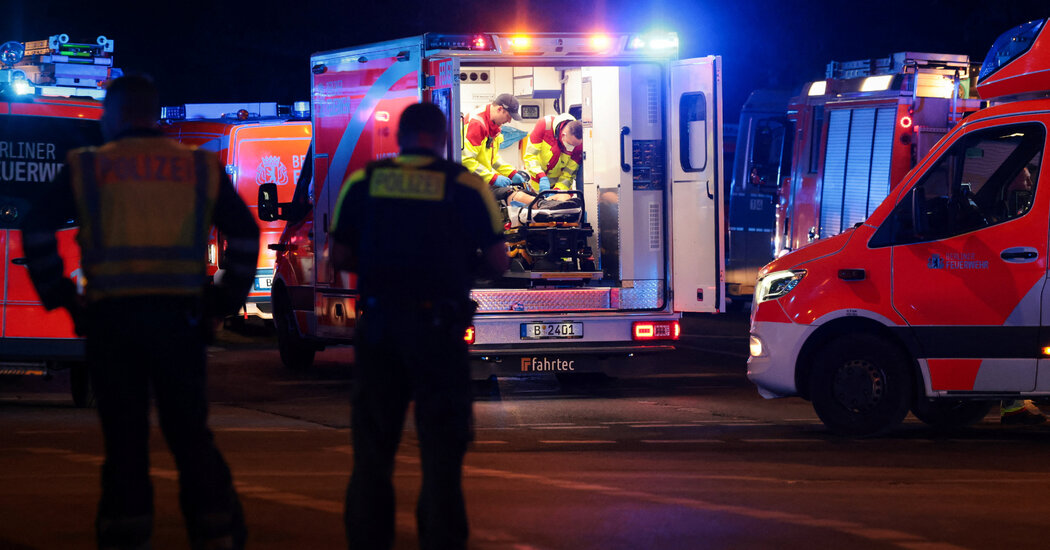
**Berlin, Germany –** A vehicle incident in Berlin’s Tiergarten park during the city’s largest L.G.B.T.Q. Pride event resulted in at least one fatality and left more than a dozen individuals injured, some critically, city police officials confirmed on Saturday. The incident has prompted a widespread investigation into its cause and the search for those responsible.
The crash occurred shortly before 10 p.m. local time on Saturday evening, in the sprawling Tiergarten, a prominent central park near the iconic Brandenburg Gate. The area was bustling with participants and spectators attending Christopher Street Day (CSD), Berlin’s annual Pride festival. Emergency services rapidly responded to the scene, establishing a perimeter and providing immediate medical attention to the victims.
Florian Nath, a spokesperson for the Berlin police, stated in an interview that the investigation into the motive behind the incident is ongoing. “The car drove through the park and hit several people walking,” Mr. Nath explained, clarifying that while the vehicle did not directly strike the main parade route, it impacted attendees who were departing from or circulating around the festivities. The precise manner in which the vehicle gained access to the park’s pedestrian areas remains a key point of inquiry.
Authorities located the vehicle, described as a white passenger car, abandoned after it had crashed into a tree. There was no one inside the vehicle when it was discovered. Police have issued a public appeal, urging anyone with photographs or video footage of the incident or its immediate aftermath to submit them to assist in tracking down the individual or individuals responsible. The prompt discovery of the vehicle but absence of a driver suggests a deliberate flight from the scene.
In light of the tragic events, the organizers of Christopher Street Day announced the cancellation of the remainder of the festival. Christopher Street Day is one of Europe’s largest Pride celebrations, drawing hundreds of thousands of participants to Berlin each year to advocate for LGBTQ+ rights and celebrate queer culture. The event takes its name from the street in New York City historically associated with the 1969 Stonewall riots, which are widely considered a pivotal moment in the modern gay rights movement. The cancellation underscores the severity of the incident and the immediate priority placed on public safety and mourning.
On social media platforms, the Berlin police department communicated updates from the scene, advising the public to avoid the Tiergarten area to allow emergency crews unimpeded access to manage the situation and conduct their initial investigations. Kai Wegner, Berlin’s Mayor, publicly condemned the attack, expressing his condolences and solidarity with the families of the victims and those affected by the tragedy. The incident has sent shockwaves through the city and the international LGBTQ+ community, which views Pride events as vital affirmations of identity and belonging.
Germany has experienced several incidents in recent years where vehicles have been deliberately driven into crowds, posing significant challenges for public security at large gatherings. Notably, in December 2016, a truck was deliberately driven into a Christmas market in Berlin, resulting in 12 deaths and dozens of injuries. While the motive in the current Tiergarten incident remains under investigation, such past events highlight the potential for vehicle ramming to be employed as a method of attack, whether by individuals with extremist motives, those suffering from mental health crises, or others. Authorities will be meticulously examining all possibilities, including the potential for a hate crime given the context of the LGBTQ+ Pride event. The ongoing investigation is expected to be comprehensive, drawing on forensic evidence, witness testimonies, and any available surveillance footage to determine the full circumstances and bring those responsible to justice.
Why This Matters
The incident in Berlin’s Tiergarten carries significant weight beyond the immediate tragic loss of life and injuries. Its occurrence during a major LGBTQ+ Pride event amplifies its impact on several fronts:
- **Impact on the LGBTQ+ Community:** Pride festivals like Berlin’s Christopher Street Day are more than just parades; they are vital celebrations of identity, community, and the ongoing struggle for equality. They represent safe spaces where LGBTQ+ individuals can express themselves freely and collectively. An attack, regardless of motive, on such an event can deeply wound the community, fostering fear and a sense of vulnerability where joy and acceptance should prevail. It raises concerns about the safety of public gatherings for marginalized groups and the potential for targeted violence.
- **Public Safety and Security at Large Events:** This incident underscores the persistent challenge faced by cities worldwide in ensuring the security of large public gatherings. Despite often extensive security measures, the ease with which a vehicle can be weaponized against crowds remains a critical vulnerability. It will likely prompt further review and enhancement of security protocols for festivals, parades, and other major events, especially those held in open urban spaces.
- **The Nature of the Investigation:** The ongoing investigation into the motive is crucial. If determined to be a deliberate act of violence, particularly a hate crime targeting the LGBTQ+ community, it would send a chilling message about rising intolerance. Conversely, if it were an accident or the result of other factors, understanding these would be vital for prevention. The transparency and thoroughness of the police investigation are paramount for public trust and for informing future safety strategies.
- **Resilience and Solidarity:** In the wake of such events, communities often demonstrate remarkable resilience and solidarity. The response from Berlin’s mayor and the cancellation of the event for safety and respect reflect this. How the city and its residents, particularly the LGBTQ+ community, move forward will be a testament to their strength and commitment to the values of inclusivity and freedom of assembly.
- **Global Implications:** As one of Europe’s largest capitals and a symbol of democratic freedoms, incidents in Berlin resonate internationally. The way authorities handle the investigation and support affected communities can set precedents and influence public discourse on safety, tolerance, and the protection of civil liberties across the globe.
Ultimately, this incident forces a critical reflection on how societies protect their citizens, particularly those gathering to celebrate their identities and advocate for their rights, against acts of violence or negligence in an increasingly complex world.