
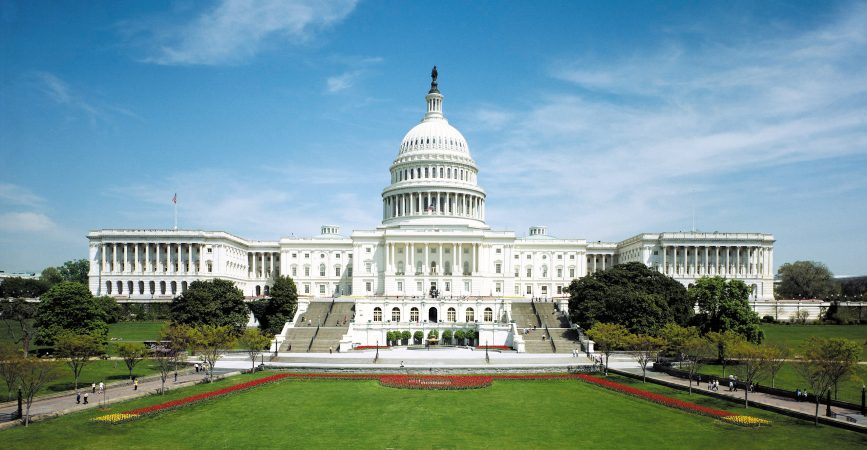
On July 22, the U.S. House of Representatives passed its version of the Fiscal Year 2027 (FY27) National Defense Authorization Act (NDAA) and a new reconciliation package allocating $60 billion to the Pentagon. Both pieces of legislation now face an uncertain path in the Senate, where previous attempts to advance defense spending have encountered significant political hurdles.
The votes in the House were largely divided along party lines, underscoring the political complexities surrounding national defense funding and policy. The FY27 NDAA passed with a vote of 216-212, while the budget reconciliation package secured passage by an even narrower margin of 216-214.
The Fiscal Year 2027 National Defense Authorization Act
The NDAA is a critical piece of legislation typically passed annually, dictating policy, directing various reports, and recommending spending levels for the Department of Defense. It is distinct from the appropriations bill, which ultimately provides the actual funding. The House’s version of the FY27 NDAA encompasses hundreds of provisions, many of which specifically target the operations and future direction of the U.S. Air Force and Space Force.
Key provisions within the House-passed FY27 NDAA include:
- Fighter Jet Procurement: Authorization for multiyear procurement contracts for the F-35 Joint Strike Fighter and the F-15EX Eagle II fighter jets. Multiyear contracts are often sought by the Pentagon to provide stability for manufacturers and potentially reduce overall costs.
- F-35 Accountability: A requirement for the Pentagon to develop and submit a comprehensive plan addressing recommendations made by the Government Accountability Office (GAO) concerning the F-35 program. These recommendations date back as far as 2014, highlighting long-standing concerns about the program’s efficiency and costs.
- Space Force Reorganization: Elimination of two significant Space Force acquisition organizations: the Space Development Agency (SDA) and the Space Rapid Capabilities Office (SRCO). This move signals a potential restructuring of how the Space Force acquires and fields new technologies.
- MH-139 Helicopter Mandate: Authorization for the procurement of four new MH-139 Grey Wolf helicopters. Additionally, the Air Force is required to brief lawmakers on its decision to abandon previous plans for the MH-139 to conduct VIP transport missions around Washington D.C.
- Tanker Self-Defense Strategy: A mandate for a report detailing the Air Force’s strategy for arming its tanker aircraft with advanced sensors, processors, and defensive weapons systems, enhancing their survivability in contested environments.
- AWACS Fleet Retention: A prohibition on the retirement of any E-3 Sentry Airborne Warning and Control System (AWACS) aircraft through Fiscal Year 2027, preserving this critical airborne command and control capability.
- ‘Right to Repair’ Expansion: Increased authorities granted to military branches to repair and maintain their own equipment, a policy initiative commonly referred to as ‘right to repair,’ aimed at reducing reliance on original equipment manufacturers for maintenance.
Additional amendments adopted on the House floor before the final vote focused on the Collaborative Combat Aircraft (CCA) program, a cornerstone of the Air Force’s future airpower strategy. One amendment requires the Air Force, in conjunction with U.S. Transportation Command, to provide Congress with a detailed strategy addressing the “storage, mobility, maintenance, cost, and deployment requirements” for the CCA program. Another amendment mandates a report on the Air Force’s future plans for integrating advanced sensor and electronic warfare systems onto CCAs, particularly as initial iterations of these unmanned platforms have been primarily unveiled as weapons-carrying assets.
Despite the House’s passage, the FY27 NDAA faces a challenging road in the Senate. A procedural vote to advance the Senate’s version of the bill failed earlier in the month, unable to garner the necessary 60 votes. This setback was largely due to pushback from Democrats, who have expressed concerns over the scale of the proposed defense budget increase, particularly in comparison to non-defense spending, and in the context of the ongoing conflict with Iran. Senate Majority Leader John Thune (R-S.D.) offered no immediate indication at a July 21 press conference regarding when he might attempt to bring the NDAA up for another vote.
Reconciliation Package 3.0: Defense Funding Initiative
The budget reconciliation package passed by the House with a slim two-vote margin represents the third such legislative effort pursued by Republicans in the current Congress. Previous reconciliation packages included $150 billion for defense in July 2025 and $70 billion for immigration agencies in June 2026.
This third version allocates a total of $95 billion, with the significant majority—$60 billion—earmarked for military spending. The precise allocation details of this $60 billion remain unclear, as the House Armed Services Committee is still tasked with crafting a specific spending plan.
Republican lawmakers have positioned this reconciliation effort as a crucial mechanism to help cover the costs associated with the ongoing war with Iran and to replenish munitions stockpiles depleted during the conflict. This aligns with a supplemental funding request submitted by the White House, which sought $67.1 billion for the Pentagon to address these costs and other urgent programs. The House’s $60 billion allocation, however, leaves a $7.1 billion gap when compared to the White House’s request.
Adding to the complex fiscal landscape, the Pentagon is still awaiting Congressional action on its broader FY27 budget request, which includes a substantial $350 billion in reconciliation funding. House lawmakers have reportedly floated the idea of pursuing a fourth reconciliation package after the 2026 midterm elections, though the immediate fate of this third package is far from certain.
In his July 21 press conference, Senator Thune also highlighted divisions among Senate Republicans regarding the $60 billion reconciliation package. Some senators advocate for even greater defense spending, while others express dissatisfaction over the absence of offsetting cuts in other areas of the federal budget. Thune indicated a preference to negotiate with Democrats directly on the White House’s supplemental funding request rather than relying solely on the reconciliation process for this tranche of defense spending.
Why This Matters
The legislative actions taken by the U.S. House of Representatives regarding the FY27 National Defense Authorization Act and the accompanying reconciliation package carry significant implications for global security, domestic policy, and international relations.
Global Security and Geopolitics: The proposed defense spending and policy directives are framed within the context of an “ongoing war with Iran.” This indicates a heightened state of military engagement and strategic focus on the Middle East, with potential ramifications for regional stability, energy markets, and alliances. Decisions regarding munitions replenishment and increased military funding directly impact the U.S.’s capacity to project power and support allies in conflict zones, influencing the geopolitical balance.
U.S. Military Modernization and Readiness: The NDAA’s specific provisions, such as multiyear procurement for advanced fighter jets (F-35, F-15EX), the restructuring of Space Force acquisition agencies, and the development of Collaborative Combat Aircraft (CCA) programs, are critical for the long-term modernization and technological superiority of the U.S. armed forces. These policies dictate future military capabilities, affecting everything from aerial combat to satellite operations. The ‘right to repair’ initiative could enhance military readiness by streamlining equipment maintenance and reducing downtime.
Congressional Dynamics and Governance: The razor-thin, party-line votes in the House, coupled with the Senate’s inability to advance its own NDAA version, highlight deep partisan divisions over defense spending and national priorities. This legislative gridlock signals challenges in achieving bipartisan consensus on critical national security issues, potentially delaying essential funding and policy implementation. The debate over defense versus non-defense spending also reflects differing philosophies on government priorities and fiscal responsibility.
Economic Impact: The allocation of billions of dollars for defense, whether through the NDAA’s recommended levels or the reconciliation package’s direct funding, has substantial economic effects. It influences defense contractors, creates jobs in the aerospace and defense industries, and impacts federal budget deficits. The specific details of how the $60 billion reconciliation funds will be spent will have direct economic beneficiaries and regional impacts across the U.S.
Ultimately, these legislative battles are not merely procedural; they are fundamental to shaping the future direction of U.S. foreign policy, military might, and economic landscape, with reverberations felt globally.