
Anduril Executive Chairman and co-founder Trae Stephens joins ‘Mornings with Maria’ to discuss the future of autonomous warfare, how technology is changing the battlefield and scaling America’s defense base.
**Key Takeaways for Investors:**
* **Geopolitical Risk to Global Auto Supply Chains:** Proposed U.S. legislation targeting connected vehicles with significant Chinese ownership highlights increasing regulatory risk for multinational automakers, potentially forcing strategic divestitures or production shifts.
* **Shifting Competitive Landscape:** Domestic automakers like GM and Ford stand to benefit from protectionist measures, potentially at the expense of established foreign competitors, leading to a re-evaluation of market share dynamics and investment in U.S. manufacturing.
* **Data Security as a Business Imperative:** The bill underscores the rising importance of data privacy and national security in the connected vehicle ecosystem, making software and data governance a critical factor in automaker valuations and market access.
***
**U.S. Lawmakers Threaten Connected Vehicle Sales Amid Escalating Tech & Trade War**
A bipartisan legislative push in the U.S. Senate is sending ripples through the global automotive market, threatening to ban the sale of connected vehicles from manufacturers with significant ownership ties to China. The proposed measure, advanced by the Senate Commerce Committee last week, introduces a critical geopolitical risk factor for major international automakers and their investors, with German luxury giant Mercedes-Benz immediately in the crosshairs.
The legislation, co-sponsored by Sens. Elissa Slotkin (D-Mich.) and Bernie Moreno (R-Ohio), seeks to codify and expand existing Biden administration restrictions. It specifically targets companies with more than 15% ownership by Chinese entities, aiming to prevent “Chinese-origin vehicles, software, and key components” from entering the U.S. market. For Mercedes-Benz, where two Chinese investors collectively hold nearly 20% equity, this threshold presents an existential threat to its U.S. sales operations.
“Chinese cars are surveillance packages on wheels, with the ability to collect on American citizens and transmit that data back to Beijing,” Slotkin asserted, framing the debate squarely within the context of national security and data sovereignty. This narrative resonates with broader U.S. efforts to decouple critical supply chains from China, driven by concerns over industrial espionage and potential misuse of sensitive data.
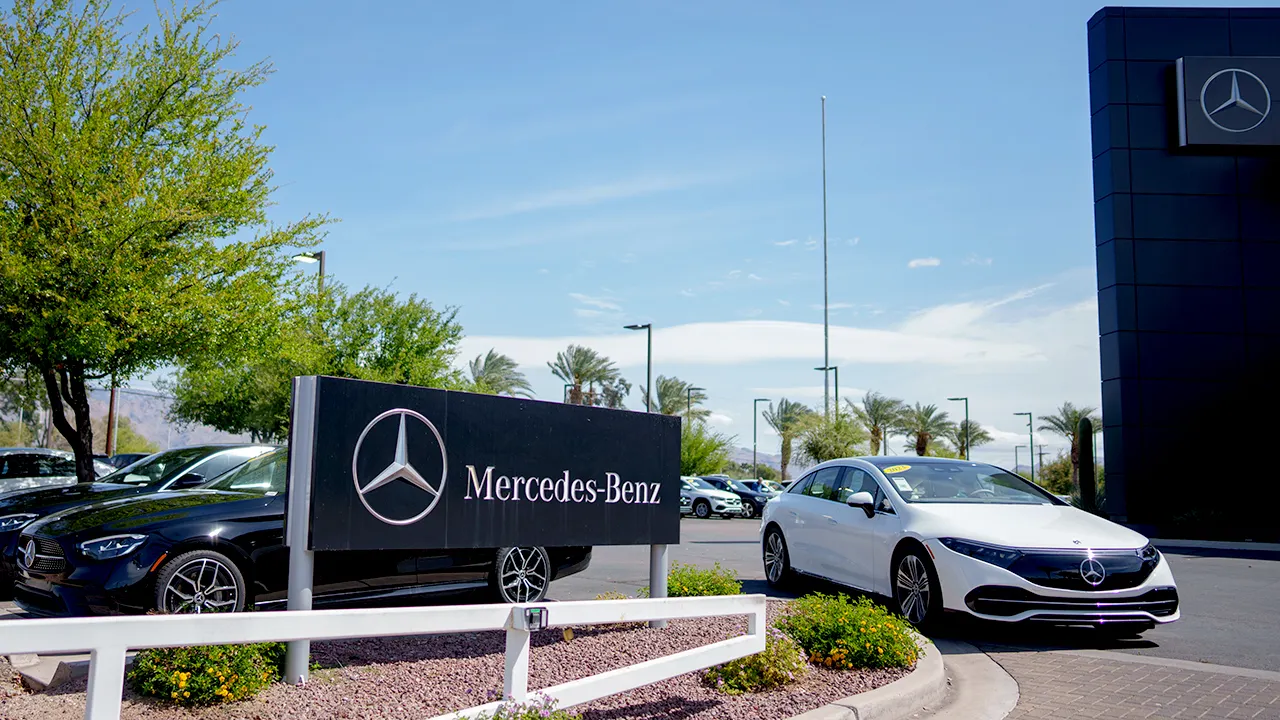
Mercedes-Benz faces a potential ban on selling connected vehicles in the U.S. under legislation targeting automakers with significant ownership ties to China.(Eric Thayer/Bloomberg via Getty Images / Getty Images)
Senator Moreno echoed these sentiments, emphasizing the economic implications: “China’s auto industry was not built to compete, it was built to destroy American manufacturing, gut the middle class and undermine our national security.” From a market perspective, this rhetoric signals a strong intent to protect the domestic industrial base, potentially leading to an artificial reshaping of the competitive landscape in favor of U.S.-based manufacturers.
However, the legislation’s broad stroke has ignited fierce debate and accusations of protectionism. Senator Ted Cruz (R-Texas), despite chairing the Commerce Committee, warned of the severe unintended consequences, specifically highlighting that the bill, in its current form, “would never consider” banning Mercedes-Benz sales in the U.S. He suggested that General Motors might be leveraging the legislation to diminish a key competitor, Mercedes-Benz’s Cadillac brand, within the luxury segment. This accusation underscores the intense lobbying and competitive pressures at play when significant regulatory shifts are proposed.
GM, for its part, countered that the legislation is not designed to target any single automaker, stating its support for “policies that protect and strengthen American manufacturing and the global competitiveness of U.S. automakers.” This stance, while publicly neutral, aligns with the strategic interests of domestic players seeking to leverage regulatory frameworks to enhance their market position and drive investment back to the U.S.
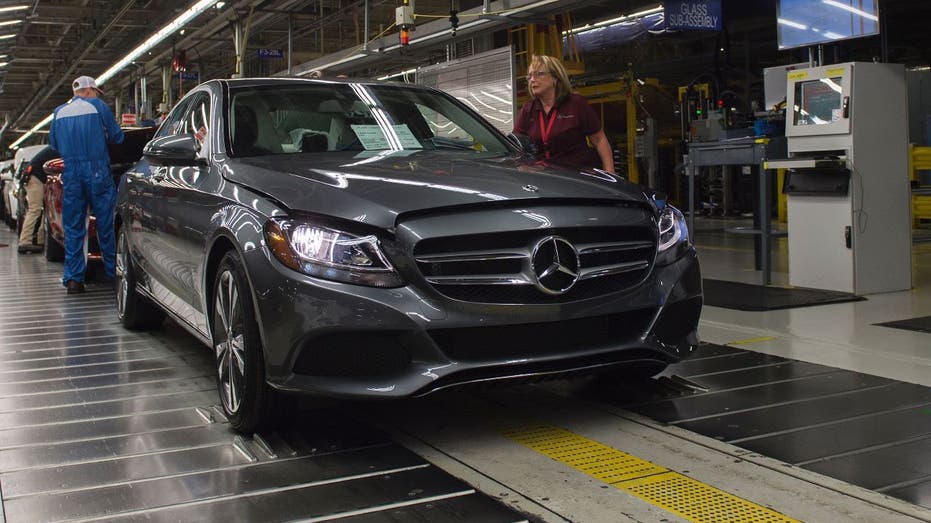
The Senate Commerce Committee advanced a measure last week that would bar the sale of vehicles in the U.S. by companies with more than 15% ownership by Chinese entities.(ANDREW CABALLERO-REYNOLDS/AFP via Getty Images / Getty Images)
Mercedes-Benz, recognizing the gravity of the situation, swiftly highlighted its extensive U.S. manufacturing footprint, including plants and R&D centers that employ thousands. The company stated its commitment to national security but stressed its intent to “ensure that any legislation does not impact our operations.” For Daimler AG, Mercedes-Benz’s parent company, a U.S. sales ban would represent a significant blow, potentially impacting its stock performance, global revenue projections, and long-term market share strategy. Investors would be scrutinizing any strategic moves by Mercedes-Benz, from increased lobbying efforts to potential restructuring of its ownership or supply chains, to mitigate this risk.
The bill does offer a potential reprieve through a Commerce Department authorization process for otherwise prohibited vehicles. This provision might offer a glimmer of hope for affected automakers, but it also introduces regulatory uncertainty and potential bureaucratic hurdles that could delay market entry or increase operational costs.
The legislative fervor appears to be already yielding results in encouraging “friend-shoring” initiatives. Senator Moreno pointed to GM’s stated intention to move production of its Chinese-made Buick Envision to the U.S. for the 2028 model year, and Ford’s agreement to transfer Chinese-made Lincolns to U.S. facilities. These announcements signal a tangible shift in supply chain strategy driven by regulatory pressure, representing significant capital expenditures and job creation potential for the U.S. industrial base. Furthermore, Google’s Waymo, a leader in self-driving technology, has reportedly committed to exploring Detroit-based manufacturers for future platforms, pivoting away from previous discussions with Chinese automaker Geely. This indicates a broader industry response to the evolving geopolitical landscape, where supply chain resilience and national security alignment are becoming paramount.
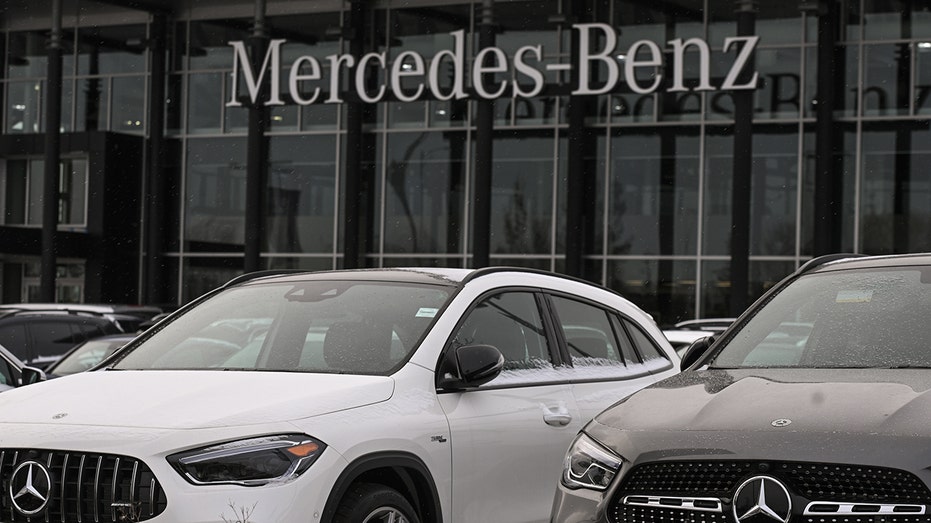
Sen. Ted Cruz warned that Mercedes-Benz would be removed from the U.S. market if the legislation becomes law.(Artur Widak/NurPhoto via Getty Images / Getty Images)
However, Senator Cruz’s concerns extended beyond Mercedes-Benz, touching upon another bill provision allegedly backed by GM that would mandate more expensive batteries from GM, potentially adding $5,000 to vehicle costs. Such provisions raise questions about market efficiency, consumer impact, and whether the legislation truly aims at national security or primarily at domestic market advantage. For consumers, this could translate to higher vehicle prices and reduced choice, while for investors, it suggests potential for regulatory arbitrage and increased scrutiny on industry lobbying.
This legislative initiative follows a precedent set by the Trump administration, which last month banned Polestar, a Sweden-based automaker majority-owned by Geely, from selling new connected vehicles in the U.S. starting in the 2027 model year. Interestingly, Polestar’s sister brand, Volvo Cars, secured an exemption in May, highlighting the nuanced and often complex nature of such regulatory decisions, which can have immediate and divergent impacts on companies within the same ownership group.
The bill still faces significant hurdles, requiring passage by the full Senate and House, and a presidential signature to become law. The ongoing legislative process, with potential for amendments and intense lobbying, means the final shape and impact on the automotive market remain uncertain.
CLICK HERE TO GET FOX BUSINESS ON THE GO
Reuters contributed to this report.
***
**Market Impact**
The proposed legislation introduces a significant layer of geopolitical risk for the global automotive sector, particularly for European and Asian automakers with complex ownership structures and supply chains tied to China. Mercedes-Benz (Daimler AG) investors face immediate uncertainty regarding U.S. market access, potentially leading to increased volatility in its stock. Domestically, General Motors and Ford could see a medium-term boost from reduced competition and incentives for U.S. production, driving investment into their domestic manufacturing capabilities. The broader market implications include a potential acceleration of “friend-shoring” and supply chain diversification across industries, higher consumer prices due to reduced competition and increased production costs, and a chilling effect on foreign direct investment in sectors deemed critical by the U.S. government. This regulatory shift signals an escalating U.S.-China economic decoupling, compelling multinational corporations to critically re-evaluate their global operational and ownership strategies to navigate an increasingly fragmented and politicized market landscape.