
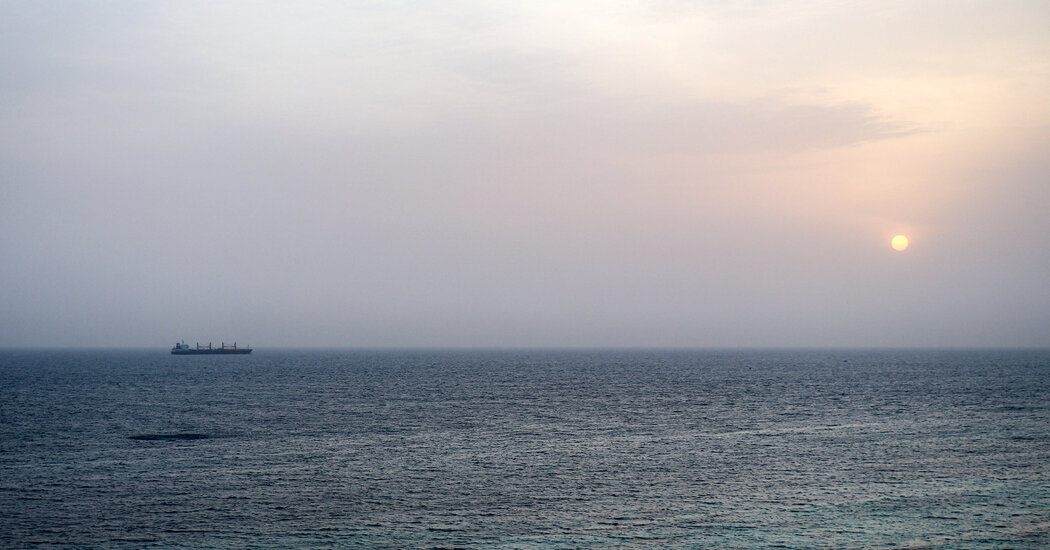
Yemen’s Iran-aligned Houthi militant group announced on Tuesday that its forces had targeted a Saudi oil tanker with missiles, marking a significant escalation in Red Sea hostilities. This alleged attack, if confirmed, would represent the latest incident in what observers describe as an intensifying proxy conflict between regional powers and an emerging front in the broader geopolitical tensions involving the United States and Iran.
The Houthis, who maintain control over a substantial portion of Yemen, including critical Red Sea coastline, stated that the targeted vessel was the NCC Ghazal, identified by public maritime monitoring services as a Saudi-flagged oil tanker. According to the Houthis, the tanker allegedly disregarded multiple warnings before being compelled to alter its course. However, the group did not specify whether the vessel sustained a direct hit or its precise location at the time of the reported engagement.
Saudi Arabian authorities have not yet confirmed the Houthi claim regarding the NCC Ghazal. Data from MarineTraffic, a prominent ship-monitoring firm, indicated that the NCC Ghazal was last recorded five days prior to the Houthi announcement, navigating along Saudi Arabia’s Red Sea coast. The absence of immediate corroboration from Riyadh underscores the challenges in verifying such claims amidst ongoing regional conflicts and information asymmetry.
This alleged targeting of the NCC Ghazal is at least the fourth reported attack on an oil tanker since the Houthi militia declared a blockade on shipping to and from Saudi Arabia in the Red Sea earlier this month. Hours after the Houthi claim, a monitoring group operated by the British Navy reported that a tanker transiting the Red Sea had experienced an explosion, though all crew members were confirmed safe. This incident, while not directly linked to the Houthi claim by the British Navy, highlights the heightened risk environment in the crucial waterway.
The Red Sea incident coincided with other reports of escalating tensions. Shortly after the Houthis made their claim, Saudi Arabia’s Ministry of Defense announced that it had intercepted and destroyed multiple drones launched by Iran-aligned militias operating from Iraq. These drones were reportedly targeting Saudi oil facilities for the second consecutive day, indicating a widening front of attacks against Saudi infrastructure by various groups within Iran’s “axis of resistance.”
Since the Houthis initiated their Red Sea blockade, both sides have repeatedly claimed successful strikes against the other. The Saudi-led military coalition, which supports the internationally recognized government of Yemen, has responded with airstrikes in Houthi-controlled territory – actions that represent the first such aerial bombardments in years. Beyond naval targets, the Houthis also asserted on Monday that they had targeted crude oil supplies and critical transport routes connecting Saudi Arabia’s eastern oil fields to the strategic Red Sea port of Yanbu. The Kingdom’s defense ministry has not yet issued a statement regarding this specific claim, adding to the unconfirmed nature of some reported engagements.
These events unfold against a backdrop of increased maritime insecurity elsewhere in the region. Since March, Iran has reportedly intensified its effective blockade of the Strait of Hormuz, the narrow but vital choke point at the mouth of the Persian Gulf. This action has significantly increased Saudi Arabia’s reliance on its Red Sea ports, located hundreds of miles to the west, for the export of its substantial oil and gas reserves. The dual pressure on key shipping lanes underscores the fragility of global energy supply chains.
The strategic importance of the Red Sea in this conflict cannot be overstated. The Houthis exert control over the majority of Yemen’s Red Sea coastline, a crucial stretch where the southern Red Sea narrows into the Bab al-Mandab Strait. This strait is a pivotal maritime gateway, connecting the Red Sea to the Indian Ocean and providing the shortest sea route for trade, particularly oil and gas, between Europe and Asia. Should this passage become impassable or too dangerous for commercial shipping, vessels would be compelled to reroute thousands of miles north around the African continent, through the Suez Canal, adding considerable time and cost to voyages.
Recent weeks have seen a surge in reported incidents in the Red Sea. In the week preceding the latest Houthi claim, the group asserted responsibility for attacks on two tankers in the Red Sea, one of which Saudi Arabia subsequently confirmed. Furthermore, on Friday, Saudi officials reported that the hull of a Saudi-owned vessel sustained damage following an attack in the Red Sea, underscoring the persistent threat to maritime security in the area.
The Houthis are a central component of what Iran terms its “axis of resistance,” a network of regional armed groups that includes Iraqi factions, Hamas in the Gaza Strip, and Hezbollah in Lebanon. This alignment provides a significant degree of strategic coordination and support from Tehran. In Yemen, the Houthis engaged in a protracted civil war against the Saudi-backed, internationally recognized Yemeni government, ultimately gaining control over a significant swathe of the country, including the capital, Sanaa.
While the Houthis and the Saudis had maintained a fragile stalemate since a UN-brokered ceasefire in 2022, tensions dramatically resurfaced this month. The Houthis accused Saudi Arabia of conducting an airstrike on Yemen’s main international airport in Sanaa, following a dispute over an Iranian plane attempting to land there. The Houthis retaliated swiftly by targeting the Abha airport in southern Saudi Arabia, marking the first direct Houthi strike on Saudi soil since early 2022 and signaling a definitive end to the relative calm.
This is not the first instance of the Houthis leveraging their geographical position and military capabilities to disrupt Red Sea shipping. During the conflict in Gaza, which commenced in late 2023, the Houthis launched a series of attacks on commercial vessels in the Red Sea, employing drones, missiles, and even engaging in ship hijackings. These actions were explicitly aimed at exerting pressure on Israel and its international allies, demonstrating their capacity to impact global maritime trade. Experts have estimated that a prolonged Houthi blockade could potentially affect more than 3 percent of the world’s total oil market, highlighting the severe economic implications of such actions.
The latest Houthi threats emerge during an already precarious period for global shipping and energy markets. Iran’s increased attacks on ships transiting the Strait of Hormuz have prompted numerous shipowners and operators to deem the waterway too perilous for safe passage. The Strait of Hormuz, a critical conduit for a substantial portion of the world’s oil supply, has been experiencing severe disruptions, with traffic virtually at a standstill – save for a brief ceasefire – since the United States and Israel reportedly launched strikes on Iran on February 28. Consequently, the number of crossings through the Strait has plummeted to some of its lowest levels in months, creating a complex and volatile environment for international trade and energy security.
Why This Matters
The escalating maritime tensions in the Red Sea, particularly the Houthi claims of targeting Saudi oil tankers, carry profound implications for global energy markets, international trade, and regional stability in the Middle East. Firstly, the Red Sea, and specifically the Bab al-Mandab Strait, is one of the world’s most critical maritime chokepoints. Disruption here forces commercial shipping, especially oil and gas tankers, to undertake lengthy and costly detours, significantly increasing shipping times, fuel consumption, and insurance premiums. This directly translates to higher consumer prices for goods and energy worldwide, impacting global economic recovery and stability.
Secondly, these incidents represent a dangerous widening of the conflict between the Houthis and the Saudi-led coalition, effectively reigniting a dormant front in the Yemeni civil war. This renewed confrontation risks drawing in other regional and international actors, potentially destabilizing an already volatile Middle East. The Houthis’ actions are deeply intertwined with Iran’s broader “axis of resistance,” and their ability to disrupt vital waterways strengthens Iran’s leverage in its ongoing stand-off with the United States and its allies. The simultaneous reports of drone attacks on Saudi oil facilities originating from Iraq further underscore the coordinated nature of these threats from Iran-aligned groups.
Thirdly, the Red Sea attacks compound existing pressures on global shipping caused by heightened insecurity in the Strait of Hormuz, where Iran has also been accused of disrupting vessel traffic. With two major maritime arteries for global energy and trade under threat, the resilience of supply chains is severely tested. This dual pressure creates unprecedented challenges for global maritime security, potentially leading to a fragmentation of shipping routes and an increase in piracy or other illicit activities in rerouted areas. The international community faces a complex challenge in de-escalating these tensions and safeguarding the freedom of navigation in these indispensable global waterways.