
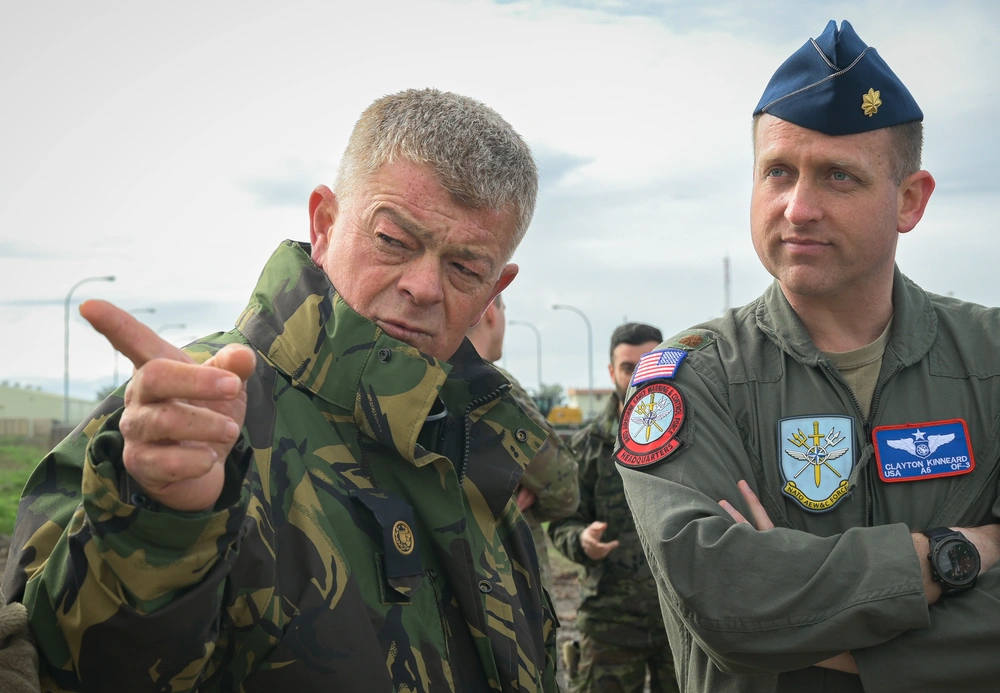
The U.S. Air Force has initiated a specialized training program designed to equip select Airmen with the unique ability to translate complex wartime operational needs into the native languages of non-English speaking allied nations. This initiative diverges from traditional linguistic training; instead, it focuses on Airmen who already possess critical technical skills, such as repairing bomb-damaged concrete runways or maintaining advanced fighter aircraft. These individuals are then trained to articulate these technical requirements in an allied language.
The program, known as the Language Enabled Airmen Program – Agile Combat Employment (LEAP-ACE), is a new iteration of the Air University’s existing Language Enabled Airmen Program (LEAP). Its distinctive feature is the selection of Airmen who are already proficient in the languages of key allies in regions such as Taiwan, the Philippines, South Korea, and other strategic countries. Chris Chesser, deputy director of the Air Force Culture and Language Center and the architect behind LEAP-ACE, highlighted that their pre-existing language capabilities make them ideal candidates for this specialized curriculum.
“These are aviators, cyber specialists, civil engineers, aircraft maintenance specialists, medical professionals, and others, who possess advanced intermediate to advanced level language proficiency,” Chesser explained to Air & Space Forces Magazine. He emphasized the necessity of this new course: “Up to this point, they have not been exposed to the technical vocabulary that spans multiple modalities, such as airfield operation, aircraft maintenance, airfield damage repair, or medical operations. Our program addresses this by teaching them the specific technical vocabulary in the target language.”
Since its inception in April, the LEAP-ACE program has conducted training for six distinct eight-member teams of Airmen, comprising both officers and enlisted personnel. Each team is trained to translate ACE concepts into a specific language. The program operates on a three-week rotation, with each rotation focusing on two separate languages. The initial rotation in April covered Japanese and Korean. Subsequent rotations included Mandarin Chinese, the primary language of Taiwan, and Tagalog, spoken in the Philippines, in June. The July rotation focused on Russian and Ukrainian.
All participants in the LEAP-ACE program are prior graduates of the original LEAP initiative, which was established in 2009. The original LEAP was designed as a career-spanning program aimed at cultivating a cadre of foreign language-proficient Airmen and Guardians across various specialties. These individuals serve as crucial cultural and linguistic experts for their fellow service members, enhancing interoperability and understanding.
However, program officials identified a growing need for a specialized, team-oriented course directly tailored to the Air Force’s Agile Combat Employment (ACE) doctrine, which was formally introduced in 2021. The ACE strategy represents a significant shift in military operational philosophy, involving the rapid deployment of small, adaptable teams of Airmen to establish and operate temporary airfields in remote or austere locations during future conflicts. For this agile concept to be effective, seamless communication with host-nation allies is paramount. The Air Force recognized that communication breakdowns could critically impede the speed and efficiency of ACE operations.
Howard Ward, the director of the Culture and Language Center, underscored the core objective of the LEAP-ACE course. “The ‘why’ behind this course is speed; the ‘how’ is through ACE concepts and technical vocabulary, fused with language training,” Ward stated. He elaborated on the crucial role of communication in modern warfare: “None of us are going to be faster than the slowest amongst us, that slows the whole team down. So, we have to be able to understand each other, breaking through any cultural barriers… so that when we get together with allies, we’re moving at one really, really fast speed.”
The impetus for developing the LEAP-ACE course gained significant momentum following lessons learned from a joint Airfield Damage Repair (ADR) exercise conducted at Morón Air Base, Spain. While the article states February 2025, considering the course began in April of the current year, it is more likely this exercise took place in February 2024 or earlier, serving as a foundational experience. During this exercise, U.S. Airmen from various European bases collaborated with Spanish and Portuguese air force personnel. Their collective mission involved addressing the intricate logistical and technical challenges associated with rapidly repairing concrete runways, a critical component of maintaining air superiority and operational readiness.
U.S. Air Force 1st Lt. Aliyah Brown, a logistics readiness officer and a LEAP scholar, played a pivotal role in this exercise. She joined operations at the airfield repair site specifically to mitigate communication challenges between the U.S., Portuguese, and Spanish forces.
“We ensured that Portuguese personnel understood what was needed, when, where, and why—helping prevent confusion and delay in a highly dynamic and fast-paced environment,” Brown recounted in a press release from the Culture and Language Center. “Being an interpreter in that environment is not just about utilizing your fluency but also actively participating in getting the right people in the right place to leverage the full extent of what they bring to the operation.” This practical insight confirmed that direct technical translation by domain experts was essential, not just general linguistic interpretation.
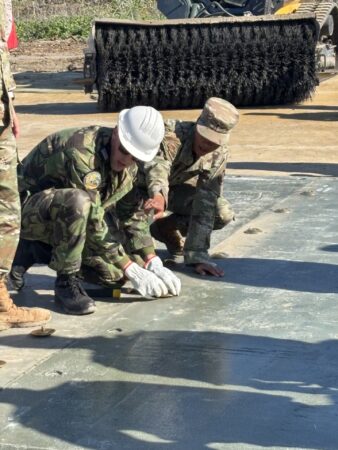
This exercise proved to be a “real turning point in developing the concept of where it is today,” according to Ward. It clearly demonstrated the necessity of training integrated teams of language-proficient ACE specialists from diverse career fields, setting a model for future operational readiness.
Each three-week rotation of the LEAP-ACE course immerses students in “multiple drills of interpretation practice, where they employ the technical vocabulary and the ACE doctrine concepts that they learn from our warfighting education directorate here at Air University,” Chesser detailed. The rigorous training culminates in simulated bilateral and trilateral regional crisis scenarios, often utilizing tabletop board games, where participants must apply all their acquired knowledge and skills in a dynamic, decision-making environment.
A key differentiator of the new LEAP-ACE course is its meticulous student recruitment process. Unlike previous iterations, this program actively recruits individuals to ensure an optimal mix of ranks and career fields, mirroring the composition of a realistic ACE team that would deploy in a real-world scenario. The Air Force leverages the Language Enabled Airman Development Resource portal, which tracks approximately 3,800 Airmen and Guardian LEAP scholars across the service.
“This tool gives us literally an ability to search for service members who match the required proficiency for that course, the required language for that course, and then we can drill in deeper to get a sense of what experiences they’ve had, where they’re stationed, their rank of course, and put together a student team,” Chesser explained. He stressed that the aim is not to simply assemble random students but to construct a functional team: “We try to put together a rank structure that will make sense, so you will have a field grade officer, for example, providing some leadership.”
Currently, the program primarily recruits Airmen, but there are explicit plans to integrate Guardians and other service members as the course matures and expands. Furthermore, the integration of LEAP-ACE graduates into existing personnel systems ensures their specialized capabilities are easily identifiable. Ward noted, “Now all of that data is in the system of records, so that when they’re trying to find folks that have those capabilities, they can easily be found.”
While these specific student teams may not operate together again in the exact same configuration, the training ensures that each graduate possesses the inherent ability to rapidly integrate and function effectively within any assembled team. This adaptability is crucial for the demands of modern conflict.
Ward concluded by emphasizing the critical need for immediate readiness in contemporary geopolitical landscapes: “The idea is we’re not going to have a crawl, walk, run kind of timeline that we’ve seen in other conflicts before. It’s pretty certain that adversaries are going to force us to run right off the bat. We have to be ready to go fast and go large on day one.”
Why This Matters
The U.S. Air Force’s LEAP-ACE program represents a significant evolution in military readiness and international cooperation, directly addressing the complexities of modern warfare and the imperative for rapid, agile operations.
Firstly, this initiative is strategically vital in the current geopolitical climate. The selection of languages such as Mandarin Chinese, Tagalog, Japanese, and Korean directly reflects the U.S. pivot to the Indo-Pacific region, where potential conflicts or humanitarian crises necessitate close coordination with key allies like Taiwan, the Philippines, Japan, and South Korea. Similarly, the inclusion of Russian and Ukrainian language training underscores the ongoing conflict in Eastern Europe and the critical need for effective communication with partners on NATO’s eastern flank and with Ukrainian forces. This targeted linguistic and technical capability enhances the U.S.’s ability to project power and respond effectively in these high-stakes environments.
Secondly, the program is fundamental to the success of the Air Force’s Agile Combat Employment (ACE) doctrine. ACE is designed to counter sophisticated anti-access/area denial (A2/AD) strategies by dispersing forces across multiple, often austere, locations, making them less vulnerable to singular attacks. However, the effectiveness of ACE hinges on seamless interoperability with host nations. Without a common technical language, the rapid establishment of ad-hoc airfields, maintenance of aircraft, and provision of medical support in foreign territories would be severely hampered by communication barriers, leading to critical delays and potential operational failures. LEAP-ACE ensures that U.S. Airmen can “run right off the bat” with allies, as emphasized by Director Ward, translating complex operational needs into clear, actionable instructions in moments of crisis.
Moreover, LEAP-ACE fosters deeper trust and understanding between allied forces. By providing culturally aware and technically proficient communicators, the program transcends mere translation. It builds rapport, reduces misunderstandings, and ensures that U.S. forces can integrate more smoothly into host-nation environments. This human element is crucial for building robust coalitions and ensuring sustained cooperation, which are cornerstones of U.S. defense strategy. The program also optimizes resources by leveraging existing technical experts within the Air Force, augmenting their skills with specialized linguistic training rather than creating entirely new roles for dedicated linguists who might lack the deep technical understanding.
In an era where conflicts are increasingly characterized by speed, distributed operations, and coalition warfare, the ability to communicate technical requirements accurately and swiftly across language barriers is not merely an advantage—it is a necessity. LEAP-ACE directly enhances the Air Force’s operational speed, efficiency, and overall lethality, while simultaneously strengthening alliances and deterring potential adversaries by demonstrating a highly capable and integrated global presence.