
UK Defence Minister Confirms Army Exercise Cancellations Amidst Financial Prioritisation
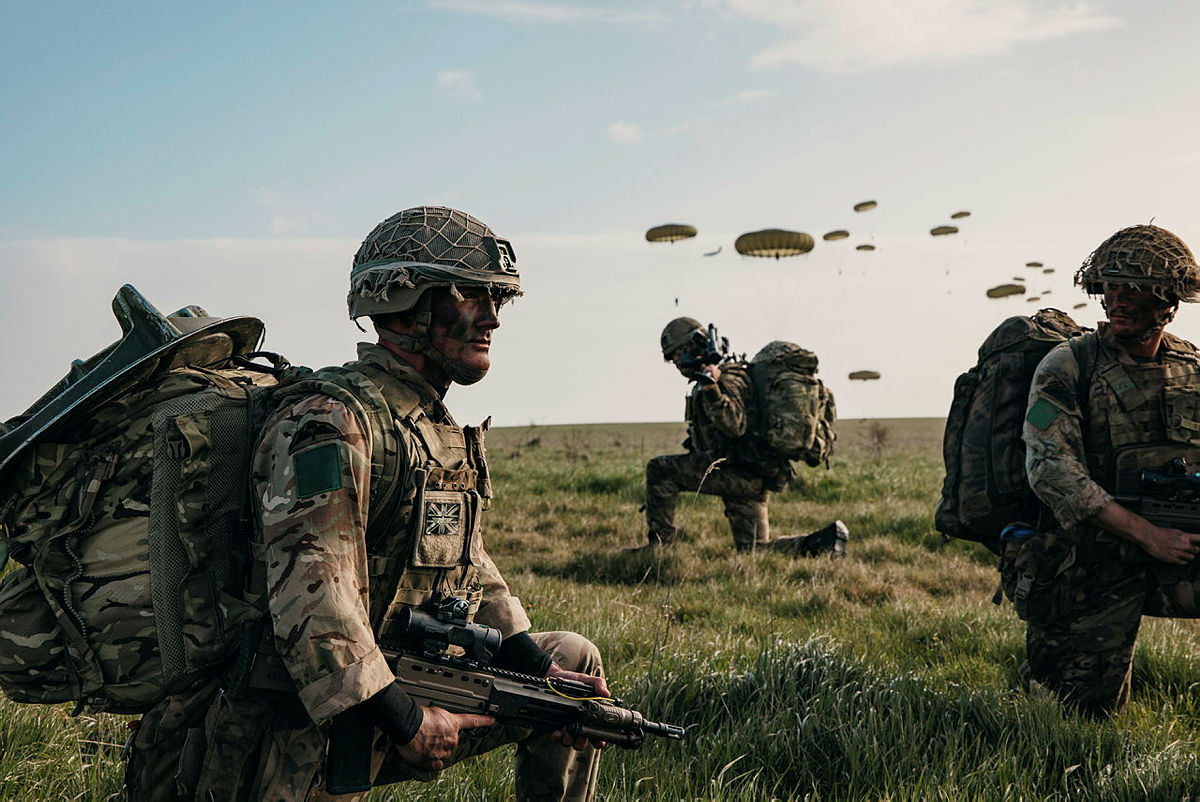
Louise Sandher-Jones, the United Kingdom’s Minister for the Armed Forces, has confirmed that several Army training exercises have been fully or partially cancelled for the current financial year. The announcement came during a parliamentary session, in response to a direct inquiry regarding the scope of training reductions.
The confirmation was issued following a question from Ben Obese-Jecty, the Conservative Member of Parliament for Huntingdon, who specifically requested a named list of training exercises that had been cancelled or curtailed within this financial year. While the Minister did not provide specific names of the affected exercises, her statement acknowledged the adjustments to the Army’s training schedule.
In her parliamentary address, Minister Sandher-Jones stated: “The UK continues to meet our NATO and wider operational commitments. Thousands of training exercises, of all sizes, will be conducted this year, across all branches of our Armed Forces. Training is routinely prioritised to ensure activity contributes most effectively to readiness and deployability.” She further elaborated, “While we do not routinely publish complete lists of training activity which is or is not taking place, I can confirm that to date several Army exercises have fully or partially been cancelled for this financial year. The Army continues to prioritise essential training to protect its operational commitments.” This statement underscores a strategic approach to military training, where resources are allocated based on perceived immediate operational necessity and readiness requirements.
The Minister’s confirmation aligns with earlier reports from various media outlets that have highlighted potential cutbacks in military training. In September, The Times newspaper reported on plans to suspend major exercises involving 90 or more soldiers, estimating these measures were part of a broader effort to save approximately £30 million. Such savings, while a fraction of the overall defence budget, can have considerable implications for unit-level training schedules and resource allocation.
Further details regarding the scope of these cancellations emerged through reporting by Sky News. Their coverage indicated that specific categories of military units would remain unaffected by the cutbacks. This includes units actively preparing for deployment, those involved in a major NATO exercise scheduled for the coming year, and forces designated for quick-reaction or standby roles. However, the same reports suggested that some reservists might experience a reduction in their allocated training days. Reservist forces play a crucial role in augmenting the regular army, providing specialist skills and additional manpower, and any reduction in their training could have downstream effects on overall force readiness and individual proficiency.
Specific instances of cancelled training have also come to light. Army Technology, an industry publication, reported that a Royal Tank Regiment live-fire exercise in Wales was among those affected by the cancellations. Live-fire exercises are considered critical for armoured units, providing essential experience in weapon systems handling, tactical movement under fire, and coordination in complex combat scenarios.
In response to earlier reports concerning these training adjustments, an Army spokesperson issued a statement affirming the continuity of military preparedness. At the time, the spokesperson said: “Our training continues and we are prioritising activity that contributes most directly to readiness,” reinforcing the Minister’s parliamentary remarks. The spokesperson also highlighted a significant long-term investment, stating that the Army was “investing £2bn to transform training for the British Army over the next 15 years.” This suggests that while short-term adjustments are being made, there is a commitment to modernising and enhancing training capabilities over the medium to long term.
These current adjustments follow a broader strategic directive issued by the Ministry of Defence (MoD) in December of the previous year. The MoD announced then that Army overseas exercises would be reduced starting from the 2026-27 financial year. This future reduction is intended to enable a greater focus on NATO commitments and the development of land warfighting capabilities. This strategic shift reflects an evolving global security landscape, where traditional land warfare and interoperability with allied forces within the NATO framework are gaining renewed emphasis.
Military training exercises are foundational to maintaining operational effectiveness and combat readiness. They provide personnel with opportunities to develop and refine skills, test new equipment, practice tactics, and enhance interoperability with allied forces. These exercises range from small-unit drills to large-scale, multi-national manoeuvres involving thousands of troops, advanced weaponry, and complex logistical operations. The decision to cancel or reduce such activities, even partially, is typically made after careful consideration of fiscal constraints, strategic priorities, and an assessment of immediate threats.
Why This Matters
The confirmation of Army exercise cancellations by the UK’s Minister for the Armed Forces carries significant implications for national security, international alliances, and the morale and readiness of military personnel. Understanding these impacts is crucial for assessing the broader strategic direction of the United Kingdom’s defence policy.
Firstly, **Military Readiness and Operational Capability** are directly affected. While the Minister emphasized that essential training for operational commitments and NATO responsibilities continues, the cancellation of other exercises, particularly those involving larger contingents or specialised activities like live-fire drills, can lead to skill degradation or a delay in proficiency development. Even if deemed “non-essential” in the immediate term, such training often builds a deeper, more resilient skillset crucial for adaptability in unforeseen scenarios. A reduced training tempo, especially for reservists who rely on these opportunities to maintain their skills alongside civilian careers, could impact their ability to seamlessly integrate into active operations when called upon.
Secondly, these cancellations speak to **Fiscal Pressures and Defence Spending Priorities**. The reported £30 million saving, while a relatively small figure in the context of the overall defence budget, highlights the constant tension between maintaining a world-class military and managing public finances. In an era of heightened geopolitical instability, where conflicts in Ukraine and tensions in the Middle East underscore the importance of robust defence capabilities, decisions to cut training can be scrutinised as potentially counter-intuitive. It raises questions about whether current funding levels are adequate to meet both immediate operational demands and long-term strategic development.
Thirdly, the focus on **NATO Commitments and Land Warfighting** signals a strategic pivot. The MoD’s long-term plan to reduce overseas exercises from 2026-27 to concentrate on these areas is a clear response to the evolving threat landscape, particularly the resurgence of state-on-state conflict in Europe. While this prioritisation is logical in light of current global events, it also implies a potential shift away from other forms of engagement, such as counter-insurgency operations or humanitarian aid missions, which also require specific training and expertise. The balance between these different types of capabilities is a continuous strategic challenge.
Fourthly, there are potential impacts on **Personnel Morale and Retention**. For soldiers, especially those in non-prioritised units, the cancellation of training exercises can be demotivating. Training is not just about skill development; it is also crucial for team building, testing leadership, and fostering a sense of purpose. Consistent reductions in training opportunities might affect job satisfaction and potentially influence retention rates among experienced personnel who seek challenging and diverse training experiences.
Finally, the decisions reflect the **UK’s International Standing and Interoperability with Allies**. While the Minister stressed that NATO commitments are being met, any perceived reduction in overall training readiness could subtly influence how allies view the UK’s contribution to collective defence. Interoperability relies heavily on shared training experiences and a common understanding of tactical procedures, and any significant deviation from established training norms could, over time, impact the seamless integration of UK forces into multinational operations.
In essence, while the UK government asserts its ability to meet core commitments, the confirmation of training cancellations represents a complex interplay of financial constraints, evolving strategic priorities, and the ongoing challenge of maintaining a fully capable and adaptable armed force in a rapidly changing world.