
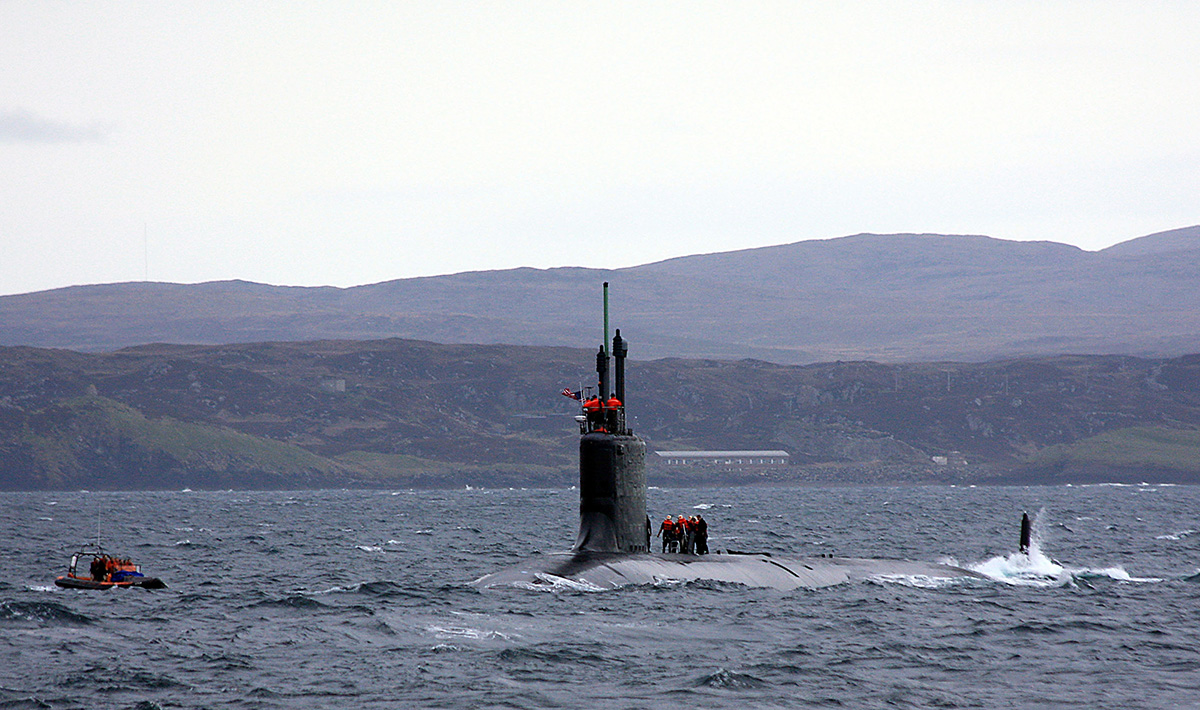
U.S. Navy Reclassifies Advanced Virginia-Class Submarines as Guided-Missile Vessels, Significantly Boosting Undersea Strike Capability
The United States Navy has announced a formal reclassification for specific blocks of its advanced Virginia-class submarines, designating Blocks V and VI as guided-missile submarines (SSGNs). This move, while not a physical modification of the vessels’ fundamental design as attack submarines, formally distinguishes them from their predecessors and highlights a significant enhancement in their strike capabilities.
At the heart of this reclassification is the integration of the Virginia Payload Module (VPM). The VPM is an innovative additional hull section that will be inserted into these submarines, increasing their overall length. Crucially, this module adds four large-diameter vertical launch tubes to the two already positioned forward on the standard Virginia-class design. Each of these new tubes is capable of housing seven Tomahawk cruise missiles, effectively increasing the strike ordnance capacity of a single submarine from 12 missiles in earlier blocks to a formidable 40, nearly tripling the vessel’s conventional strike load.
The first submarine to incorporate this enhanced design and bear the new SSGN designation, SSGN 803, is projected to be delivered in the 2029 financial year. Deliveries of these VPM-equipped submarines are anticipated to continue steadily through to 2038, marking a strategic rollout of these highly capable assets over the next decade.
Vice Admiral Rob Gaucher, director of submarine programs, emphasized the strategic importance of this development. “This reclassification is a clear acknowledgment of the increased lethality VPM brings to the undersea fight,” he stated. “These VPM-equipped SSGNs will ensure the Navy continues to dominate the undersea domain for decades to come. By integrating this additional payload capacity, we will have the ability to surge strike power to assure our allies, deter aggression, outmatch any adversary, and give our Fleet commanders an incredibly versatile, hard-hitting instrument of national power.” His comments underscore the Navy’s intent to leverage these submarines for both offensive capabilities and as a tool for international diplomacy and reassurance.
Admiral Daryl Caudle, the Chief of Naval Operations, connected the announcement directly to the impending retirement of the vessels the new designation is effectively designed to replace. “This transition comes at an important moment as USS Georgia, one of the Navy’s four Ohio-class guided-missile submarines, begins the inactivation process after more than four decades of exceptional service,” Admiral Caudle noted. He praised the legacy of the Ohio-class SSGNs, stating, “Georgia and her sister ships proved the enduring value of combining undersea stealth with unmatched clandestine strike capability. The next generation of Virginia-class SSGNs builds on that legacy with greater survivability, adaptability, and sustained combat power.”
The four Ohio-class SSGNs – USS Ohio, USS Michigan, USS Florida, and USS Georgia – were originally constructed as ballistic missile submarines (SSBNs) designed to carry nuclear weapons. However, in the early 2000s, following arms control treaties that mandated a reduction in the number of operational ballistic missile submarines, the Navy embarked on a conversion program. Rather than decommissioning these relatively young hulls, the Trident ballistic missile tubes were stripped out and refitted to carry conventional ordnance. Each of the 22 former Trident tubes was converted to house seven Tomahawk cruise missiles, giving each Ohio-class SSGN a staggering capacity of 154 cruise missiles. In addition to this immense strike capability, these converted submarines also provided accommodation for special forces units, allowing for clandestine insertion and extraction operations. A notable example of their combat effectiveness occurred in 2011, when USS Florida launched more than 90 Tomahawk missiles against Libyan air defenses during Operation Odyssey Dawn.
These venerable Ohio-class boats are now reaching the end of their certified service lives, a process that will incrementally remove a significant portion of the Navy’s undersea conventional strike capacity. The introduction of 19 VPM-equipped Virginia-class SSGNs, each carrying 40 Tomahawks, will collectively restore and even exceed the total missile capacity lost from the retirement of the four Ohio-class SSGNs (19 x 40=760 missiles, compared to 4 x 154=616 missiles). While the total missile count will be higher, it will be distributed across a greater number of smaller, more agile platforms, offering increased operational flexibility and survivability.
Vice Admiral Rick Seif, commander of submarine forces, underscored the strategic advantage of these new vessels. “The Submarine Force is defined by our ability to operate undetected and strike without warning,” he stated. “By integrating high-volume precision strike capabilities into these stealth platforms, these SSGNs serve as the ultimate enabler for Distributed Maritime Operations, giving our warfighters the overwhelming, flexible firepower required to win decisively in any theatre.” Distributed Maritime Operations (DMO) is a key strategic concept for the U.S. Navy, focusing on deploying smaller, more dispersed naval units across a wider area to complicate adversary targeting and enhance overall resilience and effectiveness.
***
Why This Matters
The U.S. Navy’s reclassification of specific Virginia-class submarines as guided-missile vessels (SSGNs) and the integration of the Virginia Payload Module (VPM) represent a pivotal moment in naval strategy and undersea warfare. This development carries significant implications across several dimensions:
Enhanced Naval Power Projection and Deterrence:By substantially increasing the Tomahawk missile capacity of each submarine from 12 to 40, the Navy significantly augments its ability to conduct long-range precision strikes against land targets from a stealthy, submerged platform. This enhanced firepower strengthens the U.S.’s global power projection capabilities and serves as a powerful deterrent against potential adversaries. The ability to “surge strike power” provides commanders with flexible options for rapid response in crisis situations, assuring allies of U.S. commitment and capability.
Strategic Replacement of Key Assets:The retirement of the Ohio-class SSGNs leaves a substantial void in the Navy’s undersea strike capability. These four converted submarines have been invaluable assets, demonstrating the effectiveness of high-volume conventional strike from stealth. The new Virginia-class SSGNs are designed to directly replace and even surpass this capacity, ensuring a continuous and evolving capability to meet national security objectives. This transition highlights a forward-looking strategy to maintain naval superiority.
Adaptability and Survivability in Future Conflicts:Distributing a larger total missile count across 19 smaller Virginia-class platforms, rather than concentrating it on fewer, larger Ohio-class vessels, enhances the overall survivability and adaptability of the fleet. In a contested environment, losing one submarine with 40 missiles is less impactful than losing one with 154. Furthermore, the Virginia-class submarines are inherently more modern, quieter, and possess advanced sensors and combat systems compared to the aging Ohio-class, offering greater resilience and operational flexibility in challenging areas.
Underpinning Distributed Maritime Operations (DMO):The increased strike capacity of these new SSGNs is central to the Navy’s evolving concept of Distributed Maritime Operations. DMO emphasizes spreading naval forces across a wide geographic area to create dilemmas for adversaries and prevent them from concentrating their defenses. Stealthy, high-payload submarines are critical enablers for DMO, providing significant firepower from dispersed, undetected positions, thereby complicating adversary targeting and enhancing overall fleet resilience and effectiveness.
Technological Advancement and Industrial Base Implications:The VPM represents a significant engineering and design achievement, showcasing the U.S. defense industry’s capability to innovate and adapt existing platforms. The sustained production of these complex submarines through 2038 also has substantial implications for the U.S. submarine industrial base, supporting high-tech manufacturing jobs and ensuring the long-term health and expertise of this critical sector.
Geopolitical Impact:In an era of increasing geopolitical competition, particularly with near-peer adversaries like China and Russia, maintaining a qualitative and quantitative edge in undersea warfare is paramount. The introduction of these highly capable SSGNs sends a clear signal about the U.S.’s commitment to maintaining its lead in this crucial domain, influencing regional power balances and international security dynamics.