
A recent report from the Pentagon’s independent watchdog has unveiled significant deficiencies in the infrastructure of U.S. military installations across the Pacific, citing widespread issues such as corrosion, mold, and structural decay. The Department of Defense Inspector General (DoD IG), initially focused on evaluating electromagnetic pulse shielding capabilities at bases under U.S. Pacific Command (PACOM), broadened its investigation after encountering what it characterized as deeper, systemic infrastructure problems.
The August 6 report details concerns affecting both “mission-critical systems” essential for military operations and “other critical infrastructure,” including housing that supports U.S. service members and their families. The investigation spanned 11 bases within the region, with particular emphasis on installations in Japan, notably Kadena Air Base and Yokota Air Base, key strategic assets for the U.S. Air Force in the Indo-Pacific theater.
The DoD IG has labeled these issues as “unresolved,” pending the receipt of comprehensive documentation from the Pentagon, U.S. Pacific Command, and U.S. Forces Japan. This documentation is expected to identify the root causes of the deficiencies and outline secured funding to address and rectify the problems. The report underscores a critical gap between identifying problems and implementing concrete, funded solutions.
While some specific details and responses from military services and commands are redacted in the publicly available version of the report, it nonetheless paints a stark picture of decay. Visible signs of degradation include pervasive corrosion, mold growth, cracks on both exterior and interior building surfaces, concrete spalling (flaking or breaking away), and exposed rebar. Furthermore, the report identifies the presence of lead-based paint and asbestos within operational, communications, maintenance, and storage infrastructure, posing potential health risks to personnel.
Water infrastructure at both Kadena and Yokota Air Bases also presented significant problems. The report cited reduced water capacity, an increase in waterline breaks, frequent water disruptions, and pipeline infrastructure that has exceeded its intended service life. These issues directly impact the daily lives and operational capabilities of personnel stationed at these facilities.
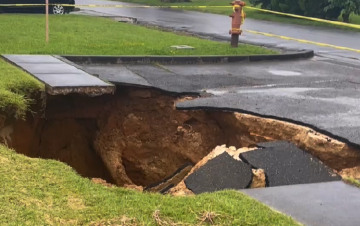
Military housing at Kadena Air Base was highlighted as being in particularly poor condition. One housing development experienced a ceiling collapse affecting 139 homes, while hundreds more exhibited signs of mold growth and concrete spalling. The report noted that these pervasive maintenance issues have necessitated the relocation of dozens of residents, disrupting family life and potentially impacting morale.
These findings corroborate earlier acknowledgements of infrastructure challenges. In 2024, Dr. Ravi Chaudhary, then Assistant Secretary of the Air Force for Energy, Installations, and Environment, initiated an Installation Infrastructure Action Plan aimed at reversing years of neglect across Air Force and Space Force bases. At the time, the action plan specifically highlighted that “70 percent of utility systems at Pacific Air Forces locations are severely degraded due to the highly corrosive environment.”
Officials from the Department of Defense stationed at the 1970s-era bases in Japan echoed these concerns to the IG. They emphasized that their locations are “subject to recurring environmental conditions such as typhoons, earthquakes, and tsunamis that further degrade the infrastructure.” These officials also warned of an ongoing safety risk to personnel from “falling debris—ranging from small fragments to large slabs.” Compounding these environmental challenges are persistent personnel shortages and the escalating costs associated with repairs and ongoing upkeep, which have hindered effective maintenance efforts.
In response to its findings, the DoD IG issued two primary recommendations. The first urged responsible commanders to submit a “prioritized list of infrastructure repair or replacement projects based on risk to critical missions.” Lt. Gen. Laura Lenderman, Deputy Commander of Pacific Air Forces (PACAF), submitted a response, though its contents remain redacted. The IG acknowledged that Lenderman “provided examples of prioritized projects related to infrastructure,” but clarified that the recommendation would remain open until PACAF provided verifiable documentation of its internal prioritization efforts for installations across the region.
The report also quoted Master Sgt. Kristopher Dunn, superintendent for wing plans at the 374th Civil Engineering Squadron at Yokota Air Base, who plainly stated, “with more money and people we could get after the issues,” underscoring the resource constraints contributing to the problem.
The second recommendation called for the Air Force and other military services to collaborate with the Pentagon, PACOM, and U.S. Forces Japan to “conduct a root cause analysis including identifying funding sources and correct infrastructure deficiencies identified” in the report. Mark Sinder, Deputy Assistant Secretary for the Defense Department’s Office of Infrastructure, Modernization and Resilience, responded by stating that the Air Force and other services would “take the lead” in addressing all identified deficiencies. This would involve developing and executing a comprehensive plan to “program, budget for, and execute the necessary repairs and replacements,” along with establishing a detailed timeline for correcting all issues.
Pacific Command also concurred with the IG’s recommendation, pledging to “support U.S. military services in correcting the issues identified in this report, to include the service’s efforts to develop and implement a corrective action plan based on the provided recommendations.”
However, neither Sinder’s nor PACOM’s responses fully satisfied the Inspector General. After further discussions with the Pentagon’s Office of Energy, Installations, and Environment, the IG redirected the recommendation directly to the military services, instructing them to work in coordination with Pacific Command and U.S. Forces Japan. As a result, the IG stated, “Therefore, we consider Recommendation 2 unresolved.” The report concluded by requesting that the appropriate office provide official management comments on the final report within 30 days, signaling a continued push for accountability and tangible action.
Why This Matters
The findings of the Department of Defense Inspector General regarding deteriorating infrastructure at U.S. military bases in the Pacific carry profound implications for national security, troop welfare, and U.S. strategic interests in a critically important region. The Indo-Pacific is central to U.S. foreign policy, with increasing geopolitical competition, particularly from China. The ability of the U.S. military to project power, maintain deterrence, and respond effectively to crises hinges directly on the readiness and functionality of its forward-deployed installations.
First and foremost, the structural integrity and operational capacity of these bases are directly linked to military readiness. “Mission-critical systems” suffering from corrosion or other damage can compromise the ability to conduct reconnaissance, launch aircraft, or communicate effectively, potentially degrading the U.S. military’s response capabilities in a conflict scenario. When 70 percent of utility systems are severely degraded, as noted in the Air Force’s own action plan, it indicates a systemic vulnerability that could impede sustained operations, affecting everything from power supply to data networks.
Beyond operational concerns, the report highlights serious issues impacting the health, safety, and morale of service members and their families. Housing plagued by mold, concrete spalling, lead-based paint, and asbestos creates an unhealthy and potentially dangerous living environment. A ceiling collapse in military housing, leading to the relocation of dozens of families, underscores a breach of trust and a failure to provide adequate support for those who serve. Such conditions can lead to increased stress, health problems, and diminished morale, potentially affecting retention rates and overall force effectiveness.
Economically, the report points to a classic dilemma of deferred maintenance. While the immediate costs of proactive repairs might seem high, the long-term expenses associated with catastrophic failures, extensive remediation of health hazards, and emergency fixes typically far exceed the cost of regular upkeep. The “unresolved” status of the IG’s recommendations further suggests a bureaucratic bottleneck and a potential lack of immediate funding or political will to address these issues comprehensively, setting the stage for even greater costs and risks in the future.
Finally, the state of U.S. military infrastructure in Japan sends a critical signal to allies and adversaries alike. For allies like Japan, robust and well-maintained U.S. bases are a tangible sign of commitment and capability. Conversely, visible decay could be perceived by adversaries as a sign of weakness or resource strain, potentially emboldening aggressive actions. Ensuring these bases are fit for purpose is not just a logistical challenge but a strategic imperative that underpins U.S. credibility and influence in the Indo-Pacific.