
NATO Surveillance Drone Conducts Extended, Partially Untracked Sortie Over Eastern Mediterranean
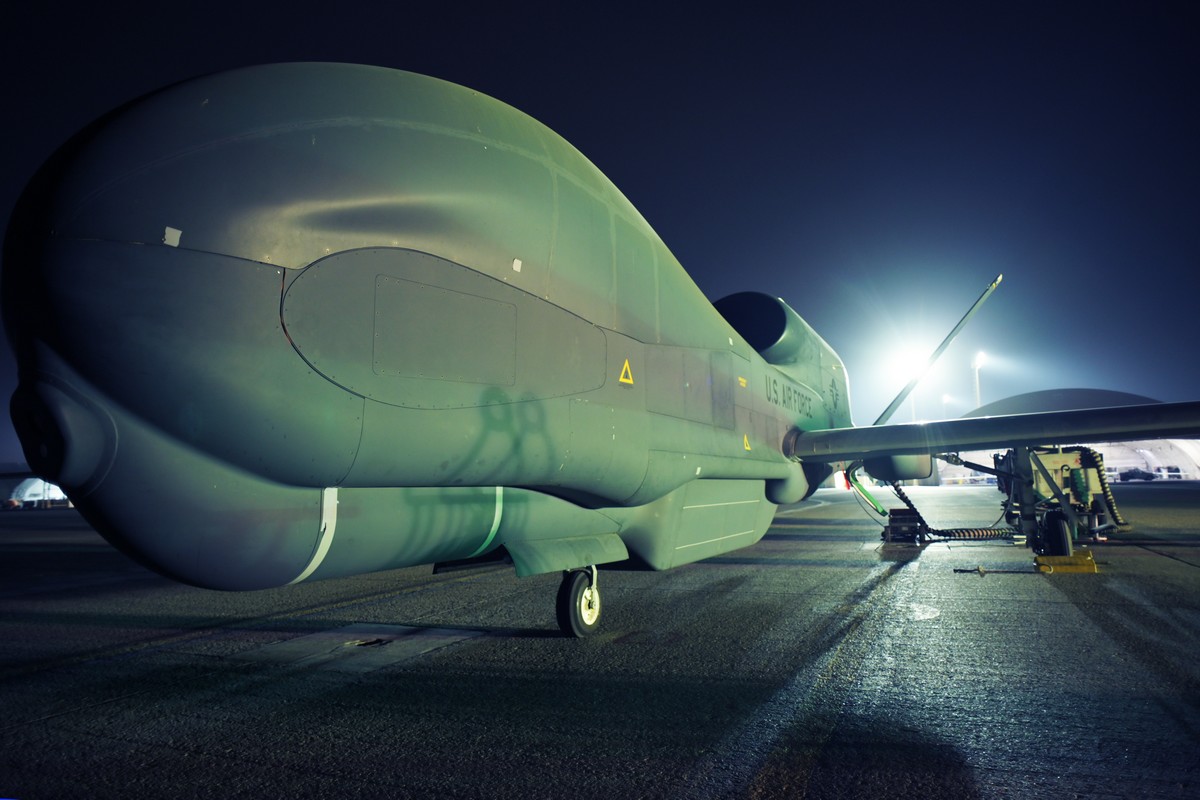
A NATO RQ-4D Phoenix uncrewed aerial vehicle (UAV) recently completed an extensive approximately 25-hour surveillance mission, returning to its base at Sigonella, Sicily, on the night of August 25. The aircraft, identified by the callsign MAGMA10 and registration MM-AV-SA-0017, departed Sigonella late on the evening of August 24. Notably, a significant portion of its flight was conducted without appearing on public flight tracking systems, reappearing only as it flew at 58,000 feet over Greece on its return trajectory towards Sicily.
The duration of this sortie, while within the RQ-4D’s design endurance, represents the upper end of its routinely observed operational flights. The RQ-4D is NATO’s specialized variant of the Northrop Grumman Global Hawk Block 40, a high-altitude, long-endurance (HALE) platform engineered for persistence rather than speed. These sophisticated drones are capable of remaining airborne for more than 30 hours at altitudes exceeding 50,000 feet, providing an unparalleled vantage point for sustained intelligence gathering.
The Phoenix fleet forms the core of NATO’s Alliance Ground Surveillance (AGS) force, a critical asset that underscores the Alliance’s commitment to collective defense and situational awareness. The AGS represents one of the few capabilities directly owned and operated by NATO, rather than relying solely on contributions from individual member nations. This independent operational capability is mirrored by NATO’s airborne early warning fleet based at Geilenkirchen, Germany. Based at Sigonella, the AGS aircraft are piloted and maintained by a multinational unit, having achieved initial operational capability in 2021.
At the heart of the RQ-4D’s surveillance prowess is its Multi-Platform Radar Technology Insertion Program (MP-RTIP) radar. This advanced sensor integrates synthetic aperture imaging (SAR) with a ground moving target indicator (GMTI) mode. This combination allows the aircraft to generate detailed radar imagery of terrain and fixed structures, while simultaneously detecting and tracking moving vehicles and formations across vast areas. Crucially, these capabilities can be deployed from a significant standoff distance, enabling surveillance without requiring the aircraft to enter the airspace it is monitoring, thereby reducing operational risk in contested regions.
Since 2022, following the escalation of geopolitical tensions in Eastern Europe, the AGS fleet has significantly increased its operational tempo along NATO’s eastern flank. Regular missions are conducted over strategic areas including the Black Sea, Romania, Poland, the Baltic states, and the eastern Mediterranean. While many of these flights are intentionally visible on public tracking platforms – a deliberate feature of NATO’s transparency and deterrence posture – the Alliance’s surveillance aircraft do periodically operate without broadcasting their positions, likely for missions requiring a higher degree of discretion.
In a separate but regionally significant development, a United States Air Force C-17A Globemaster III transport aircraft, serial 07-7191 and using the callsign REACH 4555, recently conducted a flight from Riga, Latvia, to Moscow Vnukovo Airport, arriving mid-morning on a Tuesday. The aircraft had initially flown from Joint Base Andrews in the U.S. to Latvia two days prior. Reports from CBS News senior White House reporter Jennifer Jacobs indicated that CIA Director John Ratcliffe was aboard the flight for meetings in the Russian capital. This marked what appeared to be Director Ratcliffe’s first known trip to Russia since assuming his post, a notable occurrence given the often strained relations between Washington and Moscow.
Neither the U.S. nor the Kremlin offered immediate explanations for the flight while it was in progress, which added to its unusual nature. Military aircraft typically require specific diplomatic clearances to enter another country’s airspace, making the Riga-to-Moscow leg a particularly high-profile and unusual event.
Despite the proximity in time and region, NATO officials generally do not comment on individual intelligence, surveillance, and reconnaissance (ISR) sorties, and no official link between the RQ-4D Phoenix mission and the C-17 flight to Moscow has been established. The Alliance Ground Surveillance aircraft conduct routine patrols over the Black Sea, the eastern flank, and the eastern Mediterranean, meaning a lengthy mission on any given day is not inherently unusual for the type, even if parts of it are not publicly tracked.
The Alliance Ground Surveillance program operates under the umbrella of Allied Air Command, with its collected intelligence products integrated into NATO’s broader intelligence structures rather than being delivered to any single nation. The program’s funding was provided by fifteen member states, though the United Kingdom was not among the original contributors. Nonetheless, the UK maintains its own substantial strategic ISR fleet, including the RC-135W Rivet Joint aircraft based at RAF Waddington, which routinely conducts missions along the same critical frontiers. Examples of recent allied ISR activity include an RC-135W patrol around Kaliningrad on August 7, and a significant allied air package, including a NATO E-3A Sentry airborne early warning aircraft, operating over the Baltic region on August 18, with further flights observed on the subsequent two days.
Why This Matters
The reported 25-hour, partially untracked mission by a NATO RQ-4D Phoenix drone underscores the critical and evolving nature of intelligence, surveillance, and reconnaissance (ISR) in contemporary international relations. In a geopolitical landscape characterized by heightened tensions, particularly along NATO’s eastern flank following Russia’s full-scale invasion of Ukraine, the ability to maintain constant, high-fidelity situational awareness is paramount. These extended missions, especially when conducted with periods of non-disclosure on public trackers, highlight NATO’s capability to gather sensitive intelligence discreetly, providing decision-makers with crucial data on potential threats, troop movements, and regional developments without compromising operational security.
The Alliance Ground Surveillance (AGS) system itself is a cornerstone of NATO’s collective defense. As one of the few assets directly owned and operated by the Alliance, it signifies a genuine commitment to shared intelligence and interoperability among member states. The AGS’s advanced MP-RTIP radar, with its synthetic aperture imaging and ground moving target indicator capabilities, provides NATO with an independent and sophisticated ‘eye in the sky’ that can monitor vast areas from a safe distance. This capability is vital for deterrence, allowing NATO to demonstrate its persistent presence and capacity to observe, while also providing early warning and crucial intelligence in the event of aggression.
The broader context of frequent ISR flights by various allied nations – including the UK’s Rivet Joint and NATO’s E-3A Sentry – over regions like the Black Sea, the Baltics, and Kaliningrad, reflects a sustained effort to monitor Russian military activities and secure NATO’s borders. These flights serve multiple purposes: gathering intelligence, reassuring allies, and signaling resolve to potential adversaries. The balance between public visibility (for deterrence and transparency) and occasional untracked operations (for sensitive data collection) is a strategic choice that allows NATO to adapt its surveillance posture to specific intelligence requirements.
The simultaneous reporting of a distinct event, such as the direct flight of a U.S. Air Force C-17 carrying the CIA Director to Moscow, while explicitly stated as unrelated to the drone mission, places the ISR activities within a larger mosaic of international diplomacy and intelligence. Such high-level, direct engagement between intelligence chiefs, particularly between powers with strained relations, is rare and significant. It suggests a channel for communication, even amidst geopolitical friction, which can be crucial for de-escalation or addressing specific, urgent matters. While not directly linked to the drone’s mission, it highlights the multifaceted nature of statecraft – combining overt surveillance and military posturing with covert intelligence gathering and high-stakes diplomatic exchanges – all aimed at managing complex international security challenges.