
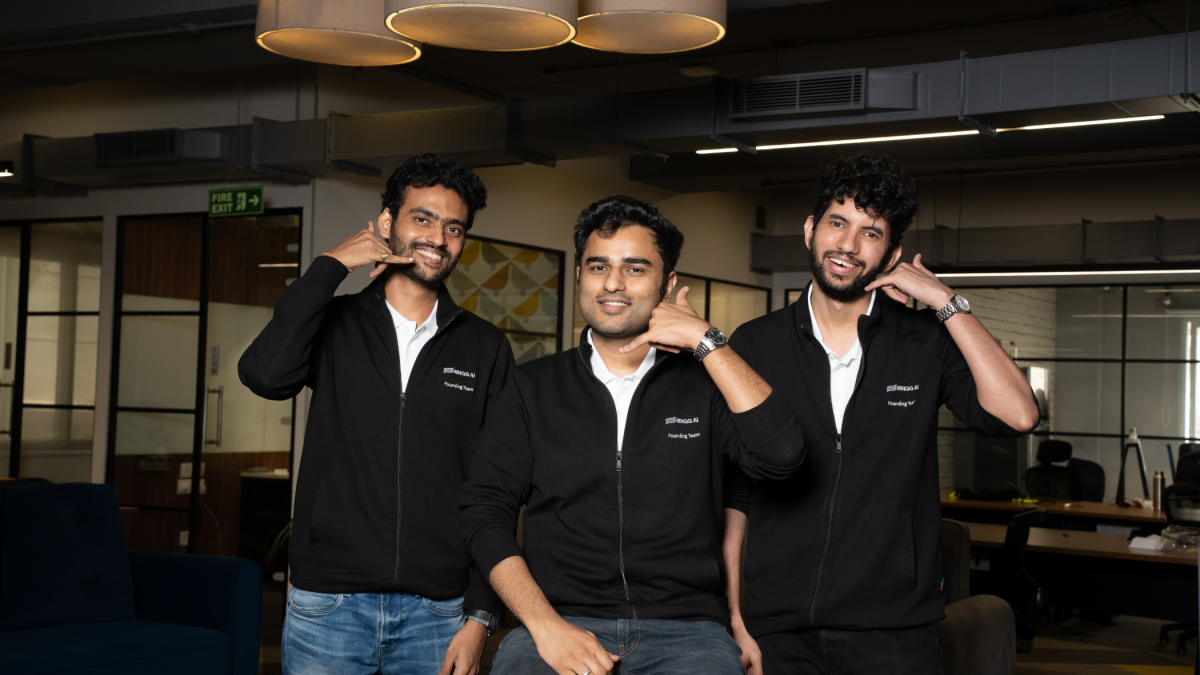
More than 76% of consumers in India prefer talking to businesses over a phone call, according to a recent study from Truecaller. Since voice is still consumers’ preferred way to communicate, that leaves a big opportunity to automate support and outreach calls using voice AI in the country. Voice AI startup Ringg, which already processes 20 million call attempts a month, is betting that volume keeps climbing over the coming months, and it just raised more money on that belief.
Key Takeaways
- Ringg Secures $10M Extension Amidst Voice AI Boom:Indian voice AI startup Ringg has closed an additional $10 million in Series A funding from Peak XV Partners, bringing its total Series A to $15.5 million. This capital infusion arrives as India shows a significant consumer preference for voice communication with businesses, creating a fertile ground for AI-driven automation.
- Strategic Pivot to Complex, Outcome-Driven AI:Initially focusing on high-volume, low-complexity tasks, Ringg successfully pivoted to tackling more intricate enterprise workflows such as appointment booking, abandoned cart recovery, and KYC processes. This shift emphasizes delivering tangible business outcomes, moving beyond a “price game” and securing deeper customer relationships.
- India as a Global Voice AI Hub:With a highly competitive landscape comprising local and international players, Ringg positions itself not just as a voice AI provider but as an “orchestration layer” that owns the customer relationship and the end-to-end outcome. Its strategy to partner with Global Capability Centers (GCCs) also highlights India’s growing role as an innovation and service hub for global AI solutions.
Ringg’s $15.5M Bet on India’s Voice-First Future
In a rapidly digitizing world, the humble phone call might seem like a relic, yet for the vast majority of Indian consumers, it remains the preferred conduit for engaging with businesses. A recent Truecaller study revealed that over 76% of individuals in India favor voice calls, a statistic that underscores a massive, untapped opportunity for intelligent automation. Capitalizing on this trend, Ringg, a pioneering voice AI startup, has announced a significant $10 million extension to its Series A round from Peak XV Partners, bringing its total Series A funding to $15.5 million. This fresh capital infusion empowers Ringg to scale its operations, betting on the continued surge in demand for automated voice solutions that already see it processing an astonishing 20 million call attempts monthly.
The Voice of Opportunity: India’s Digital Dialogue
India’s unique market dynamics present a compelling case for voice AI. While other regions might lean heavily into text-based chat or app interactions, the cultural and infrastructural realities of India — including varying literacy levels and the comfort of spoken language — cement the phone call’s primacy. This preference isn’t merely anecdotal; it’s a foundational insight driving the growth of companies like Ringg. Businesses are increasingly seeking efficient ways to manage customer interactions, qualify leads, provide support, and even conduct complex onboarding processes, all while leveraging the immediacy and personal touch of voice communication. Voice AI offers a scalable, cost-effective solution to meet this demand without sacrificing the preferred interaction method, ensuring customer satisfaction and operational efficiency.
From Text-to-Speech to AI Orchestration: Ringg’s Evolution
Ringg’s journey is a testament to adaptive innovation in the fast-paced AI landscape. The company initially began as DesiVocal, a text-to-speech startup, aiming to build foundational voice technologies. However, the founders quickly recognized the prohibitive costs and extensive resources associated with developing and training proprietary speech models from the ground up. This realization spurred a strategic pivot: instead of merely providing text-to-speech capabilities, Ringg evolved to build end-to-end voice AI agents designed for enterprise customers. This shift allowed them to move “up the stack,” delivering more comprehensive solutions that directly addressed business challenges. Their innovative approach quickly attracted major Indian players, with fintech giant Cred becoming their inaugural client. Since then, Ringg has expanded its roster to include other prominent Indian startups such as Flipkart, Practo, Groww, and PolicyBazaar, signaling strong market validation and confidence in its platform.
Beyond Simple Calls: Tackling Complex Workflows for Tangible Outcomes
Early in its journey, Ringg, like many AI solution providers, initially focused on “high-volume, low-complexity use cases” — tasks such as outbound calling for marketing, basic lead qualification, or routine loan collection reminders. While these provided immediate utility, co-founder Siddharth Tripathi candidly noted, “We quickly realized these are not sticky use cases, and so it’s always going to be a price game.” This insight catalyzed a crucial strategic shift towards more sophisticated, outcome-driven workflows that offer deeper value and foster stronger client relationships. Today, Ringg’s voice agents are deployed for intricate tasks like appointment booking in healthcare clinics, intelligent abandoned-cart recovery for e-commerce platforms, and rigorous KYC (Know Your Customer) checks for fintech applications, which often require nuanced conversations and data validation. For instance, Ringg’s AI agents seamlessly manage appointments across 1,200 clinics for healthcare behemoth Practo, handling everything from initial bookings to post-visit follow-ups, significantly streamlining operations and enhancing the overall patient experience.
Expanding Reach: Multi-Channel Capabilities and Global Ambitions
While voice calls still constitute over 70% of Ringg’s business, the startup is proactively diversifying its engagement channels to cater to a broader spectrum of customer preferences and business requirements. This strategic expansion includes integrating chat and WhatsApp support, recognizing the ubiquity of these platforms in digital communication across India and beyond. For select clients like Shell, Ringg is even automating browser-based support requests, demonstrating its versatility across various digital touchpoints. Tripathi articulates this strategic positioning clearly: “We are trying to position ourselves as a platform for agents that bring outcomes or get things done rather than voice agents for enterprises.” This vision underscores a move beyond mere automation to becoming a critical orchestration layer that drives tangible results and operational efficiencies for its clients.
Geographically, Ringg’s primary customer base remains firmly rooted in India, with nascent operations in the Middle East and the U.S. Rather than directly chasing U.S. corporate clients, Ringg has adopted an astute strategy for international expansion. It aims to partner with Global Capability Centers (GCCs) in India – the offshore hubs that multinational corporations increasingly rely on for back-office and support functions. By offering its automation capacity alongside human support provided by these GCCs, Ringg seeks to integrate seamlessly into global enterprise workflows, leveraging India’s established role as a global service provider and tapping into existing trusted relationships.
Under the Hood: Ringg’s Technical Edge and Orchestration Layer
Ringg’s technical foundation is a significant differentiator in a crowded market. The company prides itself on building its own proprietary speech recognition and generation models, a testament to its deep engineering capabilities and commitment to tailored solutions. While the long-term aspiration is to own the entire voice stack – including infrastructure and deployment – the current economic realities make this a prohibitively costly endeavor. Consequently, Ringg currently operates as an intelligent orchestration layer. This means its product dynamically routes tasks to various specialized models (whether its own or third-party) based on the specific use case, ensuring optimal performance and efficiency without the burden of owning every underlying component. Rishen Kapoor, a principal at Peak XV, highlights this technical prowess: “Because Ringg started as a research lab building its own models, that technical depth shows up in the complex use cases it’s now tackling. They can actually do these hard-won enterprise workflows end to end… with quality and with consistency.” This ability to execute complex, high-value tasks like merchant onboarding or advanced L1 and L2 customer support positions Ringg strongly against competitors who might offer more generic solutions.
A Crowded Arena: Navigating India’s Vibrant Voice AI Landscape
The voice AI sector in India is undeniably vibrant and highly competitive, reflecting the immense market potential. The ecosystem is segmented into various layers, each with its own set of players. At the foundational level, model makers like Deepgram, ElevenLabs, Cartesia, and local contenders such as Sarvam and Smallest.ai are all vying for supremacy in speech recognition and generation technologies. Above this, orchestration-focused startups like Bolna and Blue Machines are targeting the same strategic layer as Ringg, aiming to seamlessly integrate different AI models and workflows to deliver comprehensive solutions. Furthermore, sector-specific players like Gnani and Arrowhead are carving out niches, concentrating heavily on the demanding finance industry, for example. This layered stack — encompassing model makers, orchestrators, and application-layer innovators — tells a compelling story about the evolving landscape of AI. The increasing consensus is that long-term defensibility and significant financial returns will increasingly accrue to those who effectively own the customer relationship and, crucially, the end-to-end outcome delivered to businesses, rather than just a piece of the technology stack.
Growth Trajectory and Future Vision
To fuel its ambitious growth and innovation roadmap, Ringg is actively expanding its team. The company currently employs 40 individuals, having onboarded more than 15 new hires in just the last three months, demonstrating rapid scaling. A key focus for recruitment is “forward-deployed engineer” roles, which demand a unique blend of technical acumen and product management skills. These specialists are crucial for implementing and optimizing complex AI solutions directly with clients, ensuring seamless integration and maximal impact. Additionally, Ringg is investing in researchers dedicated to finding innovative ways to reduce the operational costs associated with running its advanced models, ensuring scalability and efficiency as it continues to grow and process even higher volumes of interactions.
Bottom Line
Ringg’s latest funding round underscores the immense potential of voice AI in India, a market uniquely primed for its adoption due to strong consumer preference for phone-based interactions. By strategically pivoting to complex, outcome-driven solutions and leveraging its deep technical capabilities as an intelligent orchestration layer, Ringg is not just automating calls; it’s transforming how businesses engage, support, and onboard customers in a highly personalized yet scalable manner. As the competitive landscape intensifies, Ringg’s clear focus on delivering tangible results and owning the end-to-end customer journey positions it as a formidable player, poised to redefine enterprise communication in India and beyond its borders through strategic global partnerships.
When you purchase through links in our articles, we may earn a small commission. This doesn’t affect our editorial independence.
{content}
Source:{feed_title}