
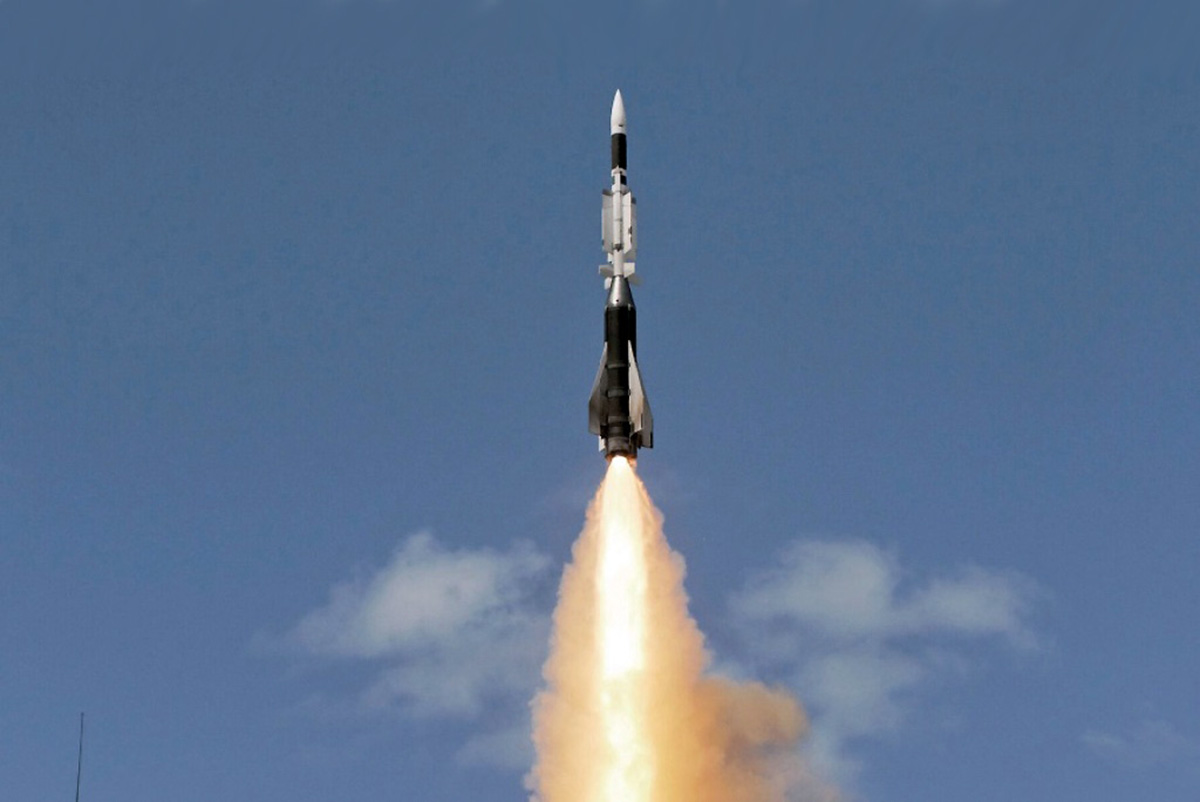
France Bolsters Air Defence Capabilities with Expanded SAMP/T NG Order
France has significantly augmented its ground-based air and missile defence capabilities by ordering an additional four SAMP/T NG (Surface-to-Air Missile Platform/Terrain – New Generation) firing units, bringing its total commitment to twelve systems. This strategic procurement underscores a concerted effort to enhance national and European security against evolving aerial threats.
The contract was formally placed by the Organisation for Joint Armament Cooperation (OCCAR) on behalf of the French government. OCCAR, an intergovernmental organisation facilitating collaborative European defence programmes, entrusted the order to eurosam. Eurosam is a Franco-Italian consortium comprising leading defence technology companies: MBDA France, MBDA Italy, and Thales. The newly ordered units are destined for the French Air and Space Force and will be configured in a multi-layer defence architecture, integrating both Aster and MICA VL missiles to provide comprehensive protection against a wide spectrum of threats.
In a statement, eurosam highlighted the significance of this order, remarking:“This order is an additional step towards the renewal of the European Long-Range Air and Missile Defence ground capabilities, following the SAMP/T NG development launched in 2021.”The company further emphasized the collaborative and sovereign nature of these defence systems, stating:“OCCAR-EA, eurosam and its members, MBDA and Thales will continue to lead the way in state of the art and sovereign air and Missile defence systems for the benefit of European defence. These advanced air defence systems are crucial in the current global context to respond to increasingly challenging threats.”This sentiment reflects a growing European ambition to develop and deploy advanced defence technologies independently, reducing reliance on non-European suppliers for critical security assets.
The SAMP/T NG system represents a formidable upgrade in ground-based air defence. Each firing unit is equipped to hold up to forty-eight Aster missiles, distributed across as many as six launcher modules, with eight rounds per module. This substantial missile capacity is complemented by a sophisticated multi-function radar and identification module, capable of detecting and identifying targets at ranges exceeding 350 kilometres. An integrated engagement module orchestrates target tracking and missile interception. Designed for rapid deployment and high mobility, the entire system can be made operational in under thirty minutes, offering 360-degree coverage and engaging aerial threats beyond 150 kilometres.
At the heart of the SAMP/T NG’s capability are the advanced Aster 30 B1 and the newer Aster B1NT missiles. The Aster B1NT variant incorporates a state-of-the-art Ka-band seeker and advanced interception algorithms, enabling a highly precise “hit-to-kill” capability. This makes it exceptionally effective against challenging targets, including short and medium-range ballistic missiles, low-manoeuvring aerial platforms, and emerging hypersonic missile threats, which are increasingly a concern for modern defence planners.
The United Kingdom also maintains a significant stake in the broader European missile defence programme. As a participant in the FSAF-PAAMS (Future Surface-to-Air Family – Principal Anti-Air Missile System) arrangement, which is managed by OCCAR, Britain is a key partner in the development and sustainment of the Aster missile family. A fourteenth amendment to this contract, signed in Paris in January 2024, specifically covered supplementary procurement of equipment to facilitate mid-life upgrades for the UK’s existing Aster missile stock. These missiles form the core of the Royal Navy’s Sea Viper system, deployed on its Type 45 destroyers. The system’s real-world effectiveness was recently demonstrated by HMS Diamond, which successfully engaged and neutralized Houthi missiles and drones in the Red Sea, highlighting the critical role of these advanced air defence systems in contemporary naval operations.
Beyond national deployments, the SAMP/T system has proven its combat effectiveness in the ongoing conflict in Ukraine. Both France and Italy have supplied SAMP/T batteries to Ukraine, where they have been successfully employed to intercept and engage Russian ballistic missiles, providing vital protection for Ukrainian cities and infrastructure. This operational validation underscores the system’s reliability and crucial defensive capabilities in a high-intensity combat environment.
The expanded French order comes at a time when other European NATO members are reassessing their air defence postures. Notably, Britain currently does not possess a ground-based long-range air defence system specifically assigned to the defence of its own homeland. This absence has prompted recent commitments to enhance the UK’s overall integrated air and missile defence. Luke Pollard, the Minister of State for Defence, recently confirmed an additional investment of £790 million in this area. This funding is earmarked for critical enhancements, including improved command and control systems, advanced sensing and radar capabilities, robust counter-drone technologies, and more effective layered defences designed to protect against a range of aerial threats. While the British Army operates the Sky Sabre, a medium-range ground-based system currently deployed in Poland and the Falkland Islands, it does not fill the long-range strategic defence gap. Further assessments continue regarding the potential for British destroyers to contribute to ballistic missile defence roles and the timeline for their planned missile upgrades.
A recent report by the UK’s Defence Committee further emphasized that many European NATO members collectively lack sufficient anti-strike capabilities necessary to effectively counter ballistic, hypersonic, and cruise missiles, as well as drones. This identified shortfall highlights a broader strategic imperative for European nations to strengthen their defence industrial base and operational capacities. The Kiel Institute, a prominent economic research institute, has estimated that replacing American military capabilities with European-produced weapons could incur an additional cost of €50 billion each year over the next decade. Such figures underscore the significant investment and long-term commitment required to achieve greater European defence autonomy and resilience in an increasingly complex global security landscape.
Why This Matters
This expanded order for SAMP/T NG systems by France is a significant development with wide-ranging implications for European security, defence strategy, and industrial cooperation. It reflects a critical response to the evolving nature of global threats and a clear commitment to strengthening sovereign defence capabilities within Europe.
Firstly, **Enhanced European Security and Deterrence**: The procurement of advanced air and missile defence systems like SAMP/T NG directly bolsters France’s ability to protect its territory, critical infrastructure, and deployed forces from sophisticated aerial threats, including ballistic and hypersonic missiles. In the current geopolitical climate, marked by increased tensions and the ongoing conflict in Ukraine, robust air defence is not merely a defensive measure but a crucial component of national deterrence. By investing in these capabilities, France contributes significantly to the collective security of NATO and the European Union, demonstrating a tangible commitment to burden-sharing and collective defence.
Secondly, **Validation of European Defence Industry**: The contract with eurosam, a Franco-Italian consortium, underscores the strategic importance of developing and sustaining a strong, independent European defence industrial base. Relying on indigenous capabilities for critical defence technologies reduces reliance on external suppliers, ensuring strategic autonomy and technological sovereignty. This order reinforces the expertise of MBDA and Thales, fostering innovation and maintaining high-skilled jobs within the European defence sector. It also serves as a testament to the effectiveness of collaborative defence programmes like OCCAR and FSAF-PAAMS in delivering advanced solutions.
Thirdly, **Response to Evolving Threats**: The emphasis on the Aster B1NT missile’s “hit-to-kill” capability against ballistic and hypersonic missiles highlights a recognition of the shifting threat landscape. Modern adversaries are increasingly developing and deploying advanced munitions that challenge traditional air defence systems. Investments in systems like SAMP/T NG are essential to counter these emerging threats, ensuring that European nations maintain a credible defence posture against future aggressors. The system’s proven track record in Ukraine against Russian ballistic missiles offers a compelling, real-world validation of its necessity and effectiveness.
Fourthly, **Catalyst for Broader European Defence Strategy**: France’s commitment to long-range ground-based air defence serves as a potential model and catalyst for other European nations. The Defence Committee’s report on the collective shortfall in anti-strike capabilities across NATO Europe underscores a pressing need for increased investment and coordination. This French order could encourage other European states to prioritize similar procurements, leading to a more integrated and robust European air defence architecture. The discussion about the costs of replacing American military capabilities with European ones further emphasizes a long-term strategic shift towards greater European self-reliance in defence.
Finally, **Implications for the United Kingdom**: While the UK benefits from its participation in the Aster missile program and the proven capability of its Type 45 destroyers in naval air defence, the absence of a long-range ground-based air defence system for its homeland presents a strategic vulnerability. The French decision highlights a capability that the UK currently lacks for its domestic defence, prompting questions about future strategic priorities and investments. The £790 million commitment to integrated air and missile defence is a step towards addressing this, but the specific role of long-range ground-based systems in the UK’s future defence remains a critical point of discussion.