
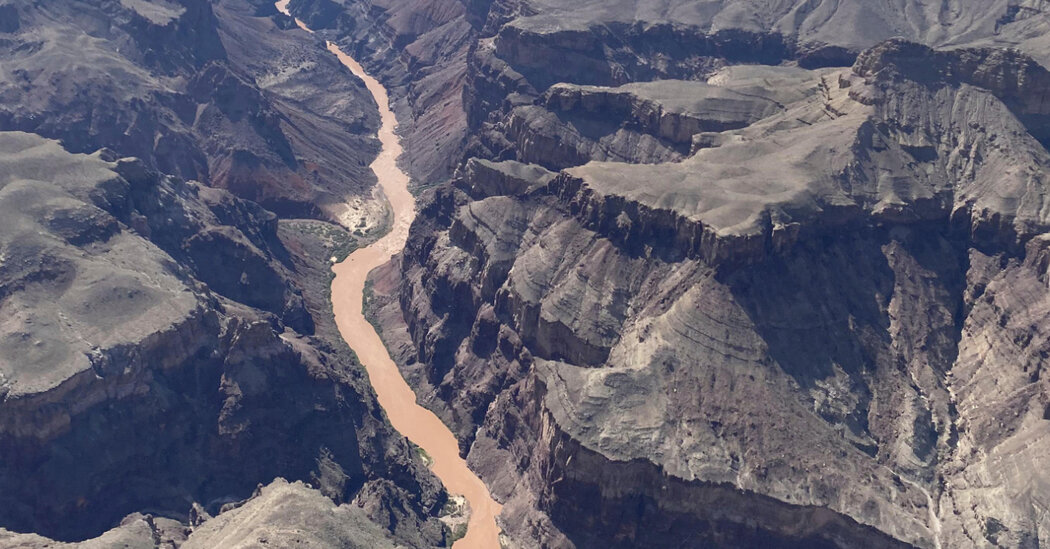
**GRAND CANYON NATIONAL PARK, Arizona** — Search and rescue operations continued on Monday within the Grand Canyon, following a destructive flash flood that swept through areas near Phantom Ranch on Saturday. One fatality has been confirmed by park officials, with multiple individuals reported missing or unaccounted for. The affected zones include sections of Bright Angel Creek, the North Kaibab Trail, and the Bright Angel Campground, all situated deep within the canyon’s formidable interior.
The incident unfolded in a remote and historic section of one of the United States’ most iconic national parks. Phantom Ranch, the only lodge located within the canyon itself, consists of a cluster of century-old stone-and-wood cabins positioned approximately 5,000 feet (nearly a mile) below the Grand Canyon’s rim. Its unique location means it is accessible exclusively by arduous hiking trails, via mule, or by rafting the Colorado River, underscoring the extreme challenges faced by rescue teams in this rugged terrain.
Grand Canyon National Park authorities initiated an extensive search effort immediately after the floodwaters subsided. The precise number of missing individuals has not been released, but rescuers are meticulously combing areas where hikers and campers might have been present during the event. The nature of flash floods in such narrow canyons, characterized by their sudden onset and powerful debris flows, makes search operations particularly complex and hazardous.
For most of the Grand Canyon’s estimated 4.7 million annual visitors, the experience typically involves viewing the vast geological formation from the developed South Rim. Here, amenities such as Grand Canyon Village offer hotels, restaurants, and shuttle services to numerous scenic overlooks, providing relatively easy access to panoramic vistas. Phantom Ranch, by contrast, represents a profoundly different and more demanding engagement with the canyon environment.
Reaching Phantom Ranch from either the North or South Rim requires significant physical exertion and careful planning. From the less frequented North Rim, which accounts for only about 10 percent of the park’s total visitation, the North Kaibab Trail descends approximately 6,000 feet (1,800 meters) over nearly 14 miles (22.5 kilometers) to the ranch. From the more popular South Rim, two primary trails — the Bright Angel Trail and the South Kaibab Trail — lead to the canyon floor, each presenting its own set of challenges, including extreme temperature fluctuations and limited water sources.
Phantom Ranch boasts a rich and storied history. Its origins date back to 1907 when David Rust established a rudimentary tent camp known as Rust’s Camp. This early outpost facilitated canyon exploration and even hosted then-President Theodore Roosevelt during a hunting expedition in 1913. Following the establishment of Grand Canyon National Park in 1919, Rust’s Camp closed. The site was redeveloped and formally opened as Phantom Ranch in 1922, under the visionary design of Mary Jane Colter, a pioneering architect for the Fred Harvey Company and the Santa Fe Railroad, known for her distinctive rustic yet refined structures within the park.
Colter’s design transformed the remote location into an unlikely and exclusive retreat, attracting a notable clientele that included famous actors, prominent authors, and industrial magnates. Records from the National Archives indicate that even Senator Robert F. Kennedy and his family journeyed to Phantom Ranch in 1967, completing an extensive four-day, 90-mile rafting trip through the canyon. An attempt to add to the ranch’s luxurious appeal with a swimming pool in 1934 proved unsustainable, and the pool was eventually filled in 1972 due to the immense logistical challenges of maintenance in such a remote setting, according to the Park Service.
Today, Phantom Ranch is owned by the National Park Service and operated by a private contractor. It can accommodate approximately 90 guests, but securing a reservation is highly competitive, typically requiring entry into a lottery system more than a year in advance. This enduring popularity underscores its unique allure, even amidst the ever-present natural hazards of the canyon.
Flash flooding has been a persistent and well-documented danger throughout the canyon’s history, particularly in the narrow gorges and creek beds that characterize the inner canyon. The National Park Service consistently issues warnings that intense summer thunderstorms can trigger flash floods with minimal or no advance notice. A notable historical event occurred in 1966 when Bright Angel Creek and surrounding areas experienced “catastrophic” flooding, following an estimated 14 inches (35 cm) of rainfall around the North Rim, as documented by the United States Geological Survey.
The risk of such events has been exacerbated by recent environmental factors. Last year, the Dragon Bravo fire scorched approximately 149,399 acres along the North Rim, necessitating the closure of the North Kaibab Trail. Wildfires remove vegetation that helps stabilize soil, making landscapes more susceptible to rapid runoff and debris flows during subsequent rainfall. As the North Kaibab Trail gradually reopened this year, the Park Service issued explicit warnings regarding an elevated potential for flash flooding and debris flows within the Bright Angel Creek watershed. In response, additional flood monitoring systems, new interpretive signage, and an updated evacuation and alert plan were implemented to enhance visitor safety in this vulnerable area.
Why This Matters
The flash flood incident at the Grand Canyon highlights several critical considerations that extend beyond the immediate tragedy:
- **Visitor Safety in Wilderness Areas:** This event serves as a stark reminder of the inherent dangers associated with wilderness exploration, even within managed national parks. It underscores the importance of visitor preparedness, awareness of rapidly changing environmental conditions, and adherence to park warnings and guidelines in dynamic natural environments.
- **National Park Management Challenges:** National Park Services globally face the complex task of balancing public access and enjoyment with the imperative of visitor safety and environmental preservation. Incidents like this underscore the constant need for robust emergency response systems, effective communication, and adaptive management strategies in areas prone to natural hazards.
- **Impact of Climate Change and Environmental Shifts:** The increasing frequency and intensity of extreme weather events, such as flash floods exacerbated by preceding wildfires, are becoming more common globally. This incident in the Grand Canyon may be indicative of broader climate-related challenges affecting vulnerable ecosystems and human activities within them. Understanding and mitigating these interconnected environmental risks is crucial for future land management and visitor safety.
- **Preservation of Historic Sites:** Phantom Ranch is not merely a lodge; it is a historic landmark within a national treasure. Natural disasters pose a significant threat to such sites, raising questions about their long-term preservation in the face of escalating environmental risks.
- **Global Awareness of Natural Hazards:** While focused on a specific location, the event contributes to a broader understanding of natural hazards and their potential impact on both local communities and international tourists who frequent such iconic destinations. It emphasizes the universal need for caution and respect for the power of nature.