
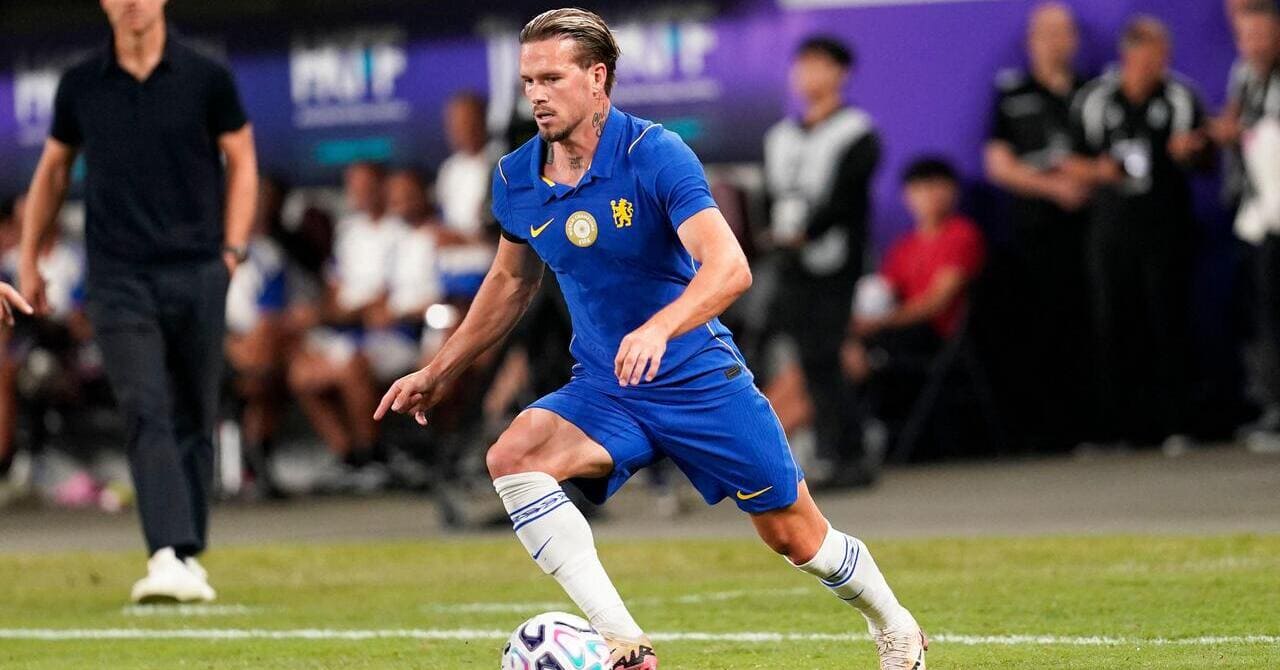
The Phoenix Rises: Mudryk’s Tottenham Odyssey Begins Under De Zerbi’s Guiding Hand
In a footballing landscape perpetually craving drama and redemption, Tottenham Hotspur has just pulled off a coup that sends ripples of excitement – and perhaps a touch of anxiety – through the Premier League. Mykhailo Mudryk, the enigmatic Ukrainian winger, has officially landed in North London on a loan deal from Chelsea, with a hefty £75m option to make the move permanent. But this isn’t just another transfer; it’s a narrative steeped in reunion, second chances, and the burning ambition of a club desperate for a spark.
Mudryk, whose last competitive minute of football dates back to November 2024, now finds himself on a clean slate. The resolution of a recent doping case with the Football Association has cleared his path, and the timing couldn’t be more poignant. For a player who burst onto the European scene with electrifying pace and audacious skill at Shakhtar Donetsk, his initial Premier League foray at Chelsea proved a challenging crucible. Now, a familiar face awaits to rekindle that lost fire: Roberto De Zerbi, the very architect of his breakthrough season in 2021-22.
“It’s a great feeling. I can’t wait to start training and playing for the club, and I’m so excited to be reunited with Roberto De Zerbi,” Mudryk declared on Tottenham’s official website, his words echoing the sentiment of a prodigal son returning home. The sentiment is palpable, the relief tangible. For Mudryk, this isn’t merely a club change; it’s a psychological reboot, a chance to shed the weight of expectation and inconsistency that marred his time across town and reclaim the joyful abandon of his play under a manager who implicitly understands his unique gifts.
He describes himself as a player who “brings speed and creativity,” promising to “help in both the offensive and defensive areas” and, crucially, to “make the fans excited.” This promise resonates deeply with a Tottenham faithful who have witnessed their club endure a torrid start to the season, propping up the table after back-to-back defeats. The squad is undeniably “strong” with “good players,” as Mudryk notes, but what it has desperately lacked is the unpredictable genius, the unorthodoxy that can unlock stubborn defenses and inject pure adrenaline into stagnant attacks.
This move wasn’t Tottenham’s first choice, with an earlier deal for Everton’s Iliman Ndiaye falling through (he’s since joined Manchester City). But perhaps fate intervened. De Zerbi, who clearly holds Mudryk in high regard, sees beyond the recent struggles, focusing on the raw, undeniable talent he cultivated. “Having worked with Misha earlier in his career, I know exactly what he can bring to our team,” De Zerbi stated with unwavering conviction. “He has the quality to change a game with his speed and ability in one-vs-one situations, and is an exciting, attacking talent.”
This isn’t just managerial praise; it’s a tactical blueprint. De Zerbi’s system thrives on daring wing play, intricate passing, and rapid transitions. Mudryk, with his blistering acceleration, close control, and courage to take on defenders, is a natural fit. He can operate on either flank, cutting inside or driving to the byline, adding a dimension of unpredictability that has been sorely missed. The manager’s demand is clear: “I will demand a lot from Misha and it is our job to help him find the best version of himself. If we do that then he can become a very important player for us. I am very happy he chose to come here, and I cannot wait to work with him again.” This isn’t just a manager signing a player; it’s a mentor taking a promising pupil back under his wing, convinced he can polish a rough diamond into a glittering gem.
Tottenham’s summer spending has been considerable, topping £300m, yet the investment hasn’t translated into immediate success on the pitch. The arrival of Mudryk, alongside the impending permanent deal for defender Tosin Adarabioyo from Chelsea (offset by Kevin Danso’s loan move to Sunderland), signals a continued overhaul, a frantic attempt to reconfigure a squad that simply isn’t gelling. The pressure is immense, not just on De Zerbi but on every new arrival, especially one carrying such a price tag and the baggage of a mixed past.
Expected Impact: Mudryk’s Potential Game Highlights
Imagine the scene: Tottenham, struggling to break down a compact defense. The ball finds Mudryk wide on the left, one-on-one with a full-back. A feint, a sudden burst of acceleration, and he’s past his marker, leaving a trail of dust. He drives into the box, head up, before unleashing a powerful shot that fizzes just wide, a warning shot. Minutes later, the ball is recycled to him. This time, he cuts inside, past two defenders with dazzling footwork, and instead of shooting, he threads a perfectly weighted pass to a surging Son Heung-min, who taps it home. Assist! Later, in a counter-attacking situation, Mudryk receives the ball deep in his own half. His searing pace sees him carry it sixty yards, shrugging off challenges, before squaring it for a tap-in. These are the moments De Zerbi and the Spurs faithful envision – game-changing interventions, moments of individual brilliance that ignite the collective, tearing apart opposition lines with sheer dynamism and audacious creativity. His ability to draw fouls in dangerous areas, his willingness to shoot from distance, and his relentless work rate, even defensively, are attributes that could quickly turn him into a fan favorite and a genuine difference-maker for a team crying out for inspiration.
Tottenham’s next challenge is a trip to Nottingham Forest on Saturday. Could this be the stage for Mudryk’s debut? The prospect is tantalizing, offering a fresh narrative against a backdrop of early-season despair. De Zerbi will be keen to integrate his prodigy quickly, hoping Mudryk can provide the electrifying spark needed to kickstart their campaign and lift them from the foot of the table.
Prediction:
This is a high-stakes gamble for Tottenham, but one that I believe will pay off handsomely. Under Roberto De Zerbi, Mykhailo Mudryk will not only rediscover his best form but surpass it. The tactical synergy, coupled with the freedom and confidence a familiar manager instills, will see him become a pivotal attacking force. I predict Mudryk will register double-digit goal contributions (goals + assists) by the end of the season, helping Tottenham to climb into a respectable mid-table position and laying the groundwork for a much stronger challenge next season. His debut against Forest will feature flashes of brilliance, and while perhaps not a full 90-minute masterclass, it will be enough to excite the fans and signal the dawn of a new, more dynamic era at the Tottenham Hotspur Stadium.