
Colorado School District Sues Federal Government Over Transgender Policies, Citing State Law and Funding Threats
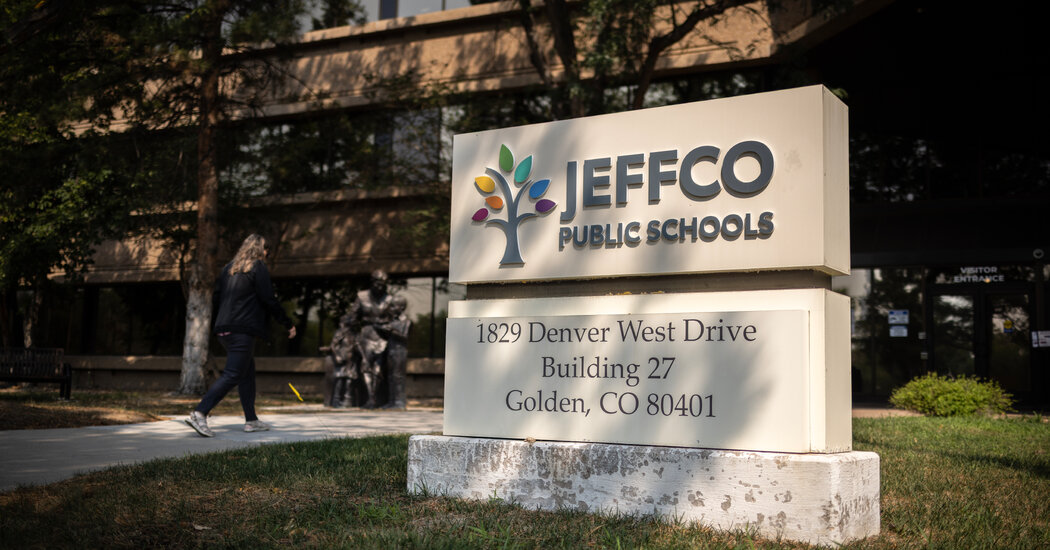
WASHINGTON D.C. –Jefferson County Public Schools (Jeffco) in Colorado has initiated legal action against the Trump administration, challenging federal demands to alter its transgender-inclusive policies. The lawsuit, filed by interim school superintendent Rob Stein, underscores a growing national tension between federal directives and local governance concerning LGBTQ+ rights, particularly those of transgender students.
The Colorado-based district, one of the largest in the state, asserts it faced an “impossible squeeze.” Refusing to comply with the administration’s demands risked the loss of approximately $50 million in crucial federal funding allocated for school meals and special education programs. However, district officials concluded that acquiescing to these demands would violate Colorado state laws designed to protect transgender students from discrimination.
Superintendent Stein highlighted the significant disruption caused by the dispute. “This has been just an enormous distraction,” he stated in an interview. “It has added a lot of stress to the system and to the kids who are being targeted here.” Jeffco Public Schools frames its decision to sue as a pragmatic response to an untenable situation, seeking judicial clarity on conflicting legal obligations.
This lawsuit represents a rare instance of a public institution directly challenging the previous Trump administration’s stance on transgender rights. While many schools, universities, and hospitals facing similar pressures have opted for settlements or policy changes, Jeffco has chosen to push back. Z Williams, an advocate for transgender rights and co-director of the Bread and Roses Legal Center in Denver, commended the district’s resolve. “I’m just incredibly proud of this school board,” Williams stated. “Trans people are being more and more villainized and more and more marginalized. So it’s really impressive for Jeffco to fight on these issues.” Williams noted that many other institutions have resorted to “voluntary capitulation” when confronted by federal pressure.
The dispute places Jeffco Public Schools at the forefront of a broader societal debate surrounding gender identity and biological sex, a central theme in the Trump administration’s efforts to reassert conservative social values within educational institutions. The legal battle highlights the challenges faced by educators nationwide, caught between state-level protections for transgender students and federal executive actions aimed at undermining those safeguards.
The Education Department, which received the summons in the lawsuit on August 13, referred the case to the Justice Department. A spokeswoman for the Education Department stated that the agency believes the district had “taken no steps to protect women and girls.” The administration’s position stems from its interpretation of Title IX, a federal law prohibiting sex-based discrimination in education. It contends that allowing individuals assigned male at birth access to girls’ sports teams and bathrooms violates Title IX, potentially causing distress to cisgender girls and women.
The investigation into Jeffco is one of more than five dozen probes the Trump administration opened into school districts and universities since 2017 over alleged violations of anti-discrimination protections for female students under Title IX. In a significant finding announced in March, the administration asserted that Jeffco had violated federal non-discrimination laws by permitting students access to restrooms, locker rooms, and sports teams consistent with their gender identity rather than their biological sex. A key point of contention was the administration’s claim that “61 boys were participating on girls’ athletic teams.”
District officials expressed surprise at this figure, clarifying that their records indicated no transgender girls were competing on girls’ teams. Jeffco contends that the Trump administration misinterpreted their data. The district explained that while records might show male participants on girls’ teams, these individuals served as team managers or mascots, not athletes. Furthermore, district officials suggested a potential confusion involving a cross-country roster where a single coach oversees separate programs for boys and girls. When questioned about this discrepancy, an Education Department spokesperson reiterated that federal investigators had determined male participants held “at least 61 roster spots on girls’ sports teams,” without further elaboration on the roles of those individuals.
To lead its legal defense, Jeffco has engaged the law firm of Jack Smith, a former special counsel known for his involvement in criminal investigations against former President Trump. The firm also represents other districts, including Shawnee Mission, Kan.; Montgomery County, Md.; and Fairfax County, Va., that are facing similar federal investigations regarding their transgender-inclusive policies.
The Jeffco lawsuit specifically accuses the Trump administration of failing to follow proper administrative procedures in threatening funding cuts. More fundamentally, it challenges the administration’s interpretation of Title IX, arguing that the law does not mandate the separation of students by biological sex in restrooms and athletic facilities. The lawsuit states: “No court has so held, no properly issued regulations so require, and the Supreme Court expressly left that question open.”
While federal laws generally supersede conflicting state statutes, Jeffco’s legal strategy posits that state law should prevail over executive decrees in this context. The Colorado Anti-Discrimination Act, originally enacted in 1957 and subsequently updated in 2007 and beyond, explicitly extends protections to transgender individuals, prohibiting discrimination based on gender identity.
The dispute has attracted national attention and involvement from key political figures. Harmeet Dhillon, then the government’s top civil rights lawyer, delivered the keynote address at a fundraiser for Jeffco Kids First, a local parents’ rights advocacy group. Lindsay Datko, head of Jeffco Kids First and a former teacher with children in the district, confirmed that her group had filed multiple complaints with the federal government regarding Jeffco’s gender policies since the previous year.
During her address, Ms. Dhillon affirmed the administration’s alignment with such groups, stating, “Passionate community members — like all of you in this room — are part of the reason why this Department of Justice, perhaps for the first time ever, is taking the side of parents as vigorously as you’re seeing in this administration.” A Justice Department spokeswoman later clarified that Ms. Dhillon’s appearance was approved by the agency’s ethics team and that she departed before any fundraising activities commenced.
Why This Matters
The legal battle initiated by Jefferson County Public Schools against the federal government over transgender-inclusive policies is far more than a local dispute; it carries significant national implications across legal, educational, and social spheres:
- Defining Transgender Rights and Protections:This case directly challenges the scope of transgender protections, particularly concerning access to facilities and sports. The outcome could set a precedent for how gender identity is recognized and protected under federal civil rights law, especially Title IX, which has been a battleground for these issues. A ruling in favor of Jeffco could reinforce the interpretation that Title IX encompasses gender identity, while a ruling against it could solidify a more restrictive view based solely on biological sex.
- Federal vs. State Authority:The lawsuit highlights a fundamental conflict between federal executive directives and state anti-discrimination laws. Jeffco’s argument that Colorado’s state law protecting transgender individuals should take precedence over federal administrative interpretations tests the limits of federal overreach versus local governance and states’ rights. The resolution could clarify the balance of power in areas where federal and state laws appear to diverge.
- Impact on Educational Institutions:Schools nationwide are grappling with how to balance the rights and needs of all students, particularly in the context of evolving understandings of gender identity. This case could provide crucial legal guidance for other districts facing similar pressures from federal agencies or parent groups. It will influence policy decisions regarding restrooms, locker rooms, sports participation, and curriculum, impacting countless students and educators.
- Funding Implications for Schools:The threat of withholding significant federal funding – as seen in Jeffco’s case with $50 million for meals and special education – is a powerful lever. The outcome will demonstrate whether federal agencies can effectively use financial penalties to enforce their interpretations of civil rights laws, potentially forcing financially vulnerable districts to choose between deeply held local values and essential resources.
- The “Culture War” and Political Polarization:This case is a microcosm of a broader national “culture war” regarding LGBTQ+ rights, particularly those of transgender individuals. It reflects deep societal divisions and political polarization, with advocacy groups on both sides keenly watching the proceedings. The lawsuit’s progression and ultimate resolution will likely fuel further debate and activism, shaping the discourse on civil rights and social values in America.
- Precedent for Future Administrations:While initiated during the Trump administration, the legal principles established in this case could influence how future administrations interpret and enforce civil rights laws. The judiciary’s stance on Title IX and gender identity could create enduring legal frameworks that transcend political cycles, affecting how schools and other public institutions operate for years to come.
Orange County, Florida– A protracted legal and social battle over gender identity policies is unfolding in Orange County, Florida, mirroring a broader national debate on parental rights, LGBTQ+ student support, and the role of public education. The Orange County School Board finds itself in a complex position, challenging state legislation while simultaneously adjusting its own internal guidelines in response to community pressure and legal threats.
At the heart of the dispute is the implementation of Florida’s Parental Rights in Education Act, often referred to by critics as the “Don’t Say Gay” bill, which prohibits classroom instruction on sexual orientation or gender identity in kindergarten through eighth grade, and mandates parental notification regarding student services. This legislation has created a contentious environment for school districts, attempting to balance state mandates with the needs of their diverse student populations and calls for local control.
In response to the state law, the Orange County School Board has taken the unusual step of suing the Florida Department of Education. The lawsuit argues that the state statute is vague and overreaching, creating confusion for educators and potentially infringing on the rights of students and staff. However, even as it challenges the state, the district faces a separate lawsuit from parental rights advocacy groups.
One such group, Moms for Liberty, which describes itself as fighting for parental rights in education, filed a lawsuit against the Orange County Public Schools. This legal challenge specifically targets district policies that allow students to use names and pronouns aligning with their gender identity without requiring parental consent. The group alleges that these policies violate the Parental Rights in Education Act, asserting that schools are overstepping their authority by withholding information from parents about their children’s gender identity at school.
Dawn Ritenour, the founder of Kids First in 2020, a group formed during the COVID-19 pandemic in response to school restrictions, has expanded its focus to include gender policies. Ms. Ritenour argues that while policies are intended to provide equal opportunities, the current expansive approach to gender identity is inadvertently disadvantaging the broader student body. “If these policies are meant to give equal opportunities to everyone, isn’t it now doing the opposite?” she questioned. “Policies that accommodate a transgender child can accommodate other children as well.”
In August, during a back-to-school meeting with principals and senior staff, district officials outlined recent adjustments to how teachers should discuss gender identity with students. Notably, teachers will no longer administer surveys to students asking if it is permissible to use their preferred pronouns when contacting their parents. This change signals an attempt by the district to be “more mindful” of community concerns, according to Dr. Stein, the interim superintendent. Dr. Stein emphasized the district’s goal to balance community concerns with student needs, stating, “We also don’t want to squelch inquiry and suppress kids as they develop their own means of expression.”
However, for some students, the school environment offers a unique space for self-expression that may be challenging to find at home. Olie Parlett, a 14-year-old who came out as nonbinary two years ago, experienced this firsthand. While Olie found acceptance from their mother and stepfather, they feared the reaction of their biological father, Dustin Gonzalez.
The private family dynamics became a public spectacle when Mr. Gonzalez addressed a school board meeting last year. He publicly criticized district policies, claiming they led to his lack of awareness regarding Olie’s preferred name and pronouns at school. Mr. Gonzalez had not been involved in prior discussions between Olie, their mother Bee Parlett, and a school counselor regarding these changes.
The footage of Mr. Gonzalez’s statement subsequently went viral on social media. High-profile figures, including Elon Musk, and various conservative influencers reposted the clip, using it to suggest that what they termed “woke” local school districts were unduly influencing children and undermining parental authority nationwide.
In an interview, Mr. Gonzalez revealed that he had lost some of his custody rights over the past year and had been estranged from Olie since May. He has since withdrawn his two younger children from public schools, both from his second marriage, and has urged other parents to “be as involved as humanly possible” in their children’s education. Mr. Gonzalez placed blame squarely on the county for initiating the legal battles, stating, “This all started with them, all of it.”
Olie, reflecting on their journey, spoke of both profound highs and lows, including feeling targeted and dismissed by national political figures. They also recalled an unexpected moment of empathy from a typically strict science teacher. Despite the personal toll, Olie expressed uncertainty about whether lawsuits would ultimately change public perceptions on gender identity. “People hate what they don’t understand,” Olie observed. “But if they would just hang out with someone who is trans or go to a drag show, they would see the healing joy, and in about 10 minutes their preconceived notions will not be there.”
Why This Matters
The dispute in Orange County, Florida, is a microcosm of a much larger, global debate with profound implications for education, family dynamics, and individual rights. The core issues at play extend beyond a single school district, resonating across national borders as societies grapple with evolving understandings of gender and identity.
Impact on Students:For LGBTQ+ youth, school can be a critical environment for safety, affirmation, and development. Policies that allow students to use preferred names and pronouns provide a sense of belonging and support, which research indicates can significantly improve mental health outcomes. Conversely, policies perceived as restrictive or that mandate parental disclosure without student consent can lead to feelings of isolation, anxiety, and even endangerment for students whose home environments may not be accepting.
Defining Parental Rights:The conflict highlights a fundamental tension over the scope of parental authority versus the school’s role in fostering an inclusive and supportive learning environment. Advocacy groups argue for an absolute right for parents to be informed and to guide all aspects of their children’s upbringing, including their identity at school. This challenges the traditional notion of schools as institutions that sometimes provide support and confidential spaces for students facing difficulties, particularly those navigating complex personal identities.
The Role of Public Education:This debate forces a re-evaluation of what public schools are meant to achieve. Are they solely educational institutions focused on academics, or do they also bear a responsibility for students’ social and emotional well-being? The Orange County situation underscores the difficulty school systems face in navigating politically charged social issues while striving to serve all students effectively.
Legal Precedent and Policy Future:The various lawsuits — Orange County’s challenge to the state and Moms for Liberty’s suit against the county — have the potential to set significant legal precedents. Court rulings could redefine the boundaries of state legislative power, local school district autonomy, and individual student rights, influencing educational policy not only in Florida but potentially across the United States. Similar legal challenges are emerging in other countries as well, creating a patchwork of varying protections and restrictions for LGBTQ+ students.
Societal Polarization:The virality of incidents like Dustin Gonzalez’s speech, amplified by national political figures and media, illustrates how local school board meetings have become flashpoints in broader cultural wars. These events contribute to deep societal polarization, making reasoned dialogue and compromise increasingly challenging. Understanding the roots of this polarization, including fears about change, differing values regarding family and community, and the influence of national narratives on local issues, is crucial for fostering more constructive approaches to these complex challenges.
Ultimately, the unfolding situation in Orange County is more than a local dispute; it is a critical bellwether for how societies will balance individual freedoms, parental authority, and the fundamental right to an inclusive education in an increasingly diverse world.