

Cult of Mac editor and publisher Leander Kahney recaps Apple’s 2026 launch event that featured the company’s first-ever foldable iPhone.
Key Takeaways
- Apple’s highly anticipated entry into the foldable smartphone market with the iPhone Duo, priced at a premium of $1,999, signals a strategic move to capture market share from Android rivals and elevate iPhone’s Average Selling Price (ASP).
- Under new CEO John Ternus, Apple is doubling down on pervasive, on-device Artificial Intelligence across its ecosystem, aiming to differentiate with “personal intelligence” and bolster user loyalty through enhanced product capabilities and privacy.
- The event underscored Apple’s sustained commitment to its interconnected product ecosystem (iPhone, Watch, AirPods), which remains a formidable competitive moat, driving recurring revenue and reinforcing consumer stickiness.
Cupertino, CA – Apple Inc. (NASDAQ: AAPL) on Wednesday captivated the tech world and financial markets alike with a highly anticipated product event, marking the first major launch under the stewardship of new CEO John Ternus. The unveiling of Apple’s first-ever foldable iPhone, dubbed the iPhone Duo, alongside a suite of AI-enhanced consumer devices, sets a definitive course for the tech giant in an increasingly competitive and innovation-driven landscape.
Wednesday’s presentation carried significant weight, not only for its product revelations but also as a public debut for Ternus, who ascended to the top role after former CEO Tim Cook’s 15-year tenure concluded at the end of August. Ternus, an Apple veteran since 2001 with deep roots in product design and hardware engineering, brings a hands-on, product-centric philosophy to the helm, a move keenly observed by investors looking for continuity and renewed innovation.
The transition was notably smooth, with Cook even appearing in a lighthearted video, playfully deferring to Ternus. This choreographed handover likely aimed to reassure stakeholders of a stable and unified leadership, crucial for a company of Apple’s market capitalization and global influence.
APPLE UNVEILS FIRST FOLDABLE IPHONE, IPHONE 18 PRO LINEUP, NEW WATCHES AT ANNUAL LAUNCH EVENT
Apple CEO John Ternus and Apple’s vice president of industrial design, Molly Anderson, show off the new iPhone Duo during an Apple event at the Steve Jobs Theater in Apple Park in Cupertino, California, on Sept. 9, 2026.(Karl Mondon / AFP via Getty Images)
Leander Kahney, editor and publisher of Cult of Mac, provided insights to FOX Business, noting Ternus’s ability to “put a human face on the big corporation that is Apple.” Kahney highlighted Ternus’s emphasis on teamwork and gratitude, echoing a style reminiscent of Apple co-founder Steve Jobs. This approach could resonate positively with consumers and employees, fostering a culture of collective achievement that historically underpins Apple’s innovation engine.
APPLE ENTERS A NEW ERA AS JOHN TERNUS TAKES OVER AS CEO
iPhone Duo: Apple’s Foray into Foldables
The star of the show, the new iPhone Duo, marks Apple’s long-awaited entry into the foldables market, a segment previously dominated by Android manufacturers like Samsung and Google. With a starting price of $1,999, the Duo is positioned firmly in the ultra-premium tier, a deliberate strategy to maintain Apple’s high Average Selling Price (ASP) and gross margins.
Boasting a 7.6-inch display—50% larger than the iPhone 18 Pro Max when unfolded—and an unprecedented thinness, the Duo underscores Apple’s meticulous design and engineering prowess. Its intricate folding system, composed of over 100 precision components, and AI-driven manufacturing for perfect hinge alignment, speak to Apple’s commitment to quality, a key differentiator in a market plagued by early foldable reliability concerns. Storage options ranging from 256 GB to 2 TB also cater to power users and creative professionals, further solidifying its premium appeal.
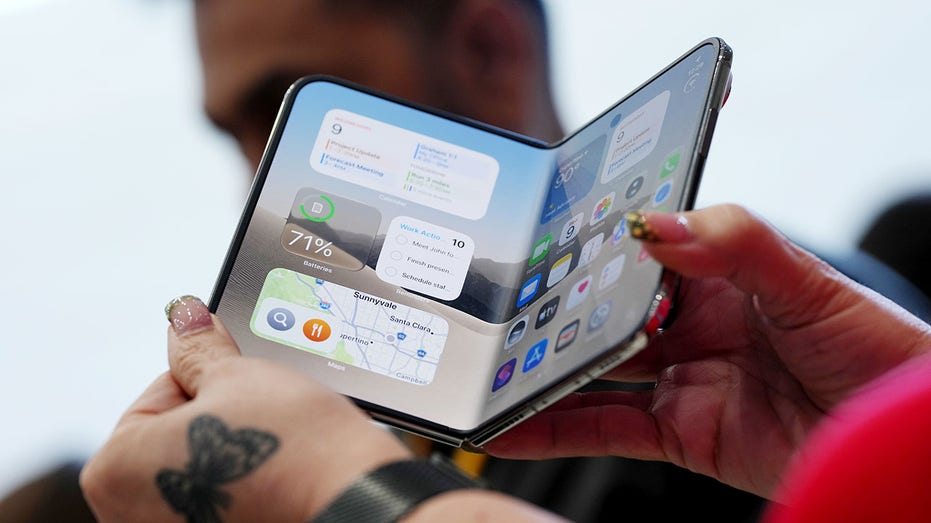
The iPhone Duo is Apple’s first foldable smartphone.(David Paul Morris/Bloomberg via Getty Images)
Kahney believes the Duo “is going to be really popular,” citing its blend of portability and large screen real estate, ideal for gaming and on-the-go productivity. The innovative selfie feature, leveraging AI to automatically capture group photos, showcases Apple’s ability to integrate practical, user-centric AI applications. The Duo’s availability starting Oct. 23, with pre-orders a week prior, will provide early indicators of market demand and Apple’s ability to disrupt this nascent, yet growing, smartphone category.
APPLE POSTS RECORD JUNE QUARTER AS IPHONE SALES SURGE; COOKS WEIGHS IN ON AI, CHINA
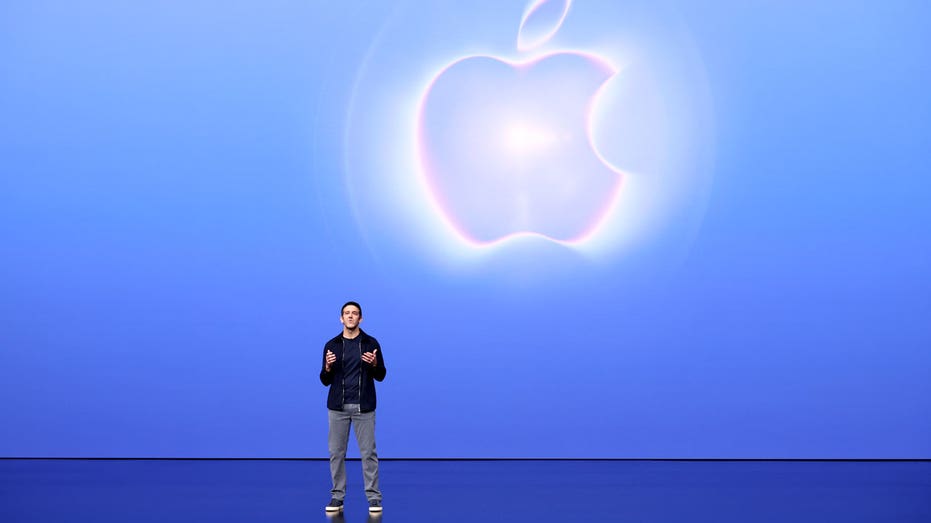
Apple CEO John Ternus speaks during the keynote address at Apple’s “Surprise and Shine” event at the company’s corporate headquarters, Apple Park, on Sept. 9, 2026 in Cupertino, California.(Benjamin Fanjoy/Getty Images)
Ecosystem Reinforcement and AI Integration
A central theme articulated by Ternus was the strength of the Apple ecosystem, a synergistic network of products that “complement each other and work well together.” This interconnectedness, refined over decades, remains a formidable competitive advantage, fostering customer loyalty and driving upgrades across product lines. The launch of AirPods 5 and Apple Watch Series 12, both heavily infused with AI, further tightens this ecosystem.
The AirPods 5, priced at $129, feature “industry leading” active noise cancellation, improved sound quality, hands-free Siri AI, and live translation capabilities. These enhancements aim to solidify Apple’s dominance in the wireless earbud market and demonstrate practical, real-time AI applications.
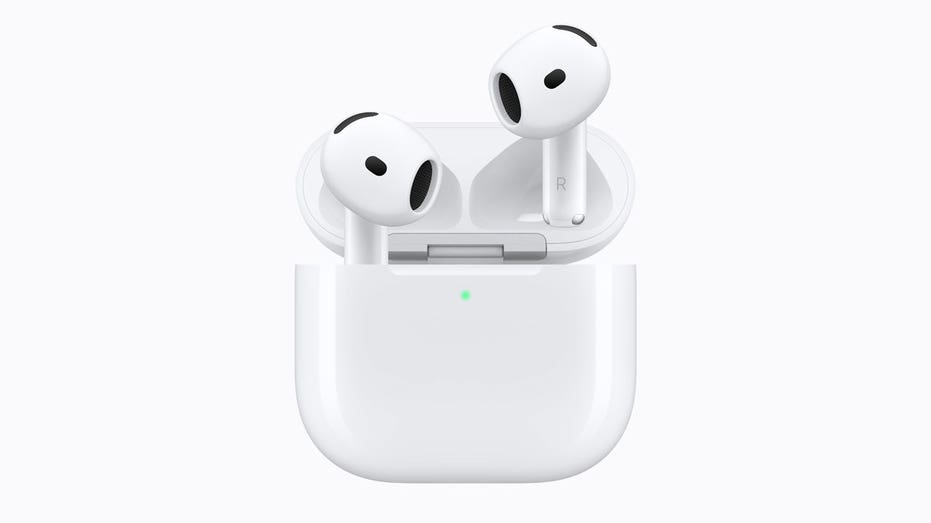
Apple unveiled the AirPod 5 Hero on Sept. 9, 2026.(Apple Inc.)
Similarly, the Apple Watch Series 12, starting at $399, boasts an updated health sensing system with higher-frequency heart rate measurements, integrated with a redesigned Health app. The inclusion of AI features, such as the “live rewind tool” for transcribing and summarizing conversations, showcases Apple’s strategy to embed AI not as a standalone feature, but as an invisible layer enhancing existing user experiences. This incremental, yet impactful, integration across its most popular devices aims to differentiate Apple from rivals often perceived as chasing the latest AI trend without holistic integration.
TIM COOK’S LAST DAY AS APPLE CEO: HOW HE LED THE TECH GIANT’S RISE TO $4T
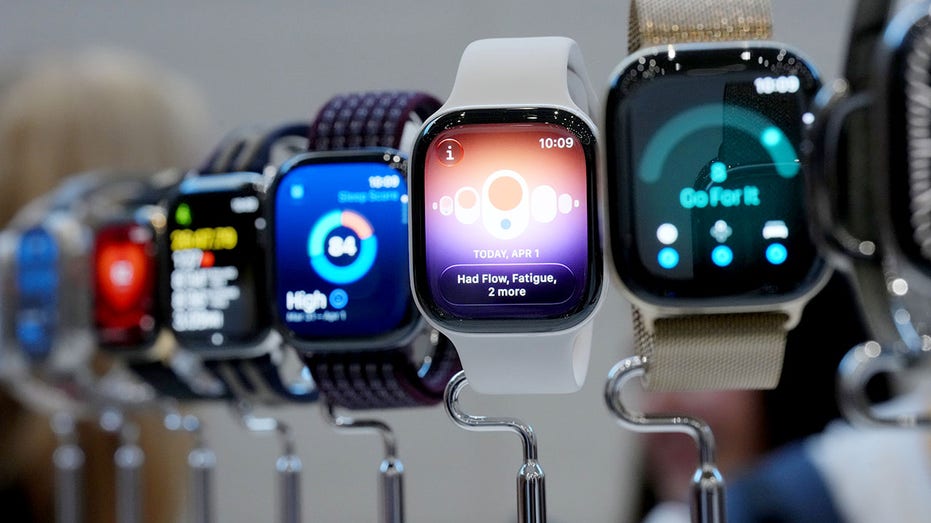
The Apple Watch Series 12 offers new AI features.(David Paul Morris/Bloomberg via Getty Images)
Artificial Intelligence: Personal, Private, Pervasive
AI was not merely a buzzword but a foundational element of Apple’s latest offerings. Ternus underscored the iPhone’s role as the ultimate “AI-powered personal hub,” uniquely positioned to understand user context—calendars, relationships, routines—while prioritizing data privacy. Apple Intelligence, the company’s branded AI framework, largely runs on devices, a distinct privacy-centric approach that differentiates it from many cloud-dependent AI solutions offered by competitors.
Ternus highlighted AI’s transformative impact, from a more capable and personal Siri across all Apple products to meaningful health insights and powerful new AirPods features like live translation. This strategy positions Apple to benefit from the burgeoning AI market without compromising its core value proposition of user privacy and seamless integration. Kahney praised the Apple Watch’s live rewind tool as a “very smart” application, leveraging an already ubiquitous device to deliver advanced AI functionalities without requiring users to adopt entirely new hardware.
| Ticker | Security | Last | Change | Change % |
|---|---|---|---|---|
| AAPL | APPLE INC. | 315.34 | -0.88 | -0.28% |
GET FOX BUSINESS ON THE GO BY CLICKING HERE
Market Impact
Despite the innovative announcements, Apple’s stock (AAPL) saw a slight dip of -0.28% on the day, a common reaction often attributed to “buy the rumor, sell the news” trading patterns or simply high expectations already priced in. However, the long-term implications are significant. The iPhone Duo’s entry into foldables could unlock a new growth vector for iPhone sales, potentially boosting Apple’s Average Selling Price (ASP) and expanding its market share in the premium segment. This move directly challenges competitors like Samsung and Google, forcing them to innovate further or risk losing ground in a category they pioneered. Furthermore, Apple’s emphasis on on-device, private AI across its robust ecosystem strengthens its competitive moat against cloud-first AI giants and further entrenches users within its services. This strategy is likely to drive sustained services revenue growth and reinforce customer loyalty, promising robust financial performance for Apple in the coming years and influencing the direction of hardware and AI integration across the broader tech industry.