
Key Takeaways for Investors:
- Political Stability & Investor Confidence:Benjamin Netanyahu’s potential retention of power, despite significant public and international scrutiny, introduces a complex dynamic. While continuity can offer a degree of short-term predictability, his controversial leadership style and hardline policies could exacerbate internal divisions and external geopolitical tensions, directly influencing foreign direct investment (FDI) and broader market sentiment.
- Fiscal Outlook & Sectoral Impact:The ongoing conflict necessitates substantial defense spending, widening Israel’s budget deficit and potentially impacting its sovereign credit rating. Key sectors like technology, tourism, and construction face distinct challenges and opportunities, with government policy under Netanyahu potentially shaping their recovery and growth trajectories.
- Geopolitical Risk & Regional Dynamics:Netanyahu’s approach to regional security and the Palestinian issue carries significant geopolitical risk. His policies could influence the future of the Abraham Accords, energy exports, and the broader stability of the Middle East, directly affecting Israel’s risk premium and its appeal as an investment destination.
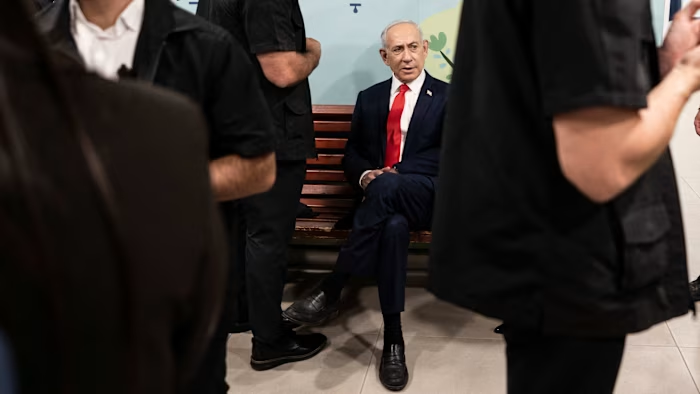
Ever the political survivor, Benjamin Netanyahu retains a chance at a fresh term even after the failures of October 7, a prospect that reverberates profoundly through Israel’s financial markets and shapes the perceptions of global investors.His political resilience, a hallmark of his decades-long career, translates into a complex equation for the economy, balancing the perceived stability of an experienced leader against the deep divisions and policy uncertainties his continued premiership entails.
The aftermath of October 7 unleashed a torrent of challenges for Israel, far beyond the immediate humanitarian crisis. The economy, robust and innovative just months prior, suddenly faced unprecedented strains. Investor confidence, a bedrock of Israel’s tech-driven growth, wavered. The Israeli Shekel (ILS) depreciated sharply, bond yields spiked, and the Tel Aviv Stock Exchange (TASE) experienced significant volatility. The initial market reaction was a visceral response to the eruption of conflict and the immediate perceived security vacuum.
Navigating Fiscal Headwinds and Budgetary Strain
Netanyahu’s potential path to a fresh term means a continuation, by and large, of the current administration’s fiscal approach, albeit one now heavily influenced by wartime demands. The war has necessitated a dramatic increase in defense spending, projected to reach unprecedented levels. This surge, coupled with a decline in tax revenues from affected sectors and a boost in social welfare payments, is set to widen Israel’s budget deficit considerably. The Bank of Israel has already intervened to stabilize the Shekel and manage inflation, but the long-term fiscal health remains a concern.
For financial journalists and investors, the key question is how a Netanyahu-led government would address this fiscal gap. Potential measures could include cuts to non-defense spending, tax increases, or reliance on increased debt issuance. Each path carries distinct market implications: spending cuts could stifle economic recovery, tax hikes could burden businesses and consumers, and rising debt could put further pressure on Israel’s sovereign credit rating, potentially leading to higher borrowing costs for the government and Israeli corporations alike.
Sectoral Impact: Tech Resilience, Tourism’s Trauma, and Defense Boom
Israel’s high-tech sector, often dubbed the “Start-up Nation’s” engine, has demonstrated remarkable resilience but is not immune to political and geopolitical tremors. While venture capital flows saw a dip in late 2023, the fundamental innovation engine remains strong. However, prolonged instability or perceived government policies that do not adequately support the sector (e.g., concerns over judicial reform prior to the war, or potential “brain drain” due to conflict) could impact its long-term growth trajectory. A stable, albeit controversial, Netanyahu government might offer a known, if not always favored, quantity for tech investors, but the broader geopolitical context remains a dominant factor in FDI decisions.
Conversely, the tourism sector has been decimated. International travel advisories and security concerns have brought inbound tourism to a near standstill. The speed and effectiveness of recovery will heavily depend on both the cessation of hostilities and strong government support for marketing and infrastructure. A Netanyahu government’s approach to regional stability and image management will be crucial here. The construction sector also faces challenges, grappling with labor shortages and supply chain disruptions exacerbated by the conflict.
On the flip side, the defense industry is experiencing a boom. Increased domestic defense spending and heightened global demand for advanced military technology position Israeli defense contractors for significant growth. Investors with exposure to this sector might see continued upside, directly linked to the ongoing security environment and government procurement policies.
Geopolitical Calculus and Regional Integration
Netanyahu’s long-standing, often hardline, approach to regional security and the Palestinian issue is a primary determinant of Israel’s geopolitical risk premium. His potential return to power suggests a continuation of policies that prioritize security above all, potentially at the expense of regional diplomatic initiatives. This stance has direct implications for the future of the Abraham Accords and any prospects for further normalization with Arab states. Expanded regional cooperation, particularly in energy (e.g., natural gas exports from the Leviathan and Karish fields), trade, and technology, offers significant economic upside. However, escalating tensions under a hardline leadership could jeopardize these opportunities, increasing the cost of doing business and deterring foreign investment that relies on regional stability.
The relationship with key allies, particularly the United States, also plays a crucial role. While bilateral ties are deep, a Netanyahu government’s policies might diverge from U.S. foreign policy objectives, potentially impacting military aid, diplomatic backing, and investor confidence tied to strong international partnerships.
Market Impact:
Netanyahu’s political survival sends a mixed signal to the markets. On one hand, his enduring presence might be interpreted by some as a known quantity, offering a degree of operational continuity during a turbulent period. This could temper immediate volatility in the Shekel and bond markets by removing the uncertainty of a power vacuum. On the other hand, his leadership is intrinsically linked to heightened political polarization domestically and a more aggressive stance on regional security, which could prolong the conflict and deter foreign direct investment critical for long-term growth. Expect continued scrutiny on sovereign credit ratings, the trajectory of the budget deficit, and the Central Bank’s monetary policy responses. Sectors like defense and cybersecurity may see sustained interest, while tourism and broader consumer-facing industries will remain sensitive to security developments. The ultimate market impact will hinge on Netanyahu’s ability to navigate the war’s aftermath, address fiscal challenges, and either mitigate or exacerbate geopolitical risks, dictating Israel’s risk premium for the foreseeable future.