
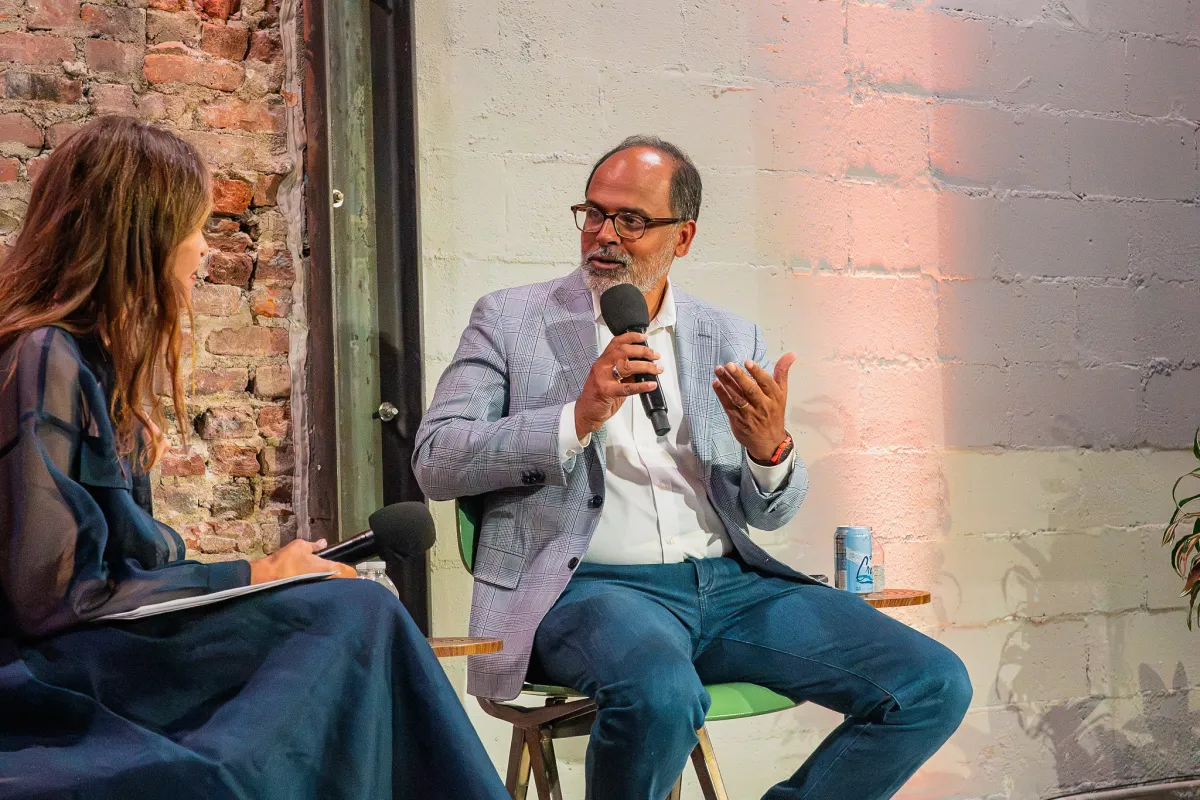
Devin Parekh, a co-leader of the formidable investment firm Insight Partners for over a quarter-century, stands in stark contrast to many of his industry peers. While others leverage social media and podcasts to cultivate public personas, Parekh and Insight Partners maintain a notably low profile, letting their considerable portfolio speak for itself. In a recent candid discussion at TechCrunch’s StrictlyVC event in New York, Parekh offered rare insights into Insight’s enduring strategy, its notable successes (including early and continued investments in Databricks, and stakes in AI giants OpenAI and Anthropic), the deals that slipped away (like AI legal-tech firm Legora), the evolving ethics of venture investing, and why the firm steadfastly adheres to a diversified approach even as the industry flocks to frontier AI. This deep dive reveals the philosophy of a quiet giant navigating a rapidly changing tech landscape.
Key Takeaways:
- Performance Over Punditry:Insight Partners deliberately maintains a low public profile, believing that the success of its portfolio companies, not public commentary, should define its reputation and attract top founders.
- Optimistic Pragmatism on AI:Parekh acknowledges the risks associated with advanced AI but firmly believes the societal benefits, particularly in healthcare and drug discovery, far outweigh potential dangers, envisioning a net positive impact on living standards.
- Diversified & Flexible Strategy:Eschewing market fads and excessive concentration, Insight Partners employs a temporal, globally diversified investment strategy across stages (early-stage, growth, buyouts), adapting to market conditions rather than adhering to rigid allocations, with a recent emphasis on earlier-stage investments where returns can be magnified by doubling down on winners.
Devin Parekh: The Quiet Force Behind Insight Partners
For 26 years, Devin Parekh has been a driving force behind Insight Partners, one of the tech investment world’s most potent, yet least vociferous, players. With $90 billion in assets under management, Insight’s influence is undeniable, but their public persona is decidedly subdued. Parekh explains this deliberate strategy: “Every venture capitalist thinks they’re an expert on everything now — epidemiology during COVID, geopolitics during the Iran war. I’m not sure we’re all experts on everything. Our attitude has been: Let the portfolio do the talking.” This philosophy underpins a firm that prioritizes performance and founder partnerships over the clamor of public discourse, believing that their results, not their rhetoric, should be their loudest statement.
Navigating the AI Frontier: Risks, Rewards, and Societal Impact
The conversation naturally gravitated to artificial intelligence, particularly the recent surge of concern regarding AI risks. Parekh, however, maintains a distinctly optimistic outlook. While acknowledging the theoretical danger of a non-state actor misusing an open-source model for nefarious purposes, he firmly believes the potential upsides overwhelmingly tip the scales. “There’s an even higher probability we get a massive decrease in the time it takes to develop new drugs and cure diseases. I’ll take that bet,” he states confidently.
Drawing from his experience on the board of NYU Langone, Parekh highlights the transformative power AI is already demonstrating in healthcare. Analyzing millions of patient records, AI can identify critical health risks, such as a 25% chance of a heart attack, for individuals seeking unrelated treatment. For Parekh, this application alone signifies a monumental leap forward. He views AI as an essential tool for scaling healthcare to meet the demands of an aging global population, arguing that every generation faces new technological risks, yet consistently finds ways to raise living standards. This pragmatic optimism underscores Insight’s continued, significant investments in the AI space.
Flexible Strategy in a Volatile Market: Early Bets and Global Reach
Insight Partners’ investment strategy is defined by its adaptability, rather than rigid allocations. The firm engages in early-stage, growth equity, buyouts, and secondaries, with the mix constantly adjusting based on market conditions. Parekh elaborates, “It’s temporal, not fixed — we invest globally, so there’s no set geographic or strategy allocation. Look at our last seven funds and you’d see different percentages of early-stage, growth, and buyout in each.”
Current market dynamics, characterized by high interest rates and cautious debt markets, have made major buyouts less attractive, with Insight not having pursued one since early 2024. On the venture side, Parekh notes a concerning trend: valuations are soaring at a pace reminiscent of 2021, a period that did not end favorably. The speed of rounds means less incremental data for investors, translating into higher prices without a corresponding reduction in risk. Insight’s response has been to “go earlier,” making smaller initial bets ($20–25 million instead of $500 million) and then aggressively doubling down on proven winners. This strategy, exemplified by their investment in Wiz from Series A onwards, has been a disproportionate source of their returns, mitigating risk while maximizing upside.
Geographically, Insight’s investments reflect a nuanced understanding of talent distribution. While Parekh acknowledges that “talent has gone flat globally,” leading them to compete for deals in places like Stockholm (where they lost Legora to General Catalyst), he recognizes pockets of concentration. AI infrastructure talent, for instance, remains heavily clustered in San Francisco. Conversely, vertical AI, such as financial services AI (think Ramp), finds its talent density in hubs like New York, allowing for more diverse geographical investments.
Navigating Conflicts: Investing in Rivals and the Concentration Debate
One of the more intriguing aspects of Insight’s strategy is its willingness to invest in rival companies, notably OpenAI and Anthropic. This was once a clear taboo in VC, but Parekh clarifies Insight’s stance. The internal debate wasn’t about the ethical implications of owning stakes in competitors at a later stage, but rather whether they should have entered earlier rounds. He differentiates between early-stage investments (Series A/B), where information-sharing restrictions and strict non-competition clauses are necessary, and later-stage investments where a firm is essentially “buying a great stock” without board representation or governance control. As AI labs require tens of billions in funding, they increasingly lose the leverage to dictate exclusivity, opening the door for diversified late-stage investors.
Regarding physical AI, Parekh remains cautious. He views many current ventures as “science projects” requiring a double bet: on the timing of robotics adoption and on its ultimate viability as a business. While his 23-year-old son, also a VC, advocates passionately for the space, Parekh’s seasoned perspective urges patience.
Finally, Parekh addresses the growing concern among Limited Partners (LPs) about concentration risk, particularly as a significant portion of VC dollars in the first half of the year flowed into OpenAI and Anthropic. While Insight’s diversified portfolio insulates them from this issue, Parekh observes other funds raising capital with explicit pitches to allocate 35-40% of their fund to one of these two companies. “This business has always rewarded diversification over a long horizon,” he asserts, emphasizing Insight’s long-term perspective across thirteen funds. While acknowledging the success of highly concentrated strategies by firms like Founders Fund and Thrive, he maintains that data over time supports diversification for most LPs.
Bottom Line
Devin Parekh and Insight Partners embody a strategic blend of quiet confidence and adaptive investment. Their refusal to engage in the venture world’s often-noisy self-promotion is a deliberate choice, rooted in the belief that true value is demonstrated through their portfolio’s performance. By embracing a flexible, diversified approach that prioritizes early-stage bets in a frothy market and maintaining a long-term, optimistic yet pragmatic view on transformative technologies like AI, Insight Partners continues to chart a distinctive course. In an industry often swayed by hype and concentrated bets, Parekh’s insights offer a refreshing perspective on sustainable success built on strategic agility and a deep, quiet conviction.
Key Takeaways:
- Liquidity Trumps Unrealized Gains:Returning capital to Limited Partners (LPs) is paramount. Even for highly promising assets, VCs must prioritize cash distributions over holding for potentially higher future valuations, as this is critical for securing future funds and maintaining LP trust.
- Strategic De-Risking is Prudent:In today’s frothy market, founders are wise to consider selling a portion (10-20%) of their stakes, even when valuations are skyrocketing. The current pace of growth is mathematically unsustainable, and market corrections are an inevitable part of the cycle.
- Mega-IPOs Redefine the Bar:Upcoming public debuts from giants like Anthropic, OpenAI, and SpaceX will set an unprecedented benchmark for public market expectations. While demonstrating immense market absorption capacity, these events will redefine “exciting growth” and likely normalize valuation expectations for the next tier of emerging tech companies.
The venture capital landscape is currently a maelstrom of unprecedented capital raises, soaring valuations, and the looming specter of market corrections. Yet, amidst this frenzy, a seasoned voice cuts through the noise, offering a pragmatic perspective on what truly matters: liquidity, strategic de-risking, and disciplined portfolio management. This deep dive explores the insights of a prominent venture capitalist, dissecting the current market dynamics, the psychology of LPs, and the strategies for navigating a truly unique period in tech history.
The Imperative of LP Returns and Liquidity
One of the most pressing issues in today’s venture ecosystem, according to the VC, isn’t just the sheer volume of capital raised between 2021 and 2023, but the stark reality that many funds haven’t yet delivered tangible returns to their Limited Partners (LPs). For many first- and second-time funds, a failure to prioritize liquidity could be a death knell, preventing them from securing future capital. “LPs want to know you can turn positions into cash; that’s the job,” emphasizes the expert.
This isn’t merely theoretical advice; it’s a lesson learned through hard-won experience. Even with companies like Anthropic, projected to potentially triple in value, the counsel remains consistent: “take your basis out anyway.” The sentiment echoes a past realization within their own firm. Despite being significant LPs in their own funds and being tempted to hold onto promising assets that “could double again,” the firm recognized that LPs aren’t compensated by unrealized gains. Over the past two years, this strategic shift has translated into over $20 billion returned to LPs through strategic sales and IPOs, with billions more anticipated. This focus on Distributed to Paid-In capital (DPI) matters profoundly, even for established, multi-fund entities. The secondary market, in this context, serves as a crucial liquidity mechanism, often benefiting early venture investors and employees alike. While a 10x return is universally celebrated, a drop to 5x without realizing gains often prompts uncomfortable questions about missed opportunities.
Navigating Frothy Valuations and the De-Risking Imperative
The conversation around valuations is particularly acute. Referencing VC Elad Gill’s argument that there’s often a narrow, 6- to 12-month window where a company’s valuation will never be higher, the VC affirms that this is a constant discussion with founders, even if they don’t always heed the advice. “It’s case by case, but when a founder gets an offer at a frothy valuation, I ask them what happens when the market corrects, because it will, even if I can’t tell you when,” the expert states. The inability to precisely time the market underscores the wisdom of de-risking. Founders aren’t advised to sell everything, but rather to “de-risk 10 or 20%.”
The current pace of valuation growth is simply unsustainable. Valuations are rising so fast that many assume the trend will continue indefinitely. However, as the VC points out, “you can’t compound $40 billion at 50% every two months for two years without becoming the world economy. That math doesn’t work.” This stark reality check serves as a crucial counter-narrative to the prevailing optimism, reminding all stakeholders that economic fundamentals, however stretched, eventually reassert themselves.
The Dawn of the AI Mega-IPOs: Setting a New Bar
The impending public offerings of AI titans like Anthropic and OpenAI, following SpaceX’s impressive market absorption, are set to redefine expectations across the industry. Anthropic, a mere four years old, is already larger than Salesforce, signaling a new era of hyper-growth companies achieving massive scale in record time. “The fact that they can go public doesn’t necessarily mean much for everyone else,” the VC cautions. Instead, the real question is the bar these companies will set for the “next tier” of IPOs.
With three companies—SpaceX, Anthropic, OpenAI—potentially going public within six to eight months, each valued north of a trillion dollars in market cap, the market’s capacity to absorb such giants has been proven. However, for a public-market investor observing a company surge from zero to $65 billion in four years, “double, double, triple, triple” growth rates will no longer appear as exciting by comparison. While phenomenal, even these companies will eventually transition into “normal-growth” entities, necessitating the public markets for continued scale. The expectation is clear: “I think we’ll see more of these IPOs over the next 18 months,” reshaping the landscape for all that follow.
LP Psychology and the Boom-Bust Cycle
The flow of capital from LPs exhibits a classic boom-bust pattern, mirroring individual investor behavior. “We all do this in our personal lives — stay out of an expensive market until we can’t stand it anymore, and pile in right when we should be pulling back,” the VC observes. LPs collectively replicate this behavior on a macro scale: eager before 2021, pulling back after, and now “piling back in” as the market heats up again. This cyclical nature is notoriously difficult to avoid, contributing to the current frenzy where venture-growth funds of $6 to $10 billion, once rare, are now commonplace.
Strategic Portfolio Management: Doubling Down and Pulling Back
Managing a diverse portfolio amidst such volatility requires keen insight into inflection points and a willingness to act decisively. The question of how long to support a company with a challenging capital structure before doubling down or walking away “varies enormously.” The VC cites “Wonderful,” an enterprise AI agent platform, as an example of rapid success: two rounds within two years propelled it to a $5 billion valuation. Conversely, some 2021 investments languished for three or four years before finding product-market fit.
This dynamic underscores the importance of rigorous portfolio reviews. The firm recently scrutinized 300 portfolio companies over three days, not just focusing on major positions, but actively seeking those showing an inflection point—whether it’s worth doubling down on, buying secondary in, or, in some cases, pulling back from. A prime example of this strategic agility is Armis, a security company. The firm initially lost the deal to Sequoia but maintained a relationship with a modest $5 million check. Eighteen months later, they acquired the entire cap table, including Sequoia, with a nine-figure investment, eventually selling it to ServiceNow for $7 billion. “Sometimes you make money with small checks, sometimes with big ones. The goal is finding the best founders in the best markets,” the VC concludes.
Bottom Line
In an era defined by explosive growth and unprecedented capital flows, the insights from this seasoned venture capitalist offer a grounding perspective. The core message is clear: true success in venture capital hinges on a relentless focus on delivering liquidity to LPs, exercising disciplined de-risking, and employing strategic portfolio management that adapts to both hyper-growth and inevitable market corrections. The upcoming wave of mega-IPOs will undoubtedly raise the bar, but the enduring principles of backing exceptional founders in the best markets, coupled with a pragmatic approach to exits, remain the bedrock of sustainable returns.
When you purchase through links in our articles, we may earn a small commission. This doesn’t affect our editorial independence.
{content}
Source:{feed_title}