
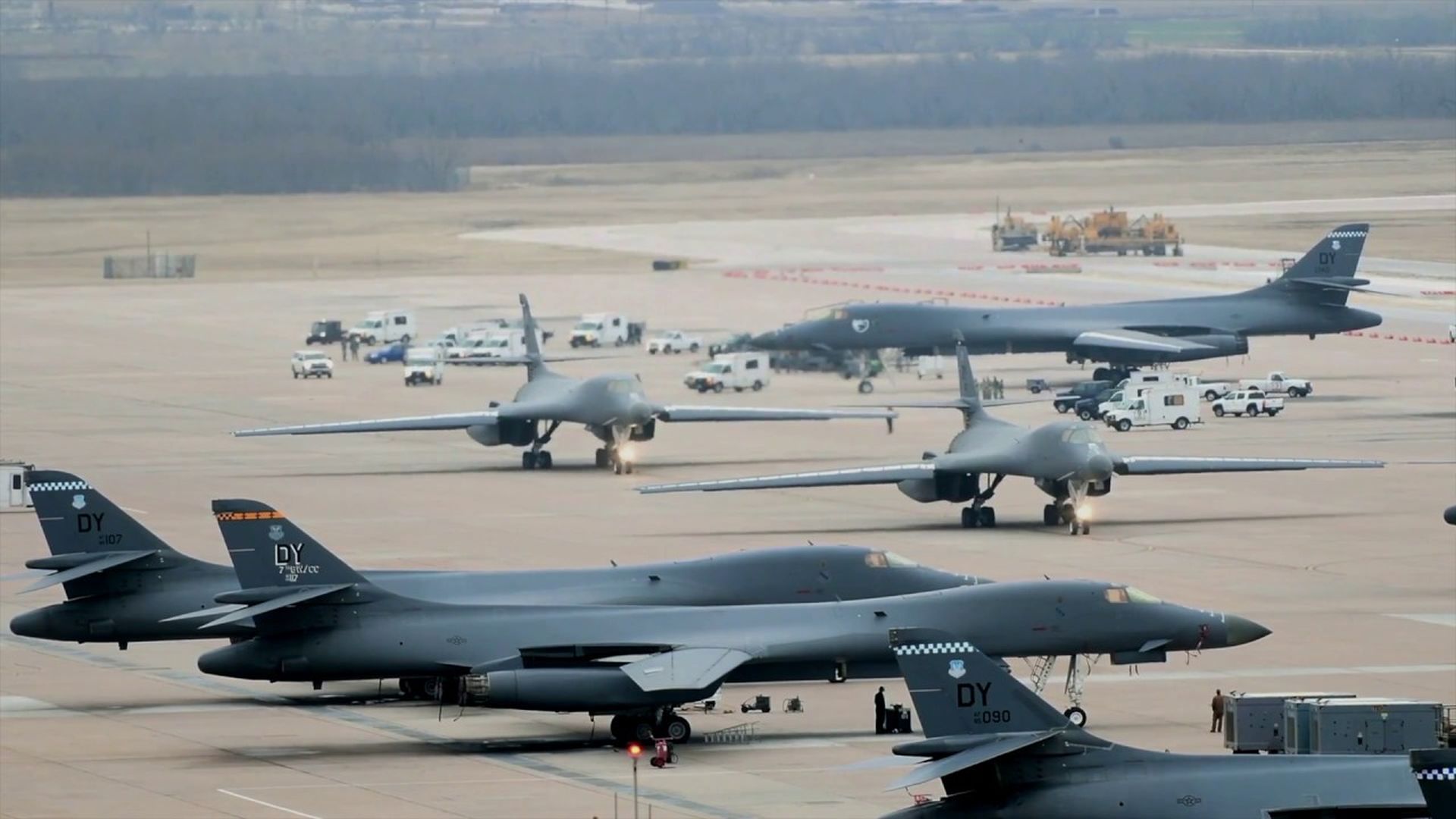
U.S. Air Force Launches Major Readiness Initiative for Bomber Fleet
The United States Air Force has initiated a comprehensive readiness campaign designed to significantly enhance the operational availability of its B-52 Stratofortress and B-1 Lancer bomber fleets. Early efforts within this new drive have already demonstrated substantial improvements, notably reducing critical parts delivery times from over a week to as little as two to three days.
Dubbed the “North Star Readiness Campaign,” this strategic initiative brings together key commands: U.S. Air Force Global Strike Command (AFGSC), Air Force Materiel Command (AFMC), and the Defense Logistics Agency (DLA). The campaign integrates maintenance, supply chain management, engineering support, and modernization efforts under a unified framework, with the overarching goal of increasing the number of mission-capable aircraft ready for deployment.
This concentrated focus on readiness comes at a critical juncture for the U.S. Air Force. The service is simultaneously managing an aging bomber fleet, implementing extensive modernization upgrades for existing platforms, and preparing for the eventual introduction of the next-generation B-21 Raider stealth bomber. Ensuring the current fleet remains robustly operational is paramount during this transitional period.
General S.L. Davis, commander of Air Force Global Strike Command, underscored the importance of the initiative, stating,“The North Star Readiness Campaign is our commitment to ensuring the warfighter has the nation’s bomber force ready to go at a moment’s notice.”He further emphasized the collaborative nature of the effort:“This is a team effort. It brings together the operators at Air Force Global Strike Command, the acquisition and sustainment experts at Air Force Materiel Command, and our logistics partners at the Defense Logistics Agency to focus on one thing: operational readiness.”
A significant component of the campaign addresses the often-overlooked but crucial challenge of timely parts delivery. To tackle this, daily “aircraft-on-ground” (AOG) meetings have been implemented. These meetings convene representatives from the Defense Logistics Agency, supply-chain personnel, base logistics units, and flight-line maintainers. Their purpose is to identify and resolve delays in real-time, facilitating faster movement of essential components between various locations.
The impact of these streamlined processes is already evident. According to the U.S. Air Force, the time required for certain lateral shipments of parts – transfers between different units or depots – which previously took a week or more, can now be completed within a mere two to three days. This accelerated delivery has directly contributed to a substantial reduction in “Mission Impaired Capability Awaiting Parts” (MICAP) issues. MICAP incidents, which denote aircraft that are non-mission-capable due solely to a lack of a specific part, have fallen dramatically from over 450 at the campaign’s inception to approximately 160 currently.
This significant reduction in immediate parts shortages has freed up sustainment teams. Instead of constantly reacting to urgent demands, they can now dedicate more resources to addressing long-standing backorders and proactively identifying components that are likely to cause future readiness problems. This shift from reactive to proactive maintenance is a cornerstone of the North Star campaign’s strategy.
The B-1 Lancer, in particular, is receiving focused attention due to specific challenges related to its structural and avionics components. The campaign aims to enhance parts availability for these critical areas while simultaneously shortening the duration of depot maintenance cycles. Lieutenant General Linda Hurry, commander of Air Force Materiel Command, highlighted the effectiveness of this integrated approach:“Our constant engagement with Global Strike leadership and joint logisticians has helped us reinvigorate the supply chain and return these airframes to the fleet faster after depot maintenance, increasing bomber capacity and capability.”
Beyond high-level strategy and logistical overhauls, the campaign also actively incorporates practical improvements proposed by personnel directly engaged with the aircraft. Chief Master Sergeant Shane Anderson, the campaign’s change management lead, cited an example where maintainers developed a localized playbook to optimize phase maintenance procedures. This ground-up innovation, he noted, has“drastically reduced maintenance timelines while strictly maintaining safety and security.”This demonstrates a commitment to leveraging the expertise of those on the front lines of aircraft readiness.
It is important to note that this readiness initiative runs in parallel with ongoing major modernization programs for the U.S. bomber fleet. The venerable B-52 Stratofortress is currently undergoing an extensive upgrade program, including new engines and updated avionics, designed to extend its operational life well into the 2050s. Concurrently, the B-1 Lancer continues to receive modifications aimed at sustaining its crucial conventional strike role. While modernization focuses on enhancing capabilities, the North Star campaign’s immediate emphasis remains on the foundational, practical problems that directly dictate how many bombers are truly capable of flying: the availability of spare parts, robust engineering support, efficient depot throughput, and optimized flight line maintenance processes.
Why This Matters
The U.S. Air Force’s North Star Readiness Campaign represents a critical effort with far-reaching implications for national security, global stability, and defense spending efficiency. In an era of renewed great power competition and evolving geopolitical landscapes, the operational readiness of strategic bomber fleets is more vital than ever.
Firstly, the ability to project power globally through a ready bomber force is a cornerstone of U.S. deterrence strategy. The B-52 and B-1 bombers provide conventional and nuclear deterrence capabilities that are indispensable in signaling resolve and assuring allies. A decline in their mission-capable rates would directly undermine this deterrent posture, potentially emboldening adversaries and increasing the risk of miscalculation. By ensuring more bombers are available “at a moment’s notice,” the campaign directly enhances the credibility and effectiveness of U.S. military power.
Secondly, this initiative is crucial for managing the transition to the next-generation B-21 Raider. The B-21’s introduction will be a gradual process, and for decades to come, the U.S. will rely on its B-52 and B-1 fleets. Maintaining high readiness levels for these existing aircraft ensures there are no critical gaps in bomber capacity during this complex transition period. It allows the Air Force to phase in new capabilities without compromising current operational requirements or global commitments.
Thirdly, the focus on supply chain efficiency and reduced maintenance timelines has significant economic implications. By cutting down parts delivery times and reducing MICAP incidents, the Air Force is operating more efficiently. Less time spent waiting for parts or in maintenance depots means these expensive assets spend more time performing their intended mission. This optimizes the return on investment for taxpayer dollars, preventing costly delays and ensuring that defense spending translates directly into tangible military capability rather than idle aircraft.
Finally, the campaign highlights the importance of organizational integration and empowering personnel. The collaboration between Global Strike Command, Materiel Command, and the DLA demonstrates a recognition that complex readiness challenges require a unified, multi-faceted approach rather than siloed efforts. Furthermore, incorporating solutions from front-line maintainers not only improves processes but also boosts morale and fosters a culture of innovation, ensuring the Air Force remains adaptable and effective in addressing future challenges.
In essence, the North Star Readiness Campaign is not just about fixing planes; it’s about safeguarding U.S. strategic advantage, ensuring continuity of defense capabilities during a critical transition, and maximizing the efficiency of a vital military resource. Its success will directly impact the nation’s ability to respond to threats, protect its interests, and maintain stability on the global stage.